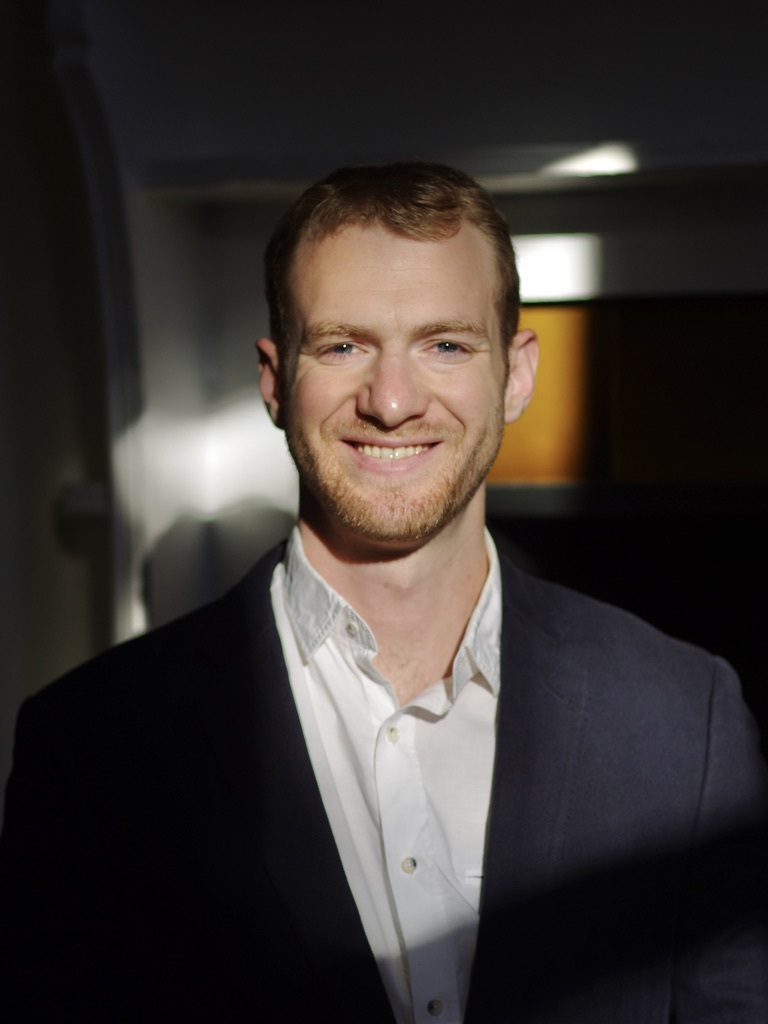
The Man Who Reads China So You Don't Have To
Let's be clear about what Jordan Schneider has actually built. ChinaTalk is not a hobby newsletter that grew up. It is not an academics' niche digest that escaped the faculty lounge. It is a full-scale, independently funded intelligence operation run by one person who decided that the most important story in the world - the collision between American and Chinese power in the arena of technology - was being covered badly by people who didn't speak Chinese, hadn't worked inside a Chinese tech company, and hadn't spent serious time in Beijing doing serious work.
Schneider corrected that gap himself. He did it methodically, deliberately, and without waiting for anyone's permission.
We make substantive, engaging content that resonates in today's media landscape.
- Jordan Schneider, ChinaTalk Year in ReviewToday, ChinaTalk sits in a peculiar position of authority. It is the newsletter that policy analysts at the State Department, chip engineers in Santa Clara, and fund managers in Singapore all cite when they need to understand what China's AI labs are actually doing. It is more cited per word than most Foreign Affairs issues. And it was built by a Yale history graduate who decided the best way to understand the 21st century was to move to Beijing and find out for himself.
Schneider graduated from Yale in 2013 with a BA in history. That is a fact, and it is also a tell. History majors who end up running China policy analysis shops aren't studying history because they like archives. They're studying it because they understand power - how it accumulates, how it is deployed, how it is lost. That same instinct now runs through every ChinaTalk issue.
After Yale, Schneider ran the standard-issue elite-track gauntlet: the Eurasia Group, where political risk gets its price tag; Princeton's Innovations for Successful Societies, where governance actually gets examined; and Bridgewater Associates, where Ray Dalio's market epistemology gets applied to everything including lunch. These were real jobs. They gave him real tools. But they were also preparation for something else.
The Beijing Years
In 2017, Jordan Schneider moved to China. He enrolled in Peking University's Yenching Academy - an elite graduate program that accepts around 100 international students per year and runs instruction in Chinese. He earned a master's degree in economics. He also did something no amount of classroom time could have taught him: he worked at Kuaishou.
Kuaishou - known internationally as Kwai - is the short-video platform that predates TikTok and, depending on the week, rivals it. It has hundreds of millions of users, a fiercely competitive algorithmic infrastructure, and a corporate culture that is as Chinese as it gets. Schneider was there as a Strategy Associate, inside the machine, watching how a Chinese tech giant actually thinks about markets, competition, and global expansion.
That experience is unreplicable. You cannot read your way to it. You cannot conference your way to it. Schneider has it, and it seeps into every ChinaTalk issue that touches on Chinese tech culture, platform dynamics, or how Chinese companies approach international strategy. The fluency is not just linguistic. It is structural.
The ChinaTalk podcast launched that same year - 2017, in Beijing, while Schneider was navigating grad school and tech work simultaneously. It started as a side project, which is the honest word for something you do because it matters, before the money exists to justify it. Seven years later, it's his full-time work. That is not overnight success. That is patience combined with compounding quality.
What ChinaTalk Actually Does
After Kuaishou, Schneider joined the Rhodium Group as a Senior Analyst - one of the sharpest research boutiques in the world for tracking Chinese economic and political data. By 2021, he had made the jump: ChinaTalk full-time. No institutional salary. No hedge fund backstop. Just the newsletter.
The output since then has been relentless. In 2025 alone: 150+ newsletter editions, focused on China AI labs, policy developments, and application analysis. 100+ podcast episodes covering elite politics, chip supply chains, export controls, tariffs, and US defense posture. Ten emergency episodes - double the pace of 2024 - dropping in real time when events demanded it. A new weekly show called "Second Breakfast," dedicated to defense analysis. One million downloads. Sixty-five thousand subscribers. Sixty percent growth in a single year.
The comparison ChinaTalk invites - and earns - is CFR's The President's Inbox. That is the only policy podcast with a larger audience. CFR has been running since 1921. ChinaTalk has been running since 2017. One of these trajectories is more interesting than the other.
What sets ChinaTalk apart from the cluster of newsletters and think-tank dispatches that litter the US-China policy space is hard to pin down in a single sentence, but here is an attempt: Schneider reads Chinese-language sources that his competitors don't, talks to people his competitors haven't found, and writes about what actually matters instead of what sounds important. He is fluent in the language and fluent in the subculture. He knows what Chinese AI researchers are arguing about in their own forums, not just what they say in English interviews.
His bylines in Foreign Affairs, Foreign Policy, Wired, and Lawfare mark him as someone the establishment takes seriously. His Substack subscriber count marks him as someone audiences follow directly. It is a rare combination. Most people optimize for one or the other.
The Researcher in the Room
Schneider currently holds the position of Adjunct Fellow in the Technology and National Security Program at the Center for a New American Security (CNAS) - Washington's most influential center-right defense and security think tank. He was also a 2023-24 AWM Scholar at The Andrew W. Marshall Foundation, named after the legendary Pentagon strategist who ran Office of Net Assessment for four decades.
These affiliations are not honorifics. They reflect where Schneider's analysis lands in the policy food chain. When the export control debates heated up - over NVIDIA chips, over HBM memory, over the full stack of semiconductor technology that determines who can build frontier AI - ChinaTalk was in the conversation, not reporting on it from the outside.
His analysis of America's semiconductor export controls and their implications ran as a notable piece in his body of work. His writing on TikTok policy, his data-driven investigation into Chinese Twitter influence operations, and his essay "War Between the US and China" on the Effective Altruism Forum showed the range: he writes for policymakers, for technologists, and for people who just want to understand what the world is becoming.
He spoke at the Yale Poynter Fellowship in Journalism in 2023, on the topic "Carving a Career in Independent Media: ChinaTalk + AI as a Case Study." The framing was accurate. ChinaTalk is a case study in how to build credibility-first media in a space dominated by institutional players with larger staffs and smaller ideas.
Funding is still holding us back from the fully humming ChinaTalk - we don't have the money to grow headcount.
- Jordan Schneider, on building independent mediaWhere He's Headed
The ambition is clear and practical: more staff, more depth, more coverage of the territory that mainstream media can't reach. Schneider has built ChinaTalk into a one-person operation that punches above organizations ten times its size. The next step is not replicating that formula at scale - it is building the institutional infrastructure that allows ChinaTalk to be what it could be with three or four researchers instead of one.
He is explicit about the constraint: funding. Not relevance, not audience, not ideas. The subscribers are there. The downloads are there. The policy reach is there. What remains is the unglamorous work of turning a newsletter into an institution - one that can hire analysts, expand coverage beats, and remain independent while doing it.
In the meantime, the output continues. Every two and a half days, on average, something new from ChinaTalk lands in sixty-five thousand inboxes. Some of it is scheduled. Some of it - those ten emergency episodes in 2025 - is not. Jordan Schneider tracks the story wherever it goes, as fast as it moves, in two languages at once.
That is not a hobby newsletter. That is a beat reporter, a policy analyst, a podcast host, a media entrepreneur, and a China fluent insider, all running in the same body. Washington hasn't quite figured out what to call it. The sixty-five thousand subscribers already know.