HIRO IWANAGA - CO-FOUNDER & CEO, TALUSAG FIRST COMMERCIAL GREEN AMMONIA IN NORTH AMERICA - IOWA 2025 $22M SERIES A RAISED NOV 2023 GOLD EDISON AWARD 2025 WORLD'S FIRST MODULAR GREEN AMMONIA SYSTEM DEPLOYED IN KENYA, IOWA, MINNESOTA STANFORD MS - BAUPOST GROUP - TALUSAG 30-50% FERTILIZER COST REDUCTION FOR FARMERS HIRO IWANAGA - CO-FOUNDER & CEO, TALUSAG FIRST COMMERCIAL GREEN AMMONIA IN NORTH AMERICA - IOWA 2025 $22M SERIES A RAISED NOV 2023 GOLD EDISON AWARD 2025 WORLD'S FIRST MODULAR GREEN AMMONIA SYSTEM DEPLOYED IN KENYA, IOWA, MINNESOTA STANFORD MS - BAUPOST GROUP - TALUSAG 30-50% FERTILIZER COST REDUCTION FOR FARMERS
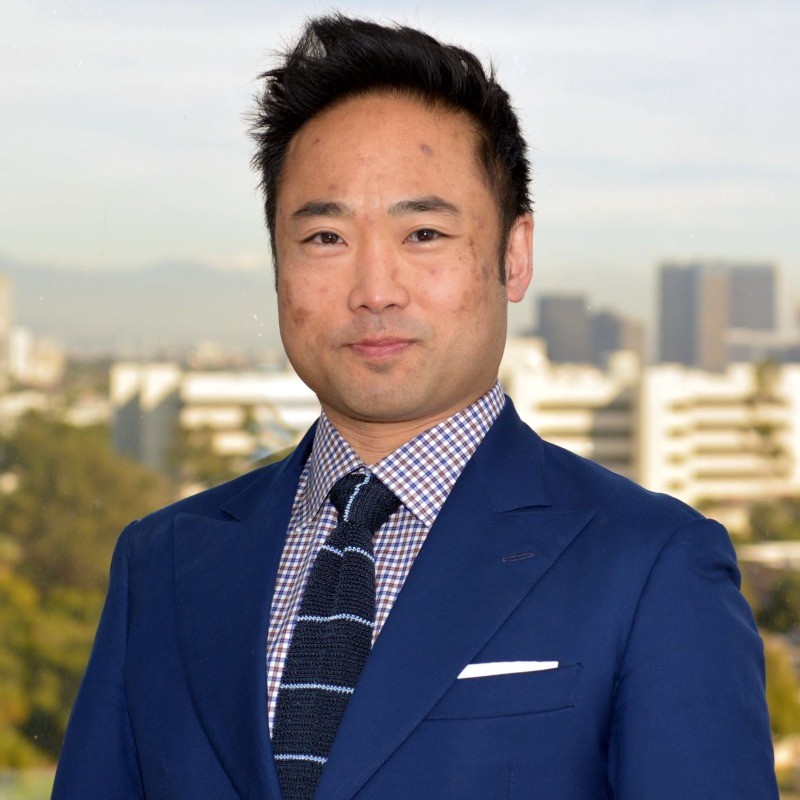
Hiro Iwanaga, Co-Founder and CEO of TalusAg
YesPress Profile • Clean Energy Pioneer

Hiro
Iwanaga

The man who put ammonia in a box - and gave the farm back its future

He spent 15 years turning a 2008 philanthropic bet on African food security into the world's first commercial green ammonia system. Now Iowa corn grows on it.

Green Ammonia Clean Energy Agriculture Stanford Series A Edison Award
Co-Founder & CEO — Talus Renewables / TalusAg
$22M Series A Raised (Nov 2023)
3 Continents Deployed
50% Max Fertilizer Cost Reduction
8T CO2 Avoided Per Ton of Ammonia

Ammonia in a Shipping Container. Food Security on a Solar Panel.

In 2008, Hiro Iwanaga was working as a hedge fund analyst at Baupost Group in Boston - studying balance sheets, hunting for undervalued assets, running numbers on billion-dollar positions. Quietly, with his own money, he funded a research project at Stanford University. The question: could you make ammonia fertilizer in a small, modular system powered by renewable electricity?

That question took 15 years to fully answer. The answer is yes - and Iwanaga built the company to prove it. TalusAg (under parent company Talus Renewables) produces green ammonia using only air, water, and renewable energy. No fossil fuels. No pipeline dependency. No supply chain that collapses when a ship gets stuck in the Suez Canal.

The talusOne unit - the company's flagship - fits inside a standard shipping container and produces roughly one ton of green ammonia per day. The talusTen produces ten times that. Stack enough of them, point them at a solar array or a hydro grid, and you have a local fertilizer factory that costs farmers 30-50% less than buying imported commodity ammonia.

The technology is not science fiction. It is running. In December 2023, Kenya Nut Company's Morendat farm in Naivasha, Kenya, switched on a talusOne unit connected to a 2.1 megawatt solar farm. The farm locked in a 15-year fixed-price supply agreement. Fertilizer, predictable and local, for a decade and a half.

In February 2025, Landus - a farmer-owned cooperative in Iowa - announced the first locally produced green ammonia in North America, from TalusAg's Boone, Iowa facility. By April 2025, the first American corn crop fertilized with American-made green ammonia was in the ground. The Edison Awards called it Gold-worthy. The judges were not wrong.

Iwanaga's background is unusual for a cleantech founder. Most clean energy CEOs come from engineering labs, government agencies, or climate-focused VC firms. Iwanaga came from the long-short equity world - Baupost Group, Silver Point Capital, PFM. He learned to think in terms of durable competitive advantage, capital efficiency, and asymmetric risk. When he finally founded TalusAg in 2017 with veteran engineer David Toyne, he brought that framework with him.

The result is a company that is neither a moonshot nor a science project. It is an industrial manufacturing business with real deployments, real customers, real cost advantages. The $22 million Series A in November 2023 - co-led by Material Impact and Xora Innovation (Temasek's deep tech platform) - brought in investors who back that kind of rigor.

I believe that humans have phenomenal capacity and can overcome most any obstacle they face.
- Hiro Iwanaga, Co-Founder & CEO, TalusAg

Global ammonia production accounts for roughly 2% of all CO2 emissions on the planet. The Haber-Bosch process - invented in 1909, refined since, still dominant - runs on natural gas. Every ton of conventionally produced ammonia generates roughly 2-3 tons of CO2. Talusag's process, powered by clean electricity, avoids 8 tons of emissions per ton of ammonia produced compared to conventional methods. The math on scale is significant.

There is also a food security dimension that Iwanaga has never stopped emphasizing. Farmers in sub-Saharan Africa pay double the world market price for fertilizer, because the supply chains are thin and the logistics are brutal. Crop yields there are a quarter to a fifth of what developed-world farmers achieve, largely because fertilizer is out of reach. A modular system that can be shipped anywhere and powered by whatever renewable energy is locally available is not just a decarbonization play. It is a food system intervention.

Iwanaga serves on the board of The Leo Project, a Kenyan nonprofit providing free programs in art, coding, and counseling to youth. He sits on the Stanford LEAD Council. The philanthropic thread that started with a 2008 Stanford research grant is still woven through everything he does.

Next up: Angola. Talus Renewables has signed an agreement with Minbos Resources to develop the Capanda Green Ammonia Project, using hydroelectric power at 1.1 cents per kilowatt-hour - some of the cheapest clean electricity in the world. First sales are targeted for Q1 2028. Minnesota is also in the pipeline for 2025 expansion.

Iwanaga is not a headline chaser. He does not post daily on X. His LinkedIn is sparse. What he does do is ship - literally. Containerized ammonia units, from a 75,000-square-foot facility in Boone, Iowa, to farms and food producers across three continents. That is a different kind of attention economy.
Haber-Bosch, Reinvented for a Renewable World

The original Haber-Bosch process (1909) made ammonia from natural gas. TalusAg's process keeps the chemistry, strips out the fossil fuels, and makes it modular enough to ship anywhere on earth.

talusOne • How Green Ammonia Gets Made
☀️
Renewable
Electricity
(Solar / Wind / Hydro)
💧
Water
Electrolysis
(H₂)
🌬
Air Separation
(N₂ from
atmosphere)
🧪
Modified
Haber-Bosch
(NH₃ Synthesis)
🌿
Green
Ammonia
Fertilizer

From Naivasha to Iowa. The Map Is Growing.

🇰🇪
Kenya • Africa
Kenya Nut Company
Morendat Farm, Naivasha
talusOne unit powered by 2.1MW solar farm. Approximately 1 ton per day of green ammonia. 15-year fixed-price supply agreement. Fertilizer costs reduced 30-40%.
Live - Dec 2023
🇺🇸
Iowa • United States
Landus Cooperative
Boone & Eagle Grove, Iowa
75,000 sq ft Boone facility operational early 2025. Eagle Grove 20-ton-per-day facility under construction. First US corn crop grown with American-made green ammonia, April 2025.
Live - Feb 2025
🇦🇴
Angola • Africa
Minbos Resources
Capanda Green Ammonia Project
talusTen modules powered by hydroelectric at 1.1 cents/kWh. Among the cheapest clean electricity in the world. First sales targeted Q1 2028.
Target: Q1 2028

From Stanford Quad to Iowa Cornfield

2004
Graduated Stanford University with both a BS and MS in Management Science and Engineering. Built the analytical foundations that would later inform his investment and entrepreneurial career.
2008
While working in finance, privately funded green ammonia research at Stanford. The focus: modular, small-scale systems for food-insecure regions of sub-Saharan Africa. A philanthropic bet, not a business plan.
2008-2013
Analyst at The Baupost Group, one of the world's most respected value-oriented hedge funds. Led investments in green technology companies - solar, renewables, clean hydrogen - while the Stanford research continued in the background.
2013-2017
Moved through Silver Point Capital and then to Partner Fund Management (PFM, LP). The investment career continued, the research matured, the commercial opportunity became clear.
2017
Co-founded TalusAg with David Toyne, a veteran engineer with roots in renewable hydrogen systems since 2009. Nine years of philanthropic research became a company.
Nov 2023
Closed $22 million Series A co-led by Material Impact and Xora Innovation (Temasek). Investors Cavallo Ventures and Rice Investment Group joined the round.
Dec 2023
First commercial green ammonia deployment: Kenya Nut Company's Morendat farm, Naivasha, Kenya. A 15-year fixed-price supply agreement locked in. Africa got its first on-site green fertilizer system.
Feb 2025
Launched first green ammonia production in North America at Boone, Iowa with Landus cooperative. A $15 million investment, a 75,000-square-foot facility, and a supply chain story that runs entirely within America's borders.
Apr 2025
First US corn crop grown with American-made green ammonia. Iowa fields, fed by Iowa-made fertilizer, produced from Iowa air, water, and electricity. Gold Edison Award followed.

What Gets Built in 15 Years of Patience

🏆

Gold Edison Award 2025

Recognized in the Community-Based Sustainable Resources category for making green ammonia production local, affordable, and scalable.

🌎

World First: Commercial Green Ammonia System

TalusAg's talusOne is the world's first commercially deployed modular green ammonia production unit - a category Hiro Iwanaga's team created.

🌿

First North American Green Ammonia Production

February 2025: Landus and TalusAg delivered the first locally produced green ammonia in North American history, at Boone, Iowa.

🍎

First US Crop on American Green Ammonia

April 2025: The first corn crop in the United States grown with domestically produced green ammonia fertilizer was planted at Landus cooperative farms.

🇷🇪

Africa's First On-Site Green Ammonia

December 2023: Kenya Nut Company's Morendat farm became the first site in Africa to produce green ammonia on-site for agricultural use.

📈

$22M Series A From Top Deep Tech Investors

Material Impact, Xora Innovation (Temasek), Cavallo Ventures (Wilbur-Ellis), and Rice Investment Group backed the round - a vote of confidence in both the technology and the team.

Series A Investors

Material Impact
Xora Innovation (Temasek)
Cavallo Ventures (Wilbur-Ellis)
Rice Investment Group

$22M Series A • November 2023

Six Facts Worth Knowing

01
The talusOne unit runs on three inputs: air, water, and renewable electricity. No natural gas. No fossil fuels. No pipeline. Just chemistry that has existed since 1909, re-engineered for 2025.
02
Iwanaga funded green ammonia research at Stanford in 2008 - nine years before founding TalusAg as a company. Patience as a competitive advantage.
03
Every ton of TalusAg green ammonia avoids 8 tons of CO2 compared to conventional production. Global ammonia manufacturing represents 2% of all human CO2 emissions.
04
The Kenya Nut Company deal is a 15-year fixed-price supply agreement. Farmers in Naivasha now have fertilizer price certainty through 2038 - something no commodity market could ever offer.
05
Iwanaga serves on the board of The Leo Project, a Kenyan nonprofit providing free art, coding, and counseling programs to youth. The philanthropy and the business point at the same continent.
06
TalusAg's Iowa Boone facility is 75,000 square feet and represents a $15 million investment - comparable in footprint to a small manufacturing plant, not a laboratory experiment.

Listen, Watch, Read

Hiro Iwanaga Online