The chemist and drug hunter running Stablix, the company betting that medicine's next move is restoration, not destruction.
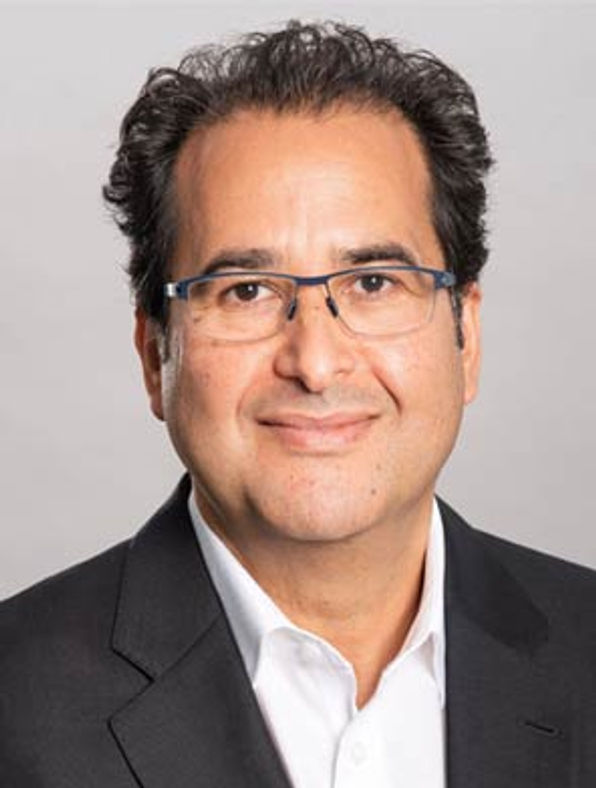
Eddine Saiah spends his days on a problem most of biology has spent the last decade trying to solve from the opposite direction. The hottest idea in drug development has been targeted protein degradation - designing small molecules that tag disease-causing proteins for the cell's own garbage disposal. Saiah, as CEO and President of Stablix, is chasing the mirror image. He wants to keep good proteins alive.
Stablix is a preclinical biotechnology company co-located in New York City and Boston, and it is built around a single, contrarian bet: targeted protein stabilization, or TPS. Where degraders remove proteins, Stablix's molecules aim to rescue proteins that disease drives the body to destroy too aggressively. The science leans on deubiquitinases - the cellular enzymes that strip the "destroy me" tags off proteins - and turns them into a therapeutic tool.
Saiah did not start the company, but he has become its center of gravity. He arrived in 2022 as Chief Scientific Officer, the person responsible for whether the science actually worked. By 2025 he was running the whole thing. That kind of move - from the lab-facing chief scientist to the top of the org chart - does not happen by accident. It happens when the board decides the person who understands the science best is also the person who should carry the business.
What he is working on now is less a product than a proof. Stablix has to show that a brand-new modality can move from an elegant idea about ubiquitin biology into molecules that behave like medicine. The company is aiming that platform at some of the hardest categories in the field: oncology, immuno-oncology, immunology, and rare diseases. None of it is easy. That appears to be the appeal.
Stablix's RESTORED platform generates a class of molecules the company calls RESTORACS - heterobifunctional small molecules that do a specific piece of chemical matchmaking inside the cell.
Saiah is, by training and temperament, a chemist. His Ph.D. came from Paris Sorbonne - Pierre and Marie Curie University, followed by postdoctoral work at the Mayo Clinic. That is a path that crosses an ocean and two very different research cultures, and it set the pattern for a career that never stayed in one lane.
The big-pharma years came at Pfizer and Wyeth, where he directed discovery teams across a wide spread of therapeutic areas - inflammation, immunology, cardiometabolic disease, rare disease. This is where the numbers came from: more than 120 publications and patents as author and co-inventor, and more than a dozen small-molecule candidates pushed into clinical trials. Moving one molecule into the clinic is hard. Doing it a dozen times is a discipline.
Then came the detour that reshaped him from scientist into company builder. As an entrepreneur in residence at Atlas Venture, he sat on the venture side of the table, helping shape early-stage companies before they existed as companies. That is a very different job from running a discovery team - it is about spotting which science deserves to become a business.
Before Stablix, he was Chief Scientific Officer at Navitor Pharmaceuticals, where he led research and early development and helped push the company to clinical stage. Each stop added a layer: the bench, the pipeline, the venture lens, the clinical push. By the time he reached Stablix, he had done nearly every job that a biotech CEO has to understand.
Ph.D. in chemistry, then postdoctoral training in the US.
Directed discovery teams across immunology, inflammation, cardiometabolic and rare disease.
Entrepreneur in residence, shaping early-stage biotech companies.
Chief Scientific Officer; advanced the company to clinical stage.
Joined Stablix as Chief Scientific Officer.
Promoted to CEO and President of Stablix.
Author and co-inventor across a body of work spanning multiple therapeutic areas and decades of research.
More than twelve small-molecule candidates advanced into clinical trials over the course of his career.
Research leadership at big pharma, a venture stint, a CSO role, and now the CEO chair - the full arc.
Rose from chief scientist to chief executive at Stablix, a rare and telling internal promotion.
Leading one of the first companies to treat protein stabilization as a therapeutic category of its own.
Runs a company deliberately spread across the two largest US biotech ecosystems at once.
The aim is bigger than one drug: prove targeted protein stabilization is a real modality, and turn the RESTORED platform into medicines for cancer, rare disease, and immune disorders.