Chief Business Officer of Alentis Therapeutics. An immunologist by training, a dealmaker by trade, and the person who keeps showing up right before the acquisition.
Claudin-1 is a tiny protein that stitches cells together. For decades, most of biology treated it as plumbing - structural, unglamorous, ignored. Alentis Therapeutics thinks it is a key. And as of November 2025, Aditya Venugopal is the man tasked with turning that conviction into deals, dollars, and partnerships.
His title is Chief Business Officer. The job underneath the title is harder to print on a card: take a clinical-stage Swiss biotech with a contrarian thesis and build the business scaffolding - capital, alliances, transactions - that lets the science survive long enough to be proven right or wrong.
Alentis is based in Allschwil, just outside Basel, and is chasing first-in-class therapies aimed at claudin-1 across two very different battlefields: organ fibrosis, where tissue scars itself to death, and solid tumors, where the same protein becomes a target on cancer cells. The pipeline runs from an antibody called lixudebart to a set of antibody-drug conjugates with names like ALE.P02 and ALE.P03. None of it works without someone who can translate the immunology into a business case. That is the chair Venugopal sits in.
What makes him interesting is not the title. It is the unusual path that led to it.
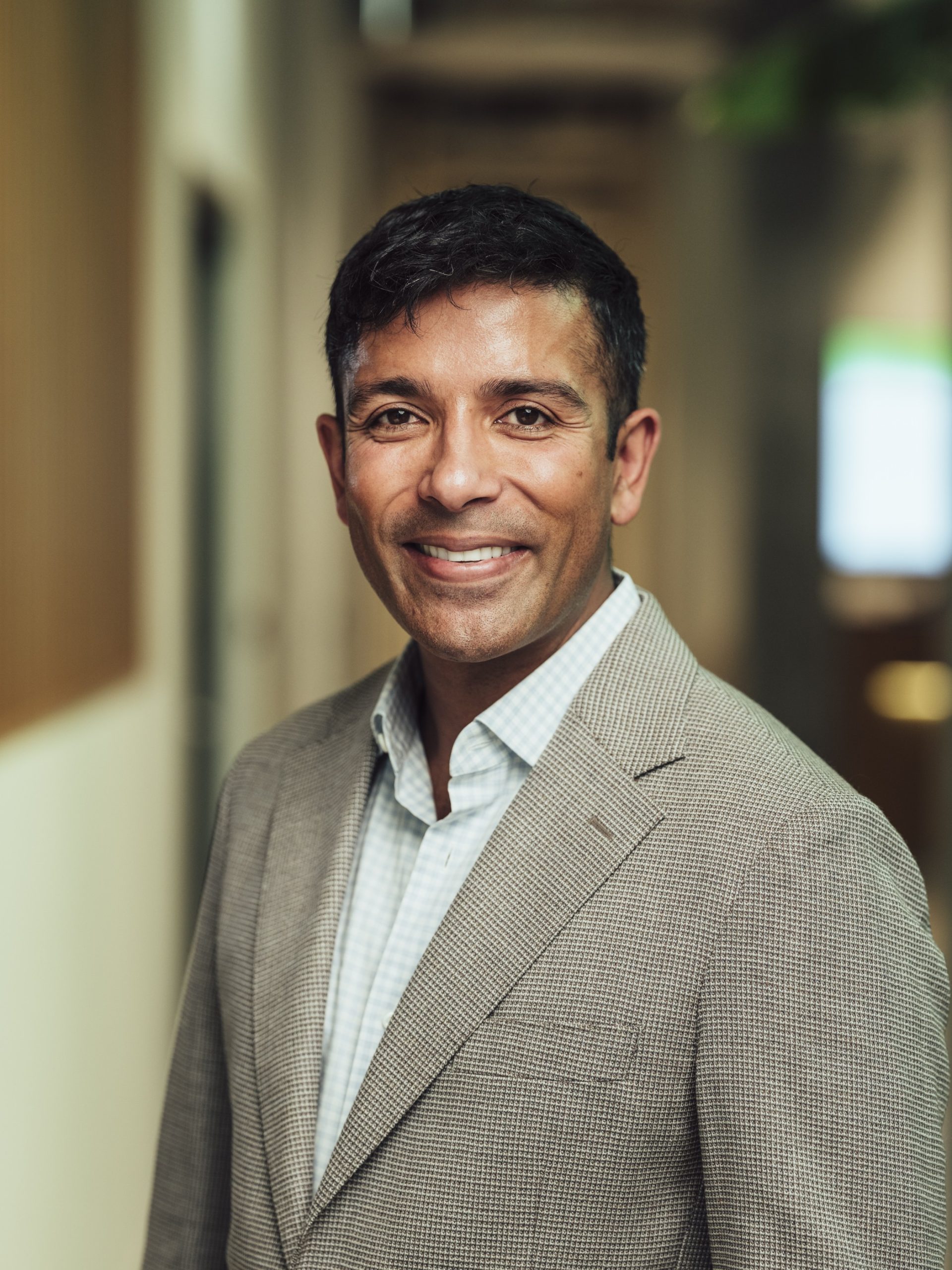
Alentis Therapeutics, Allschwil, Switzerland. Appointed November 2025. Responsible for corporate development, partnerships, and the capital strategy behind a claudin-1 pipeline spanning fibrosis and cancer.
Before the term sheets, there were petri dishes. Venugopal earned a Ph.D. in Immunology and Microbial Pathogenesis from Weill Cornell Medical College - the kind of degree that trains you to ask one ruthless question over and over: does the data actually support the claim?
That instinct turned out to be portable. Instead of staying at the bench, he spent roughly seven years in strategic life-science consulting, first at Easton Associates and then at Navigant Consulting. There, he led global cross-functional teams running business development and licensing assessments across immunology, oncology, and rare diseases - the exact terrain he would later operate in as a principal rather than an advisor.
Consulting is where a lot of scientists go to forget the lab. Venugopal seems to have done the opposite. He carried the scientific skepticism into the business conversation, which is rarer than it sounds. Most deals die not because the science is bad but because nobody in the room can tell the difference between a good story and a good molecule.
A Ph.D. teaches you to distrust your own hypothesis. It turns out that is also the most useful thing you can bring to a negotiation.
By the mid-2010s he had moved from advising biotechs to running their strategy from the inside.
Ph.D., Immunology and Microbial Pathogenesis. The training that taught him to read a dataset before he ever read a deal.
Easton Associates and Navigant. Licensing and business development across immunology, oncology, and rare diseases - global teams, hard indications.
Roughly seven years leading licensing and business-development assessments across immunology, oncology, and rare diseases.
Senior leadership roles, including work with CEO Mark Pruzanski on the launch strategy for obeticholic acid. The start of a long professional partnership.
Expanded the portfolio through platform-technology acquisitions at a company focused on rare diseases including short bowel syndrome.
Reunited with Pruzanski to help build the obesity-focused company - scaling operations, raising capital, and steering its M&A process.
VectivBio acquired by Ironwood Pharmaceuticals. Versanis Bio acquired by Eli Lilly and Company.
Joins the claudin-1 company in Allschwil - and reunites with Pruzanski once more.
There is a quiet through-line in his resume. Twice, companies he helped build were acquired by pharma giants inside roughly the same window. That is not luck so much as a skill: knowing the moment a science story becomes a business worth owning.
He led business development as the rare-disease company grew its portfolio, then was acquired by Ironwood Pharmaceuticals.
He helped scale operations, secure funding, and drive the M&A process that ended with one of the biggest names in pharma buying the company.
Intercept. Versanis. Now Alentis. Three companies, one recurring collaboration. Loyalty is its own kind of track record.
I am thrilled to partner with Mark again to help him build a truly differentiated drug candidate.
Claudin-1 normally lives between cells, holding tissue tight. In disease, it gets exposed in ways it should not - and that exposure becomes both a warning sign and a handle to grab. Here is the thesis Venugopal has to make legible to investors and partners.
When organs scar - liver, kidney, lung - exposed claudin-1 may drive the damage. Lixudebart, an antibody, aims to intervene.
On solid tumors, claudin-1 becomes a target. Antibody-drug conjugates ALE.P02 and ALE.P03 are built to deliver a payload straight to it.
No one has approved a claudin-1 therapy. That is the risk and the prize - a clean shot at a genuinely new mechanism.
The same protein, attacked two ways. A platform story, not a one-drug story - exactly the kind of narrative a CBO is built to tell.
Biotech runs on two dialects that rarely overlap. There is the language of the lab - mechanisms, assays, endpoints - and the language of the deal - valuations, milestones, dilution. Most executives are fluent in one and bluff the other. Venugopal is one of the uncommon few who learned both for real, the first through a doctorate, the second through a decade of doing it.
That bilingualism is the whole job. A Chief Business Officer is the person who stands between the scientists and the money and makes sure neither side gets lost in translation. When the science is genuinely novel - and claudin-1 is about as novel as targets get - the translator matters even more, because there is no comparable deal to copy and no obvious precedent to price against.
The hardest experiment in biotech is not in the lab. It is convincing the world to fund the lab.
His career also has a tell about temperament. Liver disease at Intercept. Short bowel syndrome at VectivBio. Obesity at Versanis. Now fibrosis and cancer at Alentis. These are not the easy, crowded, me-too markets. They are the stubborn ones. Someone who keeps walking toward hard problems is making a statement about what they find worth doing.
He started as a bench immunologist - a Ph.D. who later taught himself to read a cap table.
Two of his companies were bought by pharma giants in roughly the same stretch: VectivBio by Ironwood, Versanis by Eli Lilly.
He has worked with the same CEO, Mark Pruzanski, at three different companies.
His career is a greatest-hits of difficult indications: liver, gut, obesity, fibrosis, cancer.
He spent seven years as a consultant before ever running a deal of his own - the long apprenticeship before the principal's chair.