Breaking
$11M SEED closed, led by Tamarack Global EGRET + HERON - two unmanned cargo aircraft in build Payload: 2 TONS  |  Range: ~1,500 MI Flight tests targeted MID-2026 U.S. Navy eyes SEAGULL for contested logistics Founded 2024 - San Francisco / D.C. / Brunswick, ME Tagline: MOVE MASS $11M SEED closed, led by Tamarack Global EGRET + HERON - two unmanned cargo aircraft in build Payload: 2 TONS  |  Range: ~1,500 MI Flight tests targeted MID-2026 U.S. Navy eyes SEAGULL for contested logistics Founded 2024 - San Francisco / D.C. / Brunswick, ME Tagline: MOVE MASS
Company Dossier // Aerospace

Poseidon Aerospace

The runway is optional. Two tons of cargo, fifteen hundred miles, and nobody in the cockpit - because nobody's supposed to be.

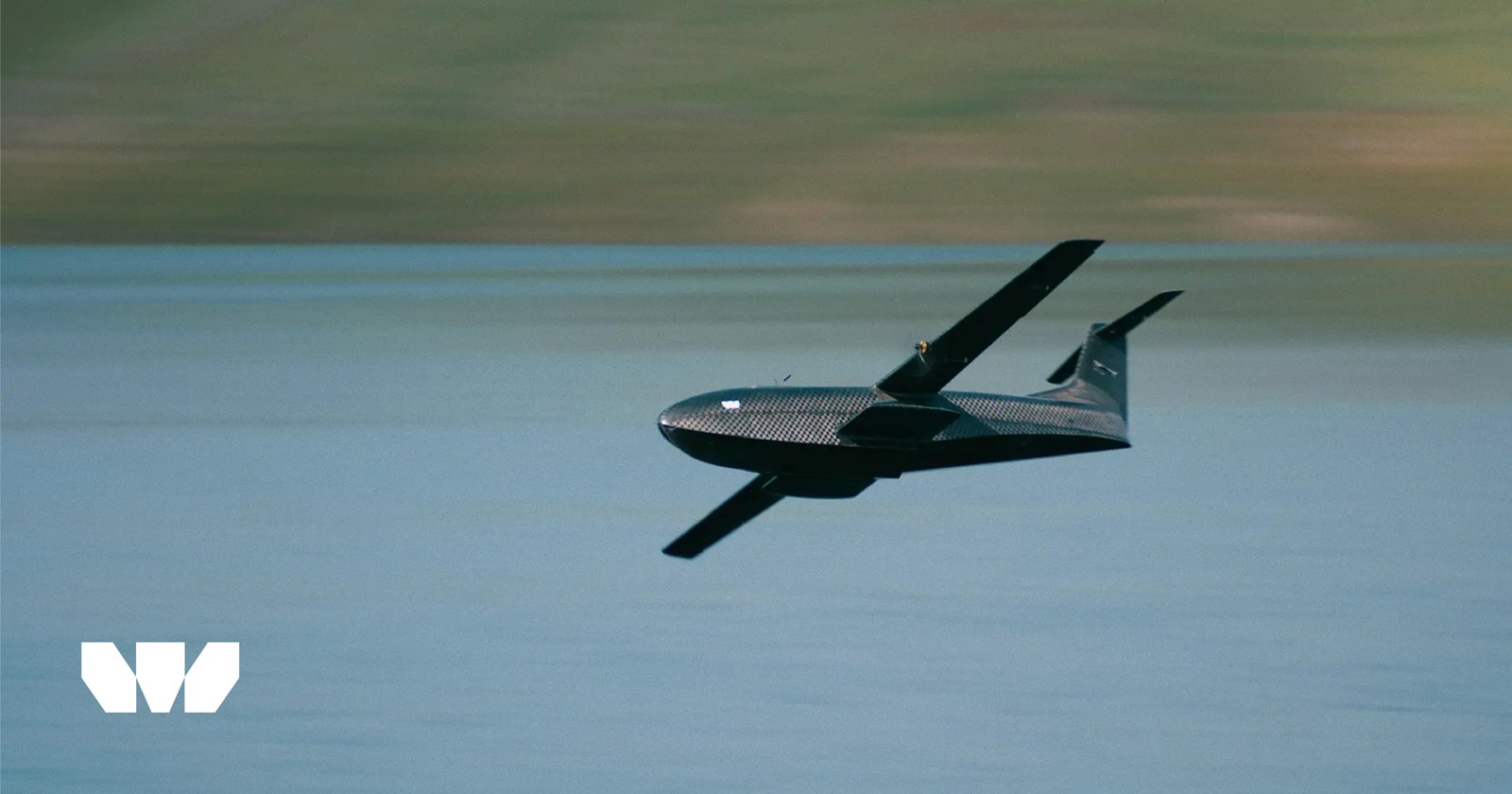
A Poseidon Aerospace unmanned aircraft flying low over open water
The Seagull, low and quiet. A quarter-scale prototype skims the water on a cushion of its own air - the same ground-effect trick a Cold War Soviet engineer used, now wearing a startup's logo.
HQ  San Francisco, CA Founded  2024 Stage  Seed ($11M) Team  ~27 people Category  Unmanned cargo aircraft
The Scene

Somewhere off a coastline with no airport, a two-ton airplane lands on the water and no one is aboard

Picture the map where the roads stop. Past the last paved runway, past the gravel strip, out where the supply chain frays into open water and contested coastline. This is exactly the geography that keeps logistics planners awake, and it is precisely where Poseidon Aerospace wants its aircraft to feel at home. No pilot. No airport. Just a purpose-built machine setting down two tons of cargo where a truck can't reach and a manned plane won't risk it.

The company is small - roughly 27 people spread across a San Francisco headquarters, a Washington, D.C. satellite office, and a manufacturing floor in Brunswick, Maine. It is young, founded in 2024. And it has a thesis sharp enough to fit on a bumper sticker: the airplane you use to haul cargo should be built for hauling cargo, and it shouldn't need a person in it. Everything else - the seaplane hull, the autonomy stack, the two-bird product line - follows from that single, stubborn idea.

"Air cargo economics have been broken for decades. We're replacing aging systems with purpose-built platforms."
- David Zagaynov, CEO & Co-Founder
$11M
Seed round, Nov 2025
2
Aircraft in development
2 tons
Target payload
~1,500 mi
Design range
The Thesis

Start with the mission. Then build the airplane.

Most cargo aviation runs on aircraft that were designed for something else and drafted into freight duty. Poseidon's founders looked at that inheritance and declined it. Their bet is that the future of air cargo is automated, unmanned, and drawn from a blank sheet for one job.

Consider the comparison they like to make. The V-22 Osprey - the workhorse of hard-to-reach military resupply - costs on the order of $30,000 per flight hour. Poseidon's entire pitch is that a pilotless aircraft, engineered from scratch for cargo, can move mass at a fraction of that. Not a marginally cheaper Osprey. A different animal entirely, priced for routes that were never economical before.

That reframes air freight from a premium exception into something closer to plumbing: dull, dependable, and routed to wherever the goods need to be - remote islands, disaster zones, contested waters, the unglamorous edges where infrastructure runs out.
The Fleet

Three birds, one flight plan

Every aircraft is named for a creature of the water's edge. That's not decoration - it's the whole strategy. These machines are built to treat coastlines, rivers, and open water as landing strips.

In development

Egret

An unmanned short takeoff and landing (STOL) aircraft, tuned for unfinished runways, gravel, and cramped landing zones where conventional freighters can't set down.

TypeSTOL
Payload~2 tons
Range~1,500 mi
In development

Heron

An unmanned amphibious seaplane engineered to launch and land from water and austere coastlines - no traditional runway required, anywhere on Earth.

Wingspan~51 ft
Storage436 cu ft
Payload~3,500 lb
Range~1,550 nmi
Prototype flown

Seagull

A 13-foot, quarter-scale proof of concept using low-altitude ground-effect flight. Small payload, big purpose: prove the idea before scaling to two tons.

Wingspan13 ft
Payload~45-100 lb
Range~110-120 mi

Specs compiled from company materials and press coverage; figures are design targets and approximate at seed stage.

The Builders

One shipped packages. One built aircraft.

Poseidon is the product of two engineers arriving at the same problem from opposite ends of "moving things." Put a logistics obsessive next to an aerospace veteran and you get a company that treats manufacturing, not the demo, as the hard part.

David Zagaynov
CEO & Co-Founder // ex-Amazon

Came out of Amazon's world of moving goods at planetary scale. Frames Poseidon around a blunt claim: cargo economics have been broken for decades, and the fix is purpose-built, unmanned platforms.

Parker Tenney
CTO & Co-Founder // ex-Lockheed Martin

Brings the discipline of defense aerospace. His line on the road ahead is refreshingly unromantic: "What matters now is manufacturing. We know how to take designs from lab to production quickly."

"The future of air cargo is automated, unmanned platforms - and these need to be built and designed from the ground up for the specific mission set."
- David Zagaynov, CEO & Co-Founder
The Money

$11 million to go from prototype to two tons

In November 2025, Poseidon closed an $11M seed round led by Tamarack Global, with a roster of venture firms and angels behind it. The capital has one job: turn the flown Seagull prototype into full-scale, manufacturable Egret and Heron aircraft, and get them flight-testing by mid-2026.

Total funding to date sits around $12.4M. For a hardware company building airplanes, that's a deliberately lean, prove-it-first posture.

Tamarack Global (lead) Draper Associates Starship Ventures Drover Ventures Cade Ventures GoAhead Ventures Fortitude VC
Seed round$11.0M
Total funding$12.4M
Team size~27

Bars scaled for illustration. Source: company + press disclosures.

Dual-Use

The Navy is watching

The same aircraft that could fly medical supplies to a remote island also answers a hard military question: how do you resupply forces when runways are targets and the waters are contested? Poseidon signed a Cooperative Research and Development Agreement (CRADA) with the Naval Surface Warfare Center's Panama City Division, and its Seagull drone has drawn U.S. Navy and Coast Guard interest for stealthy, low-altitude logistics.

One product, two markets, identical physics. When the same machine serves both a commercial feeder route and a defense mission, you don't choose - you build the platform.

The Flight Plan
2024
Poseidon Aerospace founded by David Zagaynov and Parker Tenney.
2025 // MID
Seagull prototype built; U.S. Navy reported preparing to test it for contested-waters logistics.
2025 // NOV
$11M seed round closes, led by Tamarack Global.
2026 // MID
Full-scale flight testing targeted for Egret and Heron.
The Margins

Five things that make the story stick

The Scene, Revisited

Back to that coastline with no airport

Return to where we started - the edge of the map, past the last runway. For decades that line was a hard stop. Cargo that far out arrived slowly, expensively, or by helicopter at $30,000 an hour, or not at all. The infrastructure simply ran out, and the goods waited.

Poseidon's wager is that the line moves. If an unmanned aircraft can treat open water as a runway and haul two tons for the price of a rounding error next to an Osprey, then "unreachable" quietly stops being a category. The remote island, the disaster zone, the contested coast - they become just another stop on a route. Whether the Egret and Heron fully deliver on that promise is a mid-2026 question, and the honest answer today is: we'll find out when they fly.

But the ambition is clear enough. Poseidon isn't trying to build a better version of the airplane you already know. It's trying to make the map's blank spaces boring - one two-ton landing on the water at a time.

Go Deeper

Links, feeds & footage

Watch
Poseidon Aerospace channel - demos & flight footage 🔍 Interviews & coverage
In the Press
Share This Dossier