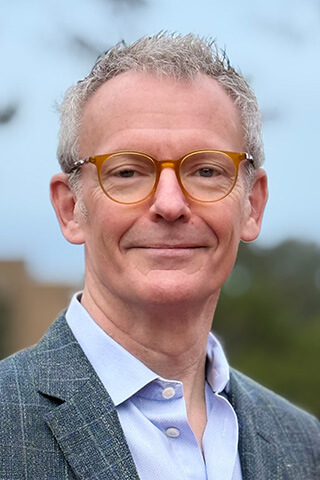
Steve Worland is standing at the strangest intersection in modern medicine: the place where a chemist's intuition meets a GPU's appetite. As CEO of Numerion Labs, he is wagering that the slow, expensive hunt for new drugs can be compressed from months into seconds without losing the part that mattered most - the human judgment.
The company he runs used to be called Atomwise. In late 2025 it became Numerion Labs, keeping the team, the programs, and a piece of software called APEX. The pitch is audacious and specific: APEX pairs deep-learning surrogates with GPU-accelerated enumeration over structured chemical spaces, and in benchmark tests it pulled the top one million biologically promising compounds out of a ten-billion-compound library in under thirty seconds, on a single NVIDIA GPU. Worland joined as CEO in February 2025. By October, the company had published the proof, co-authored with NVIDIA experts, on arXiv.
That phrase - a real-time marriage of creativity between chemist and computer - is the whole thesis in one breath. Worland is not a technologist who wandered into biology. He is a bench chemist who spent decades learning exactly how hard the search problem is, and that is why the speed numbers land differently coming from him.
His chemistry is already in your pharmacy
Consider the resume not as a list of titles but as a list of molecules. Worland's laboratory research contributed to the discovery and development of nirmatrelvir - the active ingredient in Paxlovid, the COVID-19 oral antiviral that became a household word in 2022. The same research lineage touches axitinib, sold as Inlyta, a kidney-cancer therapy. Most executives talk about impact in slide decks. Worland can point to a prescription label.
The oral COVID-19 antiviral. Its antiviral chemistry traces back to research Worland helped lead during his Agouron years.
A kinase inhibitor for advanced renal cell carcinoma. Another marketed drug his scientific work helped seed.
It started at Agouron Pharmaceuticals, where he spent thirteen years climbing from the bench to the leadership of antiviral research, eventually serving as Director of Molecular Biology and Biochemistry. Agouron was a temple of structure-based drug design before that idea was fashionable. You can draw a straight line from that discipline - look at the protein, reason about the molecule that fits it - to the work Numerion now does at machine speed.
A Roche acquisition, then a SPAC
After Agouron, Worland spent roughly a decade at Anadys Pharmaceuticals, rising through senior scientific and commercial roles to President and CEO. In 2011 he led Anadys through its acquisition by Roche, a deal valued at around $230 million. That is the trade-sale ending most founders dream about, and he had it before he turned fifty.
He could have stopped. Instead, in 2012, he co-founded eFFECTOR Therapeutics and bet on a genuinely contrarian idea: a new class of cancer drugs called selective translation regulation inhibitors, which attack the machinery that turns cancer-driving messages into protein. Under his leadership, eFFECTOR pushed two candidates - zotatifin and tomivosertib - from target concept into Phase 2, raised more than $250 million across private and public markets, and struck a research collaboration with Pfizer on eIF4E inhibitors. In 2021, he took the company public through a SPAC merger with Locust Walk Acquisition Corp.
So here is the shape of a career: sell one company to Roche, take another public via SPAC, partner with Pfizer along the way. Worland has done biotech the hard way, through both exits the industry recognizes. That is the context for why his arrival at an AI-native company is more interesting than the usual CEO swap. He is not chasing a trend. He spent decades inside the bottleneck, and he came out convinced that software could finally widen it.
What "fast" actually means
It is easy to nod past a phrase like "billions of molecules in seconds." So sit with the comparison. Traditional virtual screening of ultra-large combinatorial libraries can take months. APEX, the protocol Numerion published, does the comprehensive search in seconds - approximate but exhaustive, in the team's own framing, meaning it does not skip promising chemistry to save time.
The point is not that the computer replaces the chemist. The point Worland keeps making is the opposite: speed restores creativity. When a screen takes months, the chemist asks one careful question and waits. When it takes seconds, the chemist can argue with the machine in real time, follow a hunch, reverse it, try the weird idea. The bottleneck was never imagination. It was throughput.
Michigan, Berkeley, Harvard
The pedigree is almost theatrically strong. Worland earned a B.S. with Highest Honors in Biological Chemistry from the University of Michigan, a Ph.D. in Chemistry from the University of California, Berkeley, and went on to a postdoctoral fellowship in Molecular Biology at Harvard University as a National Institutes of Health fellow. Three institutions, three of the deepest benches in American science, one through-line: the molecular logic of how chemistry becomes biology.
That training matters to the story because it explains his credibility with the scientists he now leads. When he calls the Numerion team "world-class," it reads less like a press release and more like a peer's verdict. He has done the experiments. He knows what a false hit costs a program a year later.
The board seats and the next bet
Worland's reach extends past one company. He sits on the board of Blacksmith Medicines and has served as a director at Tracon Pharmaceuticals, Forge Therapeutics, and GenMark Diagnostics. He advises emerging biotech companies and speaks on AI in drug discovery. The pattern is consistent: he keeps putting himself wherever the science is hardest and the odds are longest.
What he is chasing now is a world where comprehensively searching chemical space is routine - so ordinary that a chemist and a computer trade ideas in a single afternoon and walk out with a better starting molecule than either would have found alone. It is an unglamorous ambition dressed in glamorous numbers. Strip away the GPU benchmarks and the goal is the same one he has had since Agouron: find the medicine faster, and find the one that actually works.
There is something fitting about a chemist who helped seed an antiviral that protected millions now spending his energy on the tooling for the next one. He has seen how long the road from idea to pharmacy really is. Cutting even a stretch of it - honestly, exhaustively, without cheating the science - would be a career's worth of impact layered on top of a career he already had.