BREAKING — Talus Bio charts the human regulome SEATTLE — $11.2M Seed+ led by Two Bear Capital, Aug 2024 THESIS — "Nothing is undruggable" PLATFORM — MARMOT runs tens of millions of compound-target reads monthly TARGETS — Brachyury · AR-V7 · STAT3 PEDIGREE — Harvard chemical biology, Bradner lab BREAKING — Talus Bio charts the human regulome SEATTLE — $11.2M Seed+ led by Two Bear Capital, Aug 2024 THESIS — "Nothing is undruggable" PLATFORM — MARMOT runs tens of millions of compound-target reads monthly TARGETS — Brachyury · AR-V7 · STAT3 PEDIGREE — Harvard chemical biology, Bradner lab
Founder · Scientist · CEO, Talus Bio

Alex
Federation,
unedited

He looked at the proteins every drug-hunter calls "undruggable" and treated the word as a dare.

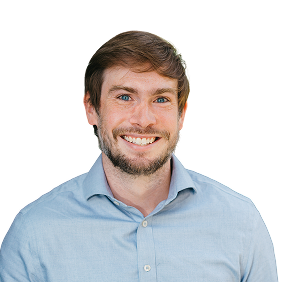
Alex Federation, co-founder and CEO of Talus Bio
FILE: Alex Federation / co-founder & CEO, Talus Bio / Seattle, WA
The Pitch

Most of biology's control panel sits behind glass marked do not touch. The transcription factors that decide which genes switch on have no neat pocket for a pill to grab. Alex Federation builds the tools to grab anyway.

Federation is the co-founder and CEO of Talus Bio, a Seattle company with a deliberately unfashionable mission: drug the proteins that everyone else gave up on. The genome is the script. The regulome is the director - the network of genome-bound proteins deciding which lines get read, when, and how loud. It shapes nearly every disease worth naming, and for decades it sat almost entirely outside the reach of small molecules.

His answer is a platform called MARMOT - Multiplexed Assays for the Rational Modulation of Transcription Factors. It drags biochemistry out of the test tube and into living human cells, measuring how thousands of regulatory proteins respond to thousands of compounds at once. Then it hands the readout to AI models trained on the data, which design the next round of molecules. The loop runs tens of millions of compound-target interactions a month.

It is an audacious bet. It is also a very specific one, made by someone who spent a decade learning exactly where the field gets stuck.

Nothing is undruggable.
— Alex Federation, the four-word company thesis
RegulomeTranscription FactorsMARMOTAI Drug DiscoveryProteomicsY Combinator S21
2020
Talus founded
$0M
Total raised
0
Employees
10s of M
Reads / month
Where The Stubbornness Came From

A chemist who learned to code, in a lab built to break rules

Federation earned his Ph.D. in chemical biology at Harvard, in the laboratory of Jay Bradner - a chemist-turned-biotech-executive whose lab Federation describes as "dynamic, multidisciplinary, entrepreneurial and rigorous." That sentence is also a fair description of how Federation now runs a company. His dissertation tackled the chemical and computational tools needed to study how transcription goes wrong in cancer. He was, in other words, already circling the regulome before it had a marketing name.

His early publications read like a map of the problem. He co-authored work on BET bromodomain proteins and how they steer enhancers - including a 2018 PNAS paper on enhancer function during adipogenesis - and on the core regulatory circuitry of chronic lymphocytic leukemia. The throughline: the most important switches in a cell are also the hardest to flip with a drug.

Then he moved to Seattle and crossed a border most scientists never cross. At the Altius Institute for Biomedical Sciences, training under genome scientists John Stamatoyannopoulos and Fyodor Urnov, he picked up computational epigenomics and proteomics to go with his synthetic-chemistry hands. Wet lab and dry lab in the same head. That combination is the whole reason MARMOT exists - it needed someone who could both run the assay and trust the math coming out of it.

Before the company, there was a detour that turned out to be training of a different kind. Federation worked as Lead Bioinformatics Scientist and Pharma Alliance Manager at SEngine Precision Medicine, a Seattle outfit screening patient tumors against drug panels. It is one thing to study drug discovery in a university lab and another to manage the seams where science meets a pharma partner's expectations and a patient's clock. He learned the operator's half of the job - the part that has nothing to do with chemistry and everything to do with shipping.

The Bradner inheritance

Jay Bradner ran a Harvard lab famous for open-sourcing a cancer compound and later led research at a major pharma. Federation took the playbook - science as a contact sport, commercialization as a duty, not a sellout - and built a company on it.

Two labs, one toolkit

Medicinal chemistry and drug screening at Harvard. Computational epigenomics and mass-spec proteomics in Seattle. Few people hold both. Federation does, and the platform is shaped like that overlap.

How MARMOT Actually Works

Inside the regulome machine

Most drug screens ask whether a molecule sticks to a purified protein in a tube. MARMOT asks a harder, more honest question: what happens to the whole control layer when you add this compound to a living cell? Here is the loop.

STEP 01

Design

AI-designed chemical libraries aimed at transcription factors and regulatory proteins.

STEP 02

Measure

Functional proteomics quantifies thousands of regulome targets inside live human cells.

STEP 03

Screen

High-throughput assays generate tens of millions of compound-target interactions monthly.

STEP 04

Learn

Foundation AI models train on the binding and functional data, then design the next round.

Source: Talus Bio platform description (talus.bio). MARMOT = Multiplexed Assays for the Rational Modulation of Transcription Factors.

"We took the leap."
ON LEAVING ACADEMIA TO COMMERCIALIZE THE REGULOME, 2020
The Partnership

A genome-sciences hallway, and a complementary obsession

Federation met Lindsay Pino in the Department of Genome Sciences at the University of Washington. She had spent her training - across the Broad Institute, UW, and the University of Pennsylvania - solving a brutal problem: how to scale up quantitative proteomics and mass spectrometry without the whole thing collapsing under its own complexity. He had a long-standing fixation on transcription factors nobody could drug. Her tooling could finally measure his targets at scale.

They founded Talus Bio in 2020, joined Y Combinator's Summer 2021 batch, and split the company the way the science demanded: Federation as CEO, Pino as CTO running the screening platform. It is a partnership built on the rare honesty of two specialists who each needed the other's half to make a whole.

Federation has a blunt test for whether any of this deserves to exist. He calls it the Mr. Burns test: build a product so good on its own merits that even a purely self-interested cartoon villain would buy it. No appeal to altruism, no mission-washing - just value real enough to survive a cynic. For a company whose mission is curing disease, it is a refreshingly unsentimental yardstick.

Build something so good even Mr. Burns would buy it.
— Federation's "Mr. Burns test" for startups

The split

Alex Federation — CEO. Chemistry, drug screening, strategy.

Lindsay Pino — CTO. Automated proteomics, mass-spec data, the screening engine.

Follow The Money

A slow, deliberate climb to $24.7M

Talus has raised in steps, not splashes - the funding of a company proving a platform before it promises a blockbuster. Total disclosed funding sits near $24.7M.

$9.75M
2022
Seed
$11.2M
2024
Seed+
$24.7M
Total
Disclosed

Sources: GeekWire (2022, 2024); Apollo/Crunchbase data. 2024 Seed+ led by Two Bear Capital, with WRF Capital, NFX, YC Continuity, Funders Club, BoxOne Ventures.

The Receipts

From bromodomains to the boardroom

HARVARD

Ph.D. in chemical biology under Jay Bradner; dissertation on chemical and computational tools for transcriptional regulation in cancer.

2018

Co-authors PNAS paper on BET bromodomain proteins and enhancer function during adipogenesis.

SEATTLE

Postdoctoral fellow at the Altius Institute; trains in computational epigenomics and invents the MARMOT platform.

PRE-TALUS

Lead Bioinformatics Scientist & Pharma Alliance Manager at SEngine Precision Medicine.

2020

Co-founds Talus Bio with Lindsay Pino.

2021

Talus joins Y Combinator (Summer 2021 batch).

2022

Raises $9.75M seed round to build out the drug discovery platform.

2024

Closes $11.2M Seed+ led by Two Bear Capital.

2025

Presents preclinical transcription-factor therapeutic data at AACR Annual Meeting 2025.

The Big Idea

The kinase bet, retold

Federation likes a particular piece of drug-history. Around the year 2000, kinases - the enzymes that pass chemical messages inside cells - were considered a graveyard for drug programs. Too similar to one another, too easy to hit the wrong one, too toxic. Then the tools caught up, and kinase inhibitors became one of the most productive drug classes in modern medicine.

His argument is simple and large: transcription factors today are where kinases were in 2000. Not impossible. Just early. The thing standing between "undruggable" and "blockbuster" was never the biology - it was the measuring stick. Build a way to see the regulome clearly inside a living cell, and the word "undruggable" quietly retires.

Talus says it has built the largest dataset of transcription-factor activity in existence, and is pointing its AI-guided programs at targets long marked hopeless - Brachyury, AR-V7, and STAT3 among them. Whether the bet pays off is, by definition, unknown. But it is the kind of bet that only makes sense if you have already decided the conventional wisdom is wrong.

The argument has a second, quieter half. A target is only as good as your ability to watch it move. Federation's contention is that the industry never lacked the will to drug transcription factors - it lacked a measuring instrument honest enough to tell a real hit from a hopeful one inside the messy chemistry of a living cell. MARMOT, in his telling, is less a drug factory than a microscope, and the drugs are what you find once you can finally see.
Brachyury - a transcription factor tied to a rare bone cancer, chordoma. Classic "no pocket" target.

AR-V7 - an androgen-receptor variant linked to treatment-resistant prostate cancer.

STAT3 - a signaling protein implicated across many cancers, long resistant to small molecules.

The frame - "Transcription factors in 2025 look like kinases in 2000."

Off The Record

Four things worth knowing

A marmot, really

The flagship platform is named MARMOT - an acronym, yes, but also a fitting mascot for a Pacific Northwest biotech named after a mountain ridge.

Bilingual scientist

He runs the assay and trusts the algorithm. Wet-lab chemistry plus computational biology in one person is rare - and it's the seam the whole company is built along.

Talus = ankle bone

The company name is the bone that bears your weight and lets you pivot. A quiet metaphor for a control layer the whole body leans on.

The goal isn't one drug. It's to retire the word "undruggable" the way the last generation retired it for kinases - and make the regulome an ordinary place to go looking for medicine.