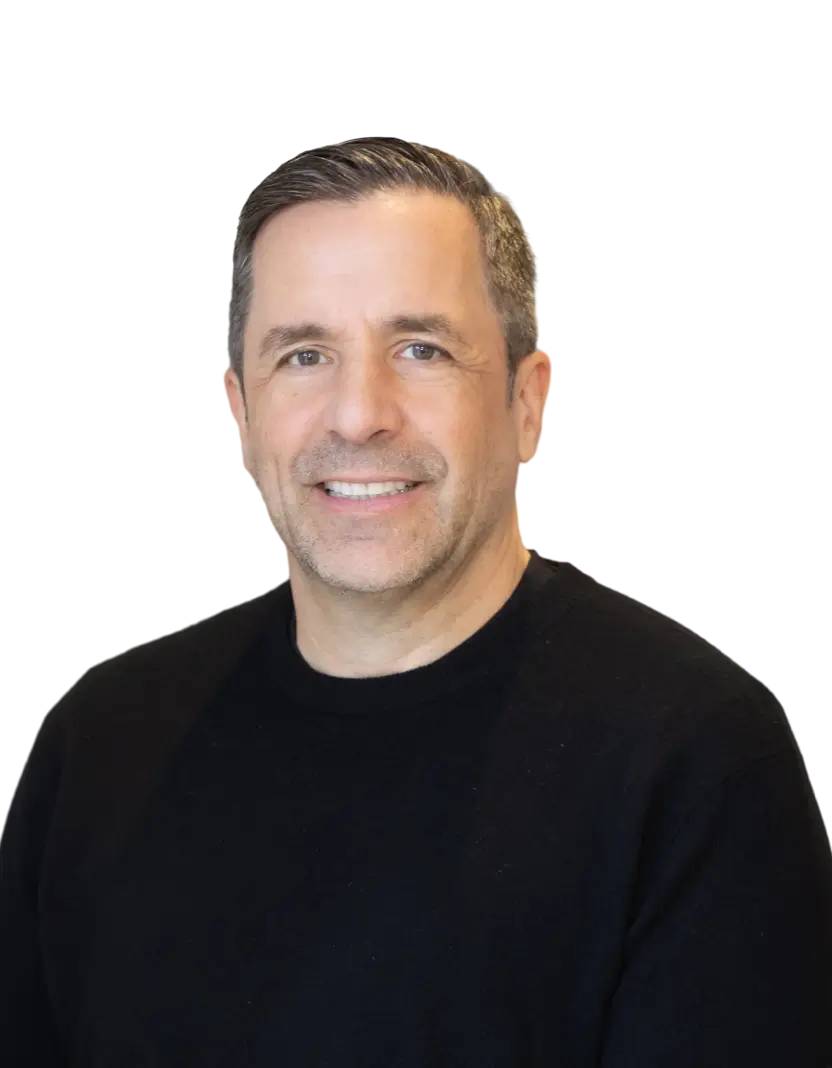
The Profile
The Architect of TechBio
Stuart Peterson runs ARTIS Ventures out of a firm belief that most investors are solving the wrong problem. While Silicon Valley spent the 2000s chasing consumer apps and the 2010s chasing enterprise SaaS, Peterson kept his eyes on a different horizon: the point where software meets biology and everything in medicine changes at once.
He founded ARTIS in San Francisco in 2001, before "TechBio" was a phrase, let alone a trademarked category. The firm backed YouTube early - back when streaming video on the internet was a technical curiosity, not an industry - and then pivoted its sharpest attention to life sciences. That pivot would define Peterson's reputation for the next two decades.
"In the last decade, it's been all too frequent for investors to shun hard science/tech and not back startups believed to have high technical risk with long gestation periods."Stuart Peterson - Medium, 2016
In March 2011, Peterson led ARTIS's first institutional round at StemCentrx - an $18M commitment in a $25M total raise. The company was working on cancer stem cell therapy, the kind of "high technical risk with long gestation" that made most VCs uncomfortable. Peterson saw it differently. He saw a team that, in his words, was "willing to let their results define them rather than their words."
Five years later, AbbVie acquired StemCentrx for up to $10.2 billion. It was the largest private transaction in the history of venture-backed biotech - and the second largest takeout of any private company in the history of venture capital, full stop. Peterson's patience and conviction had paid off at a scale that reshaped how the industry thought about early-stage life science bets.
The Forbes Midas List followed in 2017, along with New York Times and CB Insights Top 100 VC recognition and a TechCrunch Crunchies VC of the Year nomination. But the accolades are secondary to the thesis they validated.
"We cannot complain as an industry about the lack of value creation, enduring companies, and liquidity events if we aren't willing to solve big problems."Stuart Peterson - on the StemCentrx investment, 2016
ARTIS coined and trademarked the term "TechBio" to describe what Peterson had been practicing all along: applying Silicon Valley's technical speed, computational thinking, and software-style iteration cycles to the traditionally slow-moving world of biotechnology. The insight was that biology - genomes, proteomes, microbiomes - was fundamentally becoming a data problem, and data problems respond to the same tools that built Google's search engine and Amazon's logistics network.
The firm's TechBio Convergence thesis argues that the most important health companies of the next generation won't be purely pharmaceutical or purely software - they'll live at the intersection. Synthetic biology companies that iterate like startups. Diagnostic platforms that run like SaaS. Drug discovery engines powered by machine learning and trained on genomic data sets that would have been impossible to compile a decade ago.
Peterson's portfolio reflects this conviction at every stage. Current board positions include RadAi (applying AI to radiology workflow), OPYN Health, Affect Therapeutics, Conceivable Life Sciences, and Cohesity. IPO exits include Palantir, Nimble Storage, and Aruba Networks. Acquisition exits include IDbyDNA (to Illumina) and, of course, StemCentrx.
In December 2023, ARTIS closed TechBio II - a $200 million fund dedicated exclusively to the intersection of data, software, AI, machine learning, and human health. The fund's mandate is early-stage: catching companies at the moment when a founding scientist or engineer has a breakthrough insight but needs both capital and an ecosystem to turn it into a platform.
The six principles guiding TechBio II are revealing: Think Global (platforms with worldwide reach). Leave No One Behind (funding solutions for neglected diseases). Transform Systems (innovations revolutionizing care delivery). Embrace Diversity (diverse perspectives fuel breakthroughs). Persist with Grit (support founders who can overcome systemic obstacles). Stay Focused (specialized expertise for complex healthcare landscapes).
Peterson and Managing Partner Vasudev Bailey summed up the fund's ambition simply: "The age of TechBio brings with it tremendous hope and possibility. If we dream it, we can achieve it."
"The age of TechBio brings with it tremendous hope and possibility... If we dream it, we can achieve it."Stuart Peterson & Vasudev Bailey - ARTIS Ventures TechBio II, December 2023
Peterson doesn't just write checks. He co-founded FIG (Food is Good) and ONTO Health (now Onto Fertility) - putting himself on the operator side of the table alongside the investors he usually represents. It's a habit that explains why ARTIS positions itself not as a fund that gives money but as a team that "goes beyond for founders." The firm's website language is telling: not "we back founders" but "we are people who go beyond for founders." The distinction matters to Peterson.
His civic presence runs parallel to the investment work. He has been a Board of Trustees member at the San Francisco Museum of Modern Art since 2007 - longer than most of his portfolio companies have existed. He's also involved with the Human Needs Project and Tipping Point Community, San Francisco's anti-poverty coalition. In a city where tech money and cultural institutions have often been in tension, Peterson occupies both worlds without apparent contradiction.
The portfolio investments kept coming in 2024 and 2025: a $50M Series B for Rad AI, a $50M Series A for Conceivable Life Sciences, a $26M Series B for Affect Therapeutics, a $17M Seed for Network Bio, and a $20M Series A for Onto Health in April 2026. Each one is a data point in a thesis that has been running for over two decades: the best health companies are the ones that solve the hardest problems, and the investors willing to back them early will define the next era of medicine.
Career Arc