The clinical-stage company betting that severe emphysema can be treated without collapsing or cutting away the lungs - by gently propping open the airways instead.
Est. product: the BREATHE Airway Scaffold · ~29 employees · $130M raised
THE OBJECT AT THE CENTER OF IT ALL.
A self-expanding nitinol scaffold, delivered through a bronchoscope, designed to let trapped air out of an overinflated lung - no incision, under an hour.
Emphysema does its damage quietly. Over years, the air sacs deep in the lung lose their elasticity, air gets trapped, and the lung swells - hyperinflates - until every breath becomes work. More than three million Americans live with the disease. Yet fewer than one in a hundred ever receives an interventional treatment for it. Not because they don't need one, but because the options on the table are either too risky or too narrow.
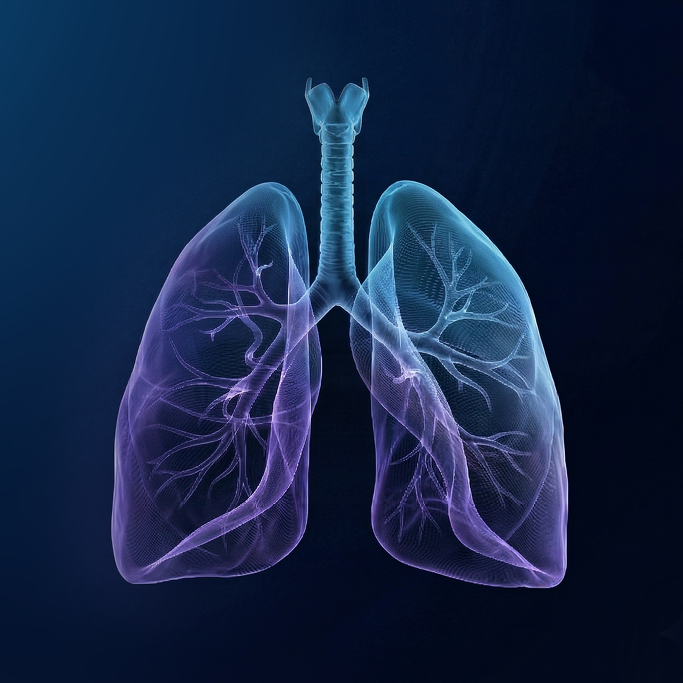
Apreo Health, a roughly 29-person company headquartered at 4040 Campbell Ave in Menlo Park, California, exists to change that math. Its answer is the BREATHE Airway Scaffold: a self-expanding implant, made of the shape-memory alloy nitinol, that a physician places through a standard bronchoscope. Rather than removing lung tissue or blocking off a lobe, the scaffold tents open a targeted airway so trapped air can escape and the overinflated lung can settle.
The distinction sounds subtle. In practice it is the whole thesis. For decades, the interventional playbook for severe emphysema has meant collapsing hyperinflated regions with one-way valves or removing them surgically. Both work by taking lung out of the equation - and both carry real risk in tissue that is already fragile. Apreo's wager is that you can relieve the pressure while leaving the healthy tissue in place.
The company was incubated at The Foundry, a medtech accelerator with a long track record of device startups, and is led by co-founders Karun D. Naga, an engineer-operator serving as CEO, and Marty Mayse, MD, its chief scientific officer. In 2025 the approach moved from promising to fundable: first-in-human data, a top-journal publication, an FDA breakthrough tag, a $130 million round, and a pivotal trial - all within roughly a year.
"Fewer than 1% of patients receive any form of interventional treatment today, because the existing solutions are either too risky or too narrow in their applicability."
The customer is the interventional pulmonologist - and, behind them, the patient who still can't catch their breath despite optimal medication. The BREATHE Airway Scaffold is designed to reach them through a procedure they already know: a bronchoscopy done in under an hour, no chest incision required.
A flexible, low-profile, self-expanding nitinol scaffold that tents open damaged airways to release trapped air. Its minimalist design aims to reduce foreign-body reaction and preserve airway side branches.
Placed bronchoscopically in under an hour. The design is intended to allow bilateral treatment - both lungs - widening eligibility beyond what current valve therapy typically permits.
Existing therapies collapse or remove hyperinflated lung. The scaffold instead relieves the pressure while sparing functional tissue - and, in early trials, reported no post-procedure pneumothorax.
Those claims come from feasibility-stage evidence, not a completed pivotal trial - a distinction Apreo itself draws. The device remains investigational. But the shape of the argument is what makes the company interesting: it is competing less on a better version of the old procedure than on a wider door into treatment.
Apreo sits in the interventional pulmonology segment of medtech, alongside device makers like Pulmonx and Olympus and the surgical alternative of lung volume reduction. Its business model is the familiar medical-device one: after regulatory approval, sell the implant and delivery system to hospitals on a per-procedure basis. For now it is pre-revenue, funded entirely by venture capital.
In May 2024 the BREATHE Airway Scaffold received the FDA's breakthrough tag, meant to speed review of devices addressing serious unmet needs.
Apreo presented BREATHE 1&2 results - 60 patients across five sites in Australia and Europe - in a late-breaking abstract at ATS 2025, with six-month data published in the American Journal of Respiratory and Critical Care Medicine.
In August 2025 the company closed an oversubscribed $130 million round and treated the first patient in BREATHE-3, its pivotal trial of up to 250 patients across 25 sites, followed for three years.
The round was co-led by Bain Capital Life Sciences and Norwest, with F-Prime and Intuitive Ventures joining as new investors and Lightstone Ventures and Santé Ventures returning. The capital is earmarked for the BREATHE-3 pivotal trial, related regulatory work, and early commercialization.
Engineer and operator leading the company from incubation at The Foundry through its pivotal-trial stage.
The clinical and scientific mind behind the tissue-sparing approach to lung hyperinflation.
Leads the biomechanical engineering behind the scaffold's conformability and durability.
Oversees the clinical program running across the U.S., Europe and Australia.
Note: links open a video search - Apreo has limited official video to date.
The Apreo BREATHE Airway Scaffold - an investigational, self-expanding nitinol implant delivered by bronchoscopy to relieve lung hyperinflation in severe emphysema.
Existing treatments collapse or remove hyperinflated lung tissue and suit only narrow patient groups. The BREATHE scaffold tents open damaged airways to release trapped air while sparing healthy tissue, aiming to treat far more patients.
Not yet. It is investigational. It received FDA Breakthrough Device Designation in May 2024 and is being evaluated in the pivotal BREATHE-3 trial.
$130 million in a Series B round closed in August 2025, co-led by Bain Capital Life Sciences and Norwest.
Menlo Park, California, at 4040 Campbell Ave. The company has roughly 29 employees and was incubated at The Foundry.