The Startup Killing the Spreadsheet Running Your Warehouse
Selling online got easy. The part after the sale - knowing what to buy, when, and how much - is still run on 1950s math and Friday-night spreadsheets. Flieber is betting AI can finally do the boring part.
Somewhere right now, a person who wanted to build a brand is instead staring at a spreadsheet. It is Friday. The tab is 40 columns wide. In one of those cells is a number - how many units of the best-selling product to reorder - and getting it wrong in either direction quietly costs real money. Guess low and the item sells out during its best week. Guess high and cash freezes in a warehouse full of stuff nobody wants. This is the unglamorous engine room of ecommerce, and it is where Flieber has decided to plant its flag.
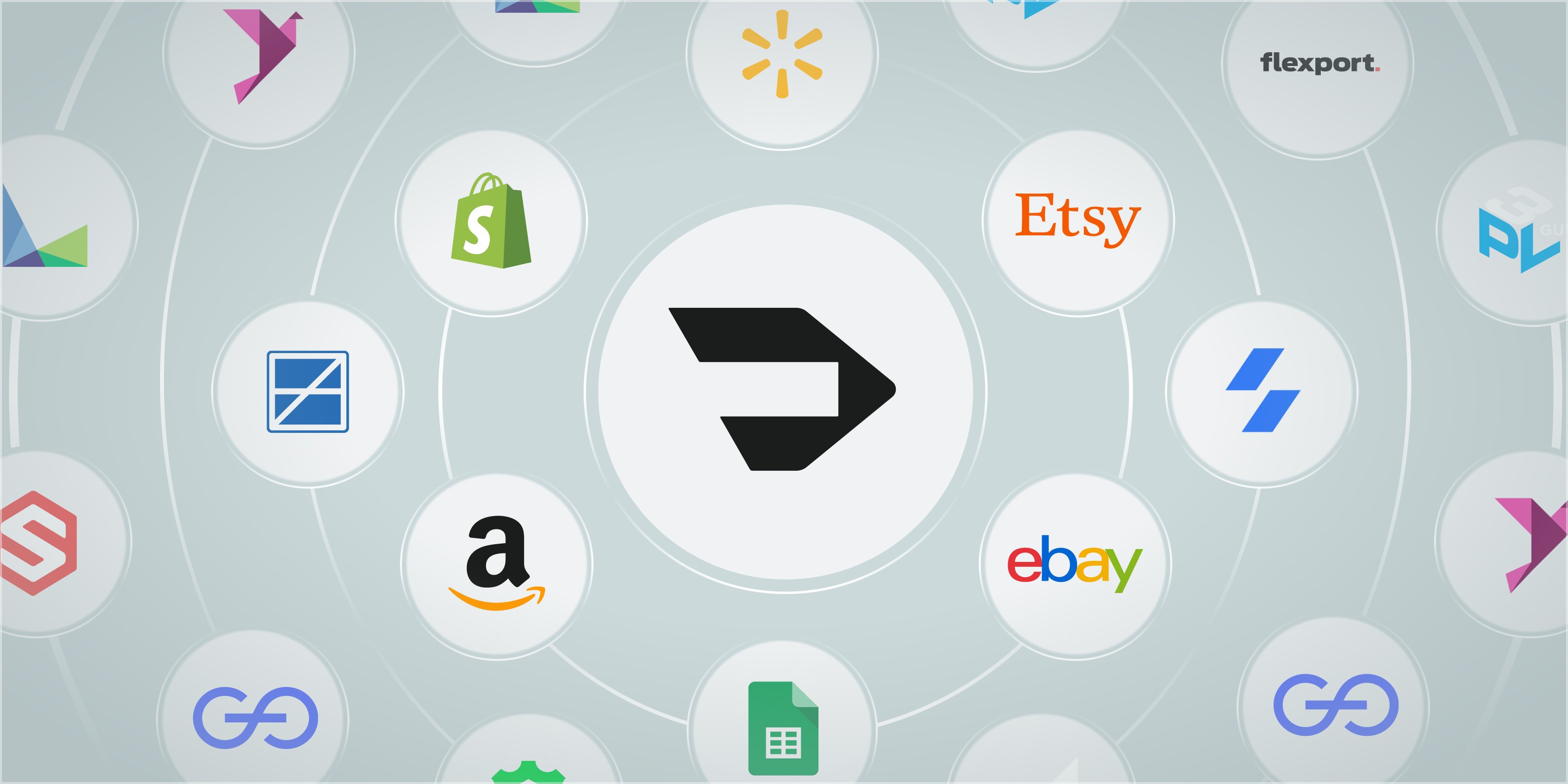
Flieber is a New York software company, founded in 2019 by Fabricio Miranda and Jair Vercosa, that sells one deceptively simple thing: a confident answer to the question "what should I buy, and when?" Its platform pulls sales, inventory and supply-chain data from every place a brand sells - Amazon, Shopify, wholesale, its own store - forecasts demand for each individual product, and hands operators a reorder plan instead of a blank cell. The company has raised roughly $20 million and, in its own telling, is chasing a problem that somehow stayed unsolved while everything around it got automated.
"Selling is so easy now with the marketplaces, but everything in order to sell is still from the 1950s."Fabricio Miranda, CEO & Co-Founder
That line is the whole thesis. Marketplaces and Shopify collapsed the cost of selling to near zero - list a product, reach the planet. But the mechanics behind the sale, the forecasting and purchasing and replenishment, never got the same upgrade. Miranda likes to point out that when retail moved online, everything went digital except one thing: the product itself is still physical, and physical things have to be counted, ordered, shipped and stored. That gap between frictionless selling and analog operations is the space Flieber is trying to own.
01 / The ProblemTwo ways to quietly go broke
Ask any operator and they will describe the same trap from both sides. A stockout is the obvious villain: your hero product goes to zero, the listing loses ranking, and a competitor eats the sale you spent years earning the right to make. But overstock is the sneakier one. It does not announce itself - it just sits there as cash you can no longer spend, sometimes for a season, sometimes forever. Brands rarely fail from one bad quarter; they bleed slowly from thousands of small inventory misses.
Miranda frames the human cost bluntly: "When you open a retail business, you like selling, but in the end, you wind up spending 80% of your time with operations." Founders who dreamed of building a brand end up as full-time inventory clerks. Flieber's pitch is not that it makes operations exciting - it is that it makes operations disappear into the background, the way payroll software made the math of getting paid stop being a monthly ordeal.
02 / How It WorksForecasting the messy stuff
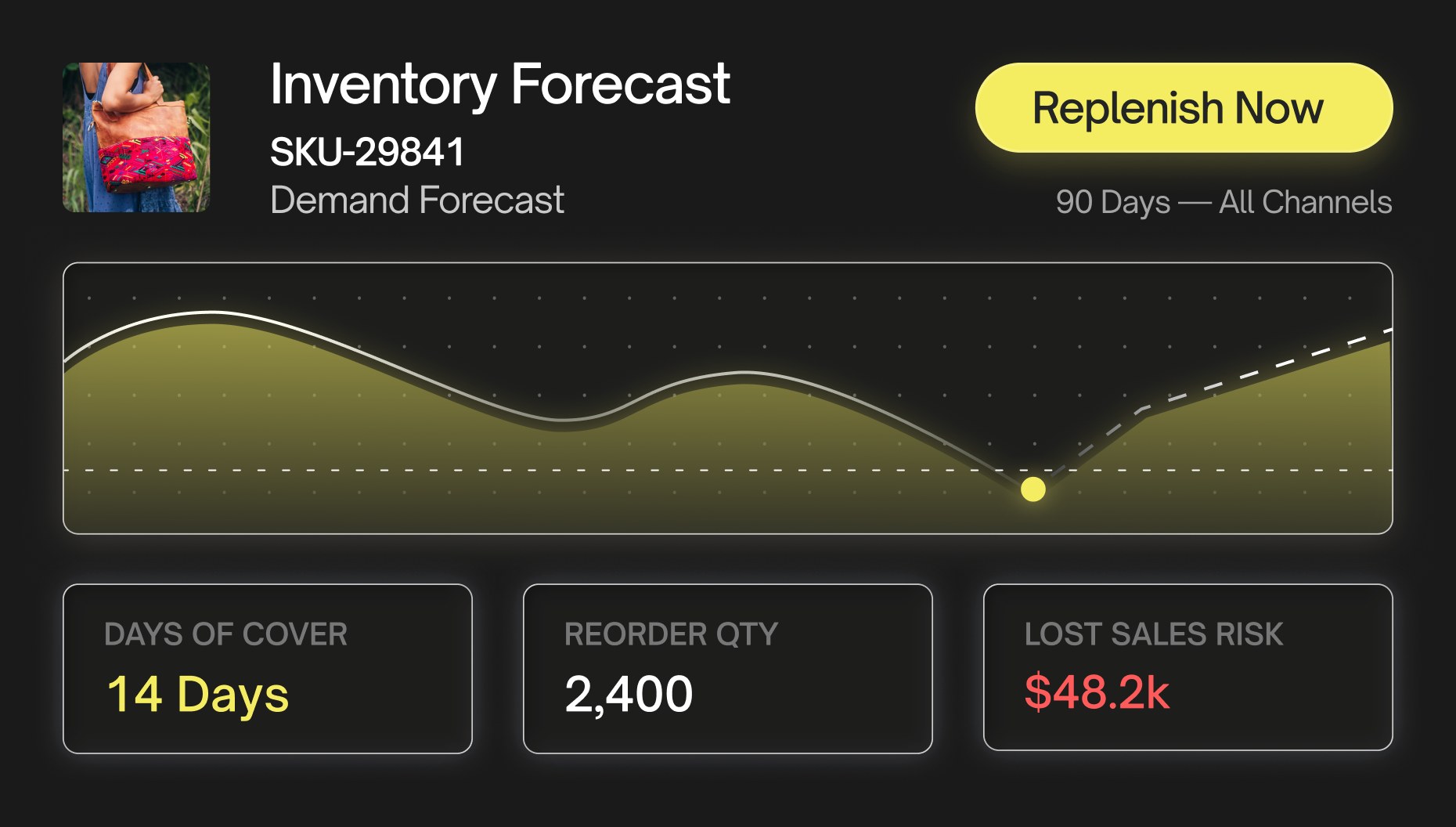
Under the hood, Flieber forecasts demand at the SKU level - meaning it makes a separate prediction for every single product, not a blanket assumption for a whole catalog. It runs those calculations continuously; the company cites more than 500,000 of them a day across hundreds of thousands of products. The forecasts feed directly into replenishment recommendations and drafted purchase orders, so the output is not a chart to admire but a decision to approve.
The interesting engineering choice is that Flieber did not try to invent its own forecasting brain from scratch. Its demand engine is built on Nixtla's TimeGPT, a foundation model purpose-built for time-series data and trained on billions of data points across retail, finance and energy. On top of that base, Flieber layers the parts that actually break simple math: kits, bundles, preorders and backorders - the composite and out-of-sequence products that a normal spreadsheet formula silently gets wrong.
Numbers like these are always worth reading as directional rather than gospel - they are averages, self-reported by a vendor, across a mix of brands. But the shape of the claim matters: Flieber is arguing that better forecasts do not just reduce waste, they lift sales, because a product that never runs out keeps its ranking and momentum. Availability, in ecommerce, compounds.
03 / The PivotKilling its own darlings
One of the more instructive moments in Flieber's short history was a decision to tear up its own product. Early on, the platform leaned on a hands-on, high-touch model. Miranda made the uncomfortable call to rebuild it to be self-serve - the kind of move that scares funded startups because it means walking away from work that already exists in favor of a version that scales. It is the sort of choice that reads as obvious in hindsight and feels reckless in the moment.
Before · The spreadsheet era
- Reorder math done by hand on Friday
- One channel at a time, manually reconciled
- Kits and bundles guessed at
- Stockouts found after they happened
After · The Flieber way
- SKU-level forecasts, recalculated daily
- All channels and warehouses in one view
- Composite products modeled directly
- Stockout risk flagged before it hits
That instinct - ship the version that scales, even at a cost - shows up again in the company's 2025 direction. Flieber began describing itself not just as inventory software but as an "AI operations platform," and rolled out a second product, Flieber Studio.
04 / Flieber StudioSoftware you describe
Studio is the more speculative half of the company. The idea: an operations manager types what they want in plain English - "alert me when any SKU is 14 days from stockout and draft the PO" - and Studio builds it. Monitoring agents watch the data, scheduled workflows handle recurring tasks, and teams can spin up custom internal tools without an engineering ticket. Flieber's framing is that work which used to take an engineering team weeks can be done before the end of the day.
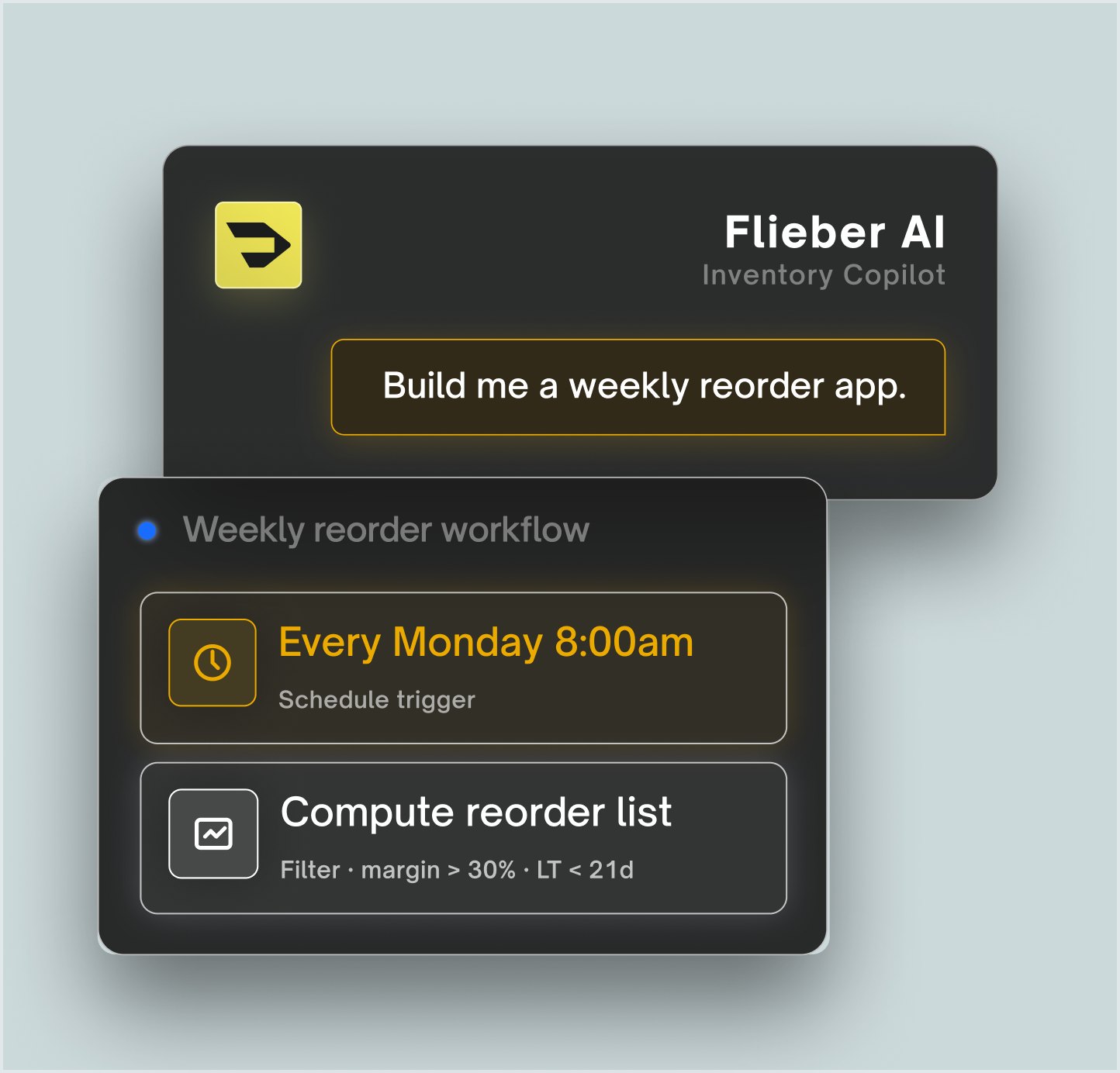
It is a bet on a broader shift: from software you learn to operate toward software you simply instruct. Whether brands adopt a build-your-own-tools layer as readily as they adopt "stop my stockouts" is an open question - but it is a coherent extension of the same mission, which is to remove the manual labor sitting between a sale and the operations behind it.
"Modern retailers of any size can now access technology used by household brands for better operational decisions."Fabricio Miranda, on Flieber's mission
05 / Who Uses ItThe unglamorous customer
Flieber's customers are the brands you actually buy from without thinking about the machinery behind them - direct-to-consumer and omnichannel sellers moving physical goods across Amazon, Shopify and wholesale. The company publicly cites 100-plus commerce brands, clients across more than 15 countries, and named users including fitness brand Lifepro and accessories maker Zugu. One customer testimonial gets to the point with unusual clarity: "Flieber killed our Amazon stockouts."
06 / The MoneyA blue-ocean bet
Flieber closed a $12 million Series A in September 2021, co-led by GGV Capital and Monashees, taking total funding to about $20 million. The earlier backing includes Cherubic Ventures and AME Cloud Ventures - the fund of Yahoo! co-founder Jerry Yang. The investment thesis is the contrarian one Flieber keeps returning to: that inventory optimization is a "blue ocean," a large and old category that no one has properly cracked for modern, multichannel brands.
The founder himself is part of the story's texture. Miranda founded and sold a water-treatment company in Brazil, then moved to the US and worked at a hedge fund before starting Flieber - a route from clean water to clean forecasts, with a quant's respect for the number in the cell along the way. It is also a New York company with a +1 650 phone number, a small tell of Silicon Valley roots.
07 / The MarketWhere it fits, and where it might not
Flieber sits in a crowded-but-fragmented field. On the software side it competes with tools like Inventory Planner, Cogsy, Netstock and Inventoro, and, further up-market, enterprise supply-chain suites such as ToolsGroup and Blue Yonder. But its most common real competitor is not a company at all - it is the spreadsheet, plus whatever inventory module a brand's ERP happens to ship with. Flieber's edge is the combination: machine-learning forecasts, multichannel data in one place, and the composite-product cases that trip up simpler tools.
Where might the bet not work? Very small brands with a handful of SKUs may not feel enough spreadsheet pain to switch. Very large enterprises may already run entrenched planning systems that are painful to rip out. And any forecast is only as good as the data feeding it - a brand with messy channel data or wildly unpredictable demand will still find the future hard to see. Flieber's answer is that most growing brands live squarely in the messy middle, big enough to hurt from stockouts, too small to afford the tools the giants use. That middle is the whole market it is chasing.
For all the AI framing, Flieber's actual promise is refreshingly small: know what to buy before you need it. No viral loop, no consumer app, no big idea about the future of everything. Just a quieter Friday for the person who used to own the 40-column spreadsheet - and a best-seller that doesn't run out during its best week. In ecommerce, the boring wins are the ones that compound.