inventory-optimization
(18)
Peak finds the money hiding on the shelf
The Manchester AI company turns inventory and pricing data into commercial decisions. Now owned by UiPath, it is taking the next step: helping businesses act on them.

SourceDay Built a Control Room for the 52% of Purchase Orders That Refuse to Sit Still
A purchase order looks final right up until a supplier changes the date, quantity or price. SourceDay built its business in that unruly gap between the ERP's plan and the factory floor - then started teaching software to resolve the safest changes on its own.

Inside the 63-Person Company Rewiring Caterpillar’s Parts Pipeline
FDC Solutions picked a narrow, unglamorous problem - getting the right heavy-equipment part to the right place before downtime becomes expensive. Twenty-four years later, its software sits between dealer ERPs, warehouse workers, robots and customers across more than 80 Cat dealer organizations.

Blue Ridge Wants to Fire the Spreadsheet - Not the Planner
The Atlanta supply-chain company spent nearly two decades turning forecasts into buying decisions. Now its biggest bet is that software should handle the routine 80 to 95 percent - and show its work when humans step in.

Kevin Young Has Spent 30 Years Making Complicated Software Sound Human
From consumer psychology to global supply chains, Kevin Young built a career around one unfashionable marketing skill: understanding the customer before reaching for the megaphone.

Aera Wants to Turn the Enterprise Dashboard Into an Autopilot
Most enterprise software tells you what already happened. Aera is betting that the valuable layer is what comes next: a governed machine that recommends, executes, and learns from thousands of operational decisions.
ToolsGroup Spent 33 Years Teaching Supply Chains to Expect the Unexpected. Now It Wants Them to Decide for Themselves
The Boston software veteran built its reputation by admitting forecasts are wrong. Its new Decion platform makes a bigger bet: probabilistic AI can help 400-plus customers act on uncertainty without handing the warehouse keys to a chatbot.
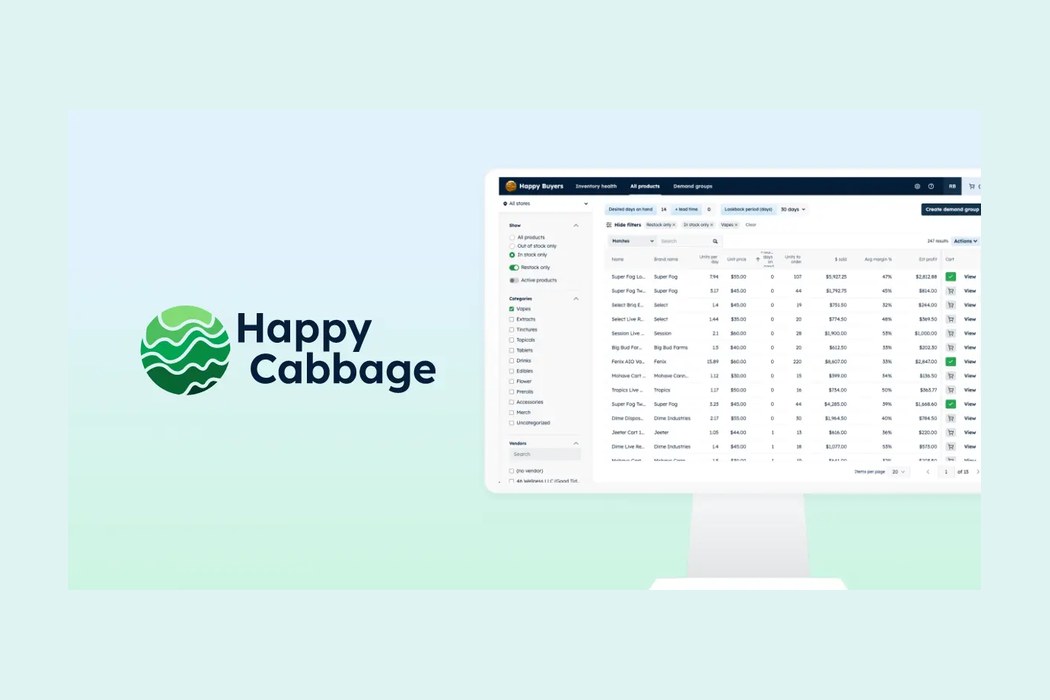
Happy Cabbage Sold Its Marketing Machine to Fix the $150,000 Problem Hiding on Dispensary Shelves
Cannabis shops do not usually run out of data. They run out of clean answers. Happy Cabbage bet that the sharper business is not sending another text - it is stopping cash from going stale in the stockroom.
Headset Turned Cannabis Receipts Into a Map - Now the Map Can Place the Order
Cannabis has thousands of products, fragmented rules and no universal product code. Headset built the translation layer - then moved from describing the shelf to helping operators decide what belongs on it.

The Startup That Wants to Kill the Spreadsheet Running Your Warehouse
Selling online got easy. The part after the sale - knowing what to buy, when, and how much - is still run on 1950s math and Friday-night spreadsheets. Flieber is betting AI can finally do the boring part.

The $3.7 Billion Bet on Giving Big Business a Better Memory
o9 Solutions wants to replace the monthly spreadsheet séance with a living model of the enterprise. Its wager: the company that remembers why a plan failed can make the next decision faster - and waste less along the way.

The $8.5 Billion Brain Behind the Things on Your Shelf
Blue Yonder is trying to give the global supply chain one shared brain - from the forecast to the forklift to the final return. Its real advantage is less about flashy AI than joining thousands of ordinary decisions before they become expensive surprises.
Manhattan Associates
The software behind a delivery promise has to reconcile a shelf, a warehouse, a truck and a customer in seconds. Manhattan Associates has spent 35 years turning that hidden choreography into an enterprise platform - and now it is teaching AI agents to help run it.

Datavations
Datavations is a New York-based, AI-powered market intelligence platform built exclusively for manufacturers and distributors in the building materials and home improvement industries. It aggregates granular, store-level and SKU-level retail data across thousands of stores to give suppliers the cross-retailer visibility they otherwise lack - helping them optimize pricing, inventory, and product assortment, and walk into merchant meetings armed with data their retail partners don't have. Founded in 2020 by Philip Odelfelt, the company raised a $17M Series A in July 2025 led by Forestay Capital.
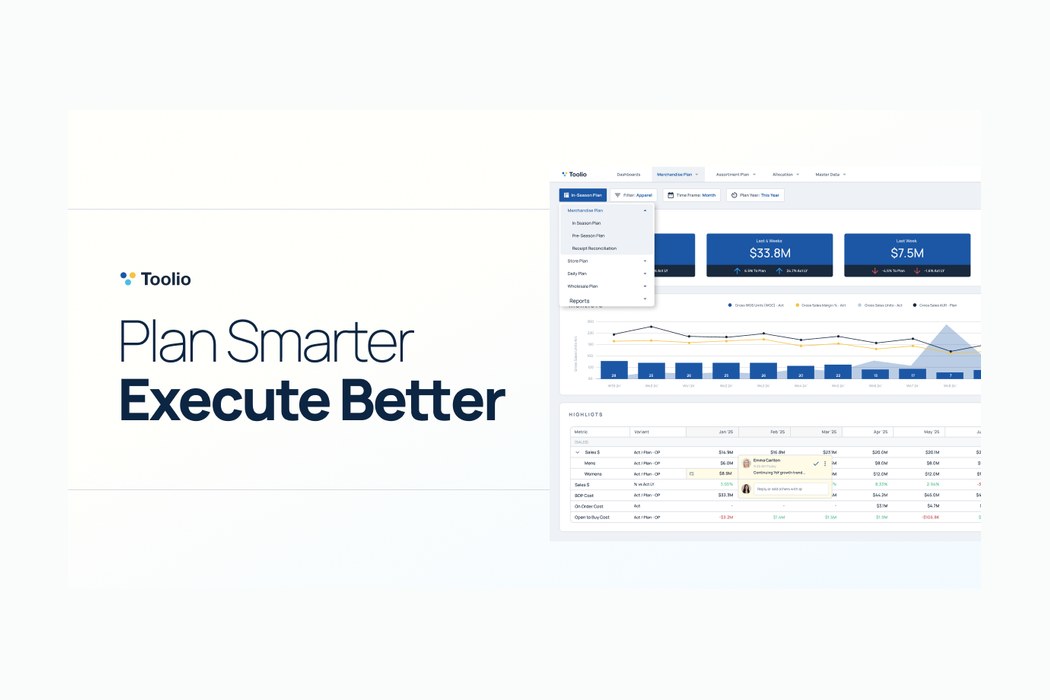
Toolio
Toolio is a New York-based retail technology company that builds cloud-based, AI-powered merchandising software. Its platform replaces spreadsheet-driven planning with connected workflows for merchandise financial planning, open-to-buy, assortment planning, demand forecasting, and allocation. Founded in 2019 by ex-Walmart engineers Eytan Daniyalzade and Berk Atikoglu, Toolio helps modern retailers and direct-to-consumer brands decide what to buy, how much, and where to place it - managing over a billion dollars of inventory across more than 100 retail customers.
DeepVu
DeepVu (legal entity Vufind Inc.) is a San Ramon, California startup building AI planning agents for supply chain teams. Its platform pairs a supply-chain knowledge graph (VuGraph) enriched with macroeconomic and trade signals, a digital-twin simulator (VuSim), and reinforcement-learning decision agents (VuDecide) to make demand planning, inventory, procurement, production and logistics decisions more resilient to shocks - while trimming cost and carbon. Founded in 2016 by Moataz Rashad and Prof. Walid Aref, the company pivoted from computer-vision roots to focus on autonomous, shock-resilient supply chain planning for manufacturers and retailers.

ThroughPut.ai
ThroughPut.ai is a Silicon Valley-based supply chain decision intelligence company that turns time-stamped operational data into fast, profit-focused decisions. Its AI platform - anchored by an engine named ELI - detects bottlenecks, senses demand, rebalances inventory, and optimizes capacity and logistics so manufacturers, distributors, and industrial operators can free up cash from operations they already run. Founded in 2017 by operators and serial industrial-tech entrepreneurs, the company works backward from real customer demand to match it with actual capacity.
Mayan
Mayan is a growth automation platform for Amazon sellers, built by MIT data scientists and paired with human Customer Success Managers who are proven Amazon PPC experts. It blends machine-learning software with expert account management to automate advertising, bidding, pricing, listings and inventory so brands can grow revenue and profit on Amazon without drowning in the data.