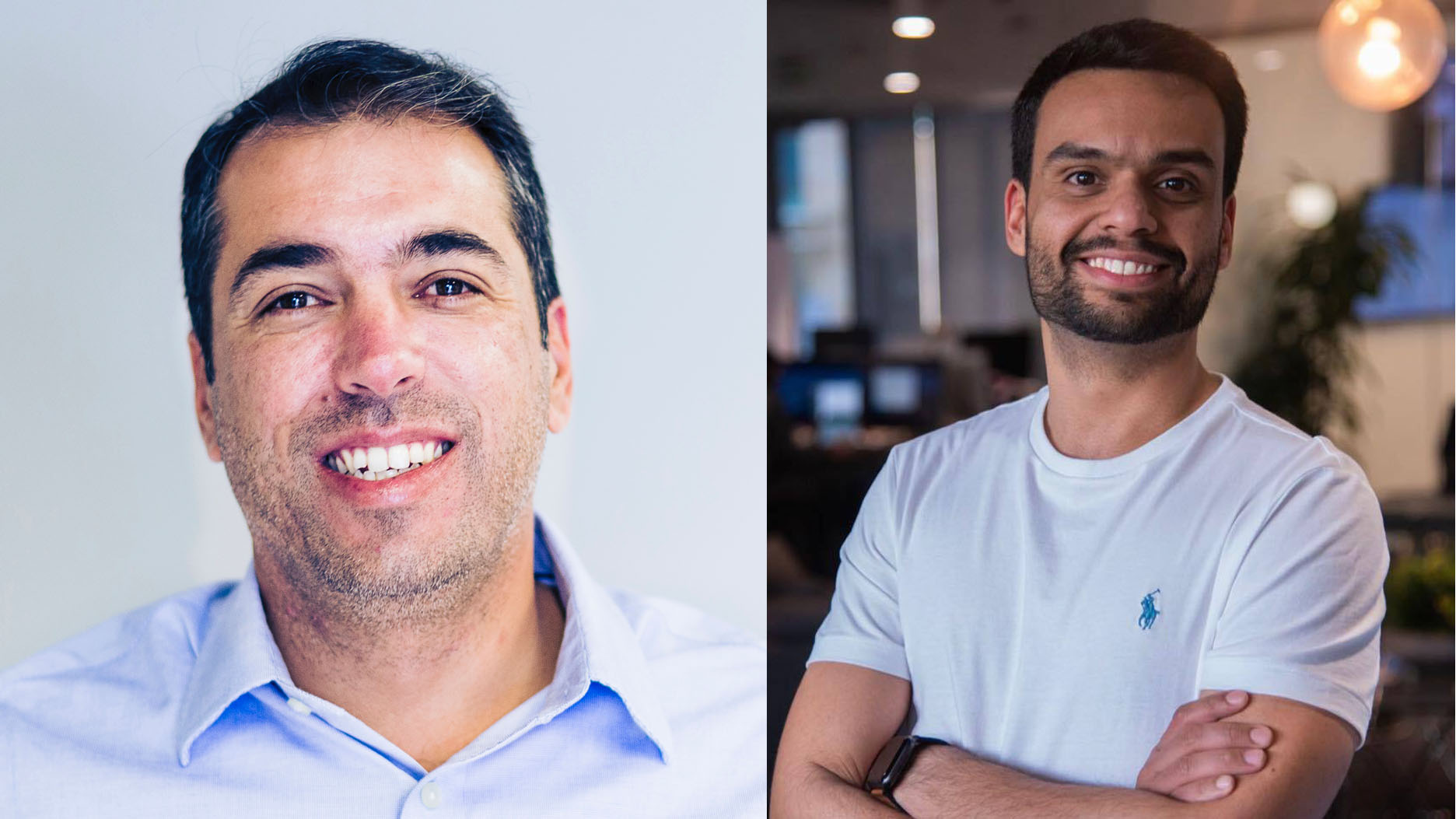
Fabricio Miranda likes the arrival of a new company before it becomes a company. The forms are signed, the tax number appears, and the possibility is still clean. He once described getting goosebumps when a new EIN lands. This is useful information about a founder on venture number seven. He is attracted to the zero-to-one passage, the moment an opportunity stops being conversation and acquires a bank account.
It also explains a career that refuses to behave like a tidy résumé. Miranda has worked in software, water treatment, investment management and online retail. He has been the young director, the operator of a business with employees in the high hundreds, the newcomer raising Brazilian capital in Manhattan and the Amazon seller discovering that brisk sales can create a terrible week in the warehouse. The industries changed. The operating question remained: what breaks when the thing starts growing?
Flieber, the New York company he co-founded in 2019 with CTO Jair Vercosa, is his current answer. It connects the scattered evidence of commerce - orders, stock, warehouses, suppliers, purchase orders and sales channels - then helps a brand decide what to buy and when. The pitch sounds like mathematics. The origin story is more personal. Miranda first had to be trapped by inventory himself.
The education of an opportunity hunter
Miranda is from Rio de Janeiro. He studied at the Pontifical Catholic University of Rio de Janeiro, completed a certificate at UC San Diego and later attended COPPEAD UFRJ for an MBA. By his account, he became the youngest director at the multinational consultancy Neoris. At 26, he made his first entrepreneurial jump and built an HR technology company.
Then 2008 arrived, and companies stopped hiring. The premise under an HR business disappeared with rude efficiency. Miranda laid people off, shut the venture and transferred its customers to a partner company. It is not the sort of first exit that gets framed in a lobby. It did teach him that a market can veto a strategy no matter how sincere the founder feels about it.
His next move was into water treatment, where he joined a friend at EcoAqua and ran operations, planning, controls and finance. The technical water work belonged to a specialist; nearly everything around it belonged to Miranda. The company grew across treatment plants and was acquired by Odebrecht, then Latin America's largest construction group. He has recalled that the scale was not visible on day one. A modest opportunity kept revealing larger rooms.
“I don't think I'm a technology person, I think I'm an entrepreneur.”Fabricio Miranda, Ops Unfiltered
That line is not a rejection of technology. It is an ordering of loyalties. Miranda likes opportunity first and tools second. He has joked that he could open an ice-cream shop. The joke works because his career makes it plausible. He is less interested in staying inside an industry than in finding the stubborn piece of reality that an operator can reorganize.
From clean water to messy commerce
Miranda moved to the United States in 2014 with his family. He wanted his children to grow up with a more global view, and he saw the American capital market as friendlier to entrepreneurial risk. Needing a way to work in the country, he returned to the thing he knew: forming a company. Victori Capital gathered investment largely from Brazilians who wanted exposure to dollars, along with some American capital.
At the fund, he met someone opening an Amazon store. The conversation pulled harder than finance. Miranda left to become a seller, and his retail operation generated $10 million in sales in its first years, according to his later account. The number is impressive until one asks what had to happen behind it. Products had to be sourced, paid for, shipped, stored, moved between locations and replenished before demand ran ahead. Advertising could make the problem worse by succeeding at the wrong moment.
The revelation was mundane and therefore valuable: a retailer begins because it wants to sell, then can spend most of its time making the sale physically possible. Marketplaces had made discovery and checkout delightfully quick. The backstage machinery still behaved as if fax cover sheets were involved.
“Selling is so easy now with the marketplaces, but everything in order to sell is still from the 1950s.”Fabricio Miranda, TechCrunch
Flieber grew from that mismatch. Its distinction is between knowing inventory and deciding inventory. A management system can report what is on hand today. Planning asks what demand may look like months from now, when an order must be placed, where the units should go and what changes if sales speed up. For a seller with Amazon, Shopify, wholesale accounts and several warehouses, the answer is not one number. It is a moving arrangement of consequences.
The decision behind the purchase order
and demand
and lead times
forecast
wait or slow ads
A spreadsheet is a formidable incumbent
Miranda talks about Excel with the respect one reserves for a rival who keeps winning. Specialist inventory companies may compete for customers, but he argues that their shared opponent is the spreadsheet. It is cheap, flexible, familiar and already filled with a company's private logic. Convincing an operator to leave it requires more than a prettier dashboard.
Flieber's own route included a correction. Its early version required extensive service and manual work. Miranda invested a little over $200,000 to build it and has said it reached $350,000 in annual recurring revenue in less than four months. The numbers looked healthy. The delivery model did not scale cleanly. A product cannot serve hundreds or thousands of customers if every arrival creates a bespoke project behind the scenes.
Later, he identified configurability as the unlock. Retailers share nouns but not necessarily processes. One brand has kits, another has stores, another sells the same SKU through several marketplaces, and each has acquired systems and exceptions over years. Software that demands a single operating pattern merely replaces spreadsheet freedom with administrative resentment. The better product bends without becoming manual again.
That lesson arrived alongside another: capital is not product-market fit in a convincing suit. Flieber announced a $12 million Series A in September 2021, co-led by GGV Capital and Monashees, bringing reported funding to about $20 million. Miranda later wrote that raising too much before the product was ready encouraged over-expansion. More people created more communication and complexity, not automatically more output. His public accounting is refreshingly free of founder mythology. Money accelerated what the company already understood, including its mistakes.
AI meets the complicated Tuesday
Miranda's skepticism about artificial intelligence is precise rather than fashionable. Retail data carries hidden explanations. A product that stocked out records fewer sales, but not because shoppers wanted it less. An influencer campaign produces a spike that may not repeat. A price change, delayed shipment or promotion can distort the curve. A powerful model fed the wrong story will produce a polished misunderstanding.
His preferred future begins with context. Sales, inventory, orders, prices and operational events have to be connected and interpreted before a model can decide responsibly. In 2026, Miranda described Flieber less as a collection of screens and more as an AI operating layer for commerce. A user can ask about a SKU from Slack and receive inventory by location, sales velocity, stockout risk and replenishment recommendations. The ambition is to let the same conversation trigger work: draft a purchase order, follow up with a supplier or pause an ad campaign while stock is scarce.
This direction fits the career. Water treatment taught him that technical machinery needs an operator around it. Finance taught him to watch capital. Amazon taught him that a sale is not the end of a process but the visible middle. Flieber is an attempt to make the surrounding system think in sequence.
“Every sale decision that you make has to be connected with the inventory impact of that decision.”Fabricio Miranda, The Opportunity Podcast
The romance and discipline of beginning
There is an amusing tension in Miranda. He loves starting, but the problem he chose punishes improvisation. Inventory rewards patience, context and an unromantic respect for lead times. A founder can revise a pitch overnight. A container crossing an ocean remains stubbornly indifferent to inspiration.
Perhaps that is why the fit works. His appetite supplies the movement; two decades of operating supplies the brake. He mentors by showing teams that famous founders were uncertain too, hoping tangible examples can widen what people imagine themselves capable of building. He also publishes his own errors: hiring too quickly, treating capital as a score, confusing service-led traction with a repeatable product. The point is not confession. It is context, the same ingredient he believes retail data needs.
The current aspiration is larger than forecasting a number in a cell. Miranda wants commerce teams to describe an operating need in ordinary language and have software assemble the workflow around connected data. The dashboard becomes temporary. The decision travels into the places where work already happens.
There will still be spreadsheets. There will still be complicated Tuesdays. Products will remain physical, suppliers will remain human, and forecasts will meet weather, taste and delay. Miranda's wager is not that uncertainty disappears. It is that an operator can meet it with better memory, clearer context and fewer tabs open. For a founder who loves the pristine instant of zero to one, that is a mature ambition: not to make the world neat, but to make its mess legible enough to act.