At Canton Car Wash, the troublesome moment could happen where no employee could see it. A customer touched the brakes. A car stopped moving as expected. Behind it, the conveyor kept delivering the next customer. In a business built around forward motion, a few feet of separation became a financial problem.
THE QUICK WASH
- Connects payments, memberships and machinery.
- Serves individual washes and chains.
- Measures that matter: damage, delays, daily friction.
According to a November 2024 DRB customer account, Canton had been spending 20 to 25 cents per vehicle on damage claims. After installing NoPileups, it reported roughly 3 to 5 cents. The software watched vehicles through the tunnel and stopped the conveyor when it detected a collision threat. The useful innovation was knowing when everything should stop.
DRB occupies that peculiar intersection of retail software and moving machinery. Its customers include express tunnel operators, full-service washes and convenience stores with unattended bays. They need to collect money, recognize members, deliver the right wash and keep vehicles separated. A receipt is only the beginning of the transaction. The same business must remember what a customer bought, recognize the vehicle on another visit and tell the tunnel which services to deliver. Each handoff creates another opportunity for delay or error.

02The register grew a conveyor belt
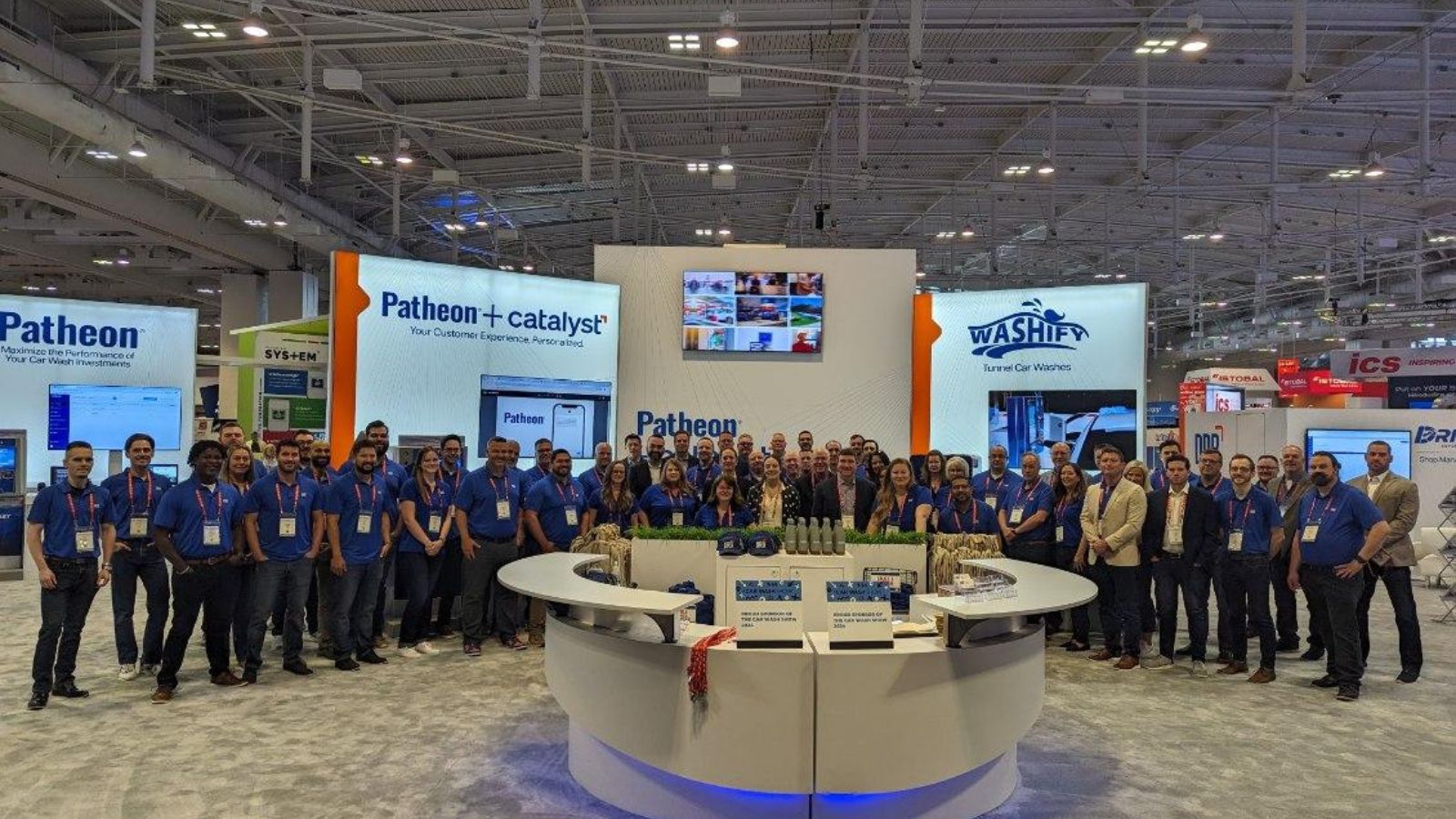
Founded in 1984, with Dale Brott identified publicly as a co-founder, DRB built its business around hardware and proprietary software for car washes. Today its range includes Patheon, the browser-based management platform; SiteWatch, its Windows-based system; and Washify, positioned for single-site and smaller operations. Sierra and Unitec-branded pay stations serve the in-bay market.
Patheon coordinates sales, wash plans, customer records and queues. License-plate recognition or RFID can identify a returning member. Beacon supplies branded mobile apps. Catalyst connects transaction data with marketing campaigns. SUDS adds pricing analysis, design and advisory services. Together, these products extend DRB’s role from taking the payment to encouraging the next visit.
The physical work remains essential. TunnelWatch controls wash equipment, adjusting when devices activate and helping limit unnecessary chemical use. Its TCS2 control station connects software instructions to relays. NoPileups adds video-based monitoring across the tunnel. Crucially, these products can work beyond DRB’s own POS ecosystem: TunnelWatch supports other POS systems, and NoPileups works with most tunnel controllers.
FOUR HANDOFFS.
- 01RecognizePlate or RFID
- 02TransactSale or membership
- 03CoordinateQueue + equipment
- 04WatchDetect collision threats
03First, the old software became the bottleneck
Time to Shine supplies a revealing example because the system it outgrew also came from DRB. The operator had used SiteWatch since opening in 2009. As the business expanded, changing prices and promotions became cumbersome, while training consumed time. The hardware could still take a payment; managing the organization had become harder.
In DRB’s April 2024 case study, Time to Shine described moving to Patheon across 13 locations in two states. Chase Cursey said pricing changes could reach every site within 15 minutes. He also reported staff training in about a week rather than months. These are customer-reported results, but they identify a concrete benefit: fewer routine decisions waiting on technical assistance.
Splash Xpress operations manager Aaron McCollum initially doubted Patheon. A February 2024 account describes what changed his view: setting up plans and discounts independently, seeing performance in a consolidated dashboard and training new employees more easily. The persuasive feature was control over ordinary work. A manager could make the change himself.
“Our members barely noticed a difference.”Chase Cursey, Time to Shine · 2024 customer account
04Cloud software, with its feet on the ground
Patheon uses a hybrid-cloud architecture. A managed computing device at each wash provides essential local services and synchronizes with the cloud. That arrangement is designed to keep sites operating through internet interruptions while giving managers remote access. It reflects the awkward reality of the product: a browser can wait for connectivity; a queue of cars is less patient.
This makes DRB a specialist in car-wash operations rather than a generic checkout provider. Its advantage is the breadth of connected products, hardware knowledge, installation and training, plus round-the-clock tunnel technical support. Integration itself is not exclusive: alternatives such as ICS WashConnect and Micrologic’s WashCentral also combine memberships, payments, reporting and hardware.
The practical comparison is therefore local and specific. Can the proposed system operate the equipment already installed? Which functions survive an outage? How will membership payment credentials move? DRB’s own migration guidance says operators converting from SiteWatch should retain a server for historical sales records needed in a tax audit. Changing software includes looking after yesterday’s receipts.
CANTON / CLAIMS PER VEHICLE
05What the connection costs
DRB earns money through hardware, software, licensing, maintenance, support and services. Its February 2026 price notice raised selected recurring fees by up to 5%, including Patheon and SiteWatch software-related charges, Beacon licensing and support, and Washify tunnel subscriptions. An operator evaluating a proposal needs the complete combination of equipment, recurring charges and implementation work.
The ownership economics are easier to pin down. In July 2021, Vontier announced an approximately $965 million acquisition from New Mountain Capital. The deal closed that September. This was a purchase of the company, not a venture funding round. Vontier’s announcement projected approximately $170 million in 2021 revenue, about 40% recurring; those were acquisition-era expectations, not current results.
The product footprint continues to widen. Vontier acquired Sergeant Sudz in June 2025, adding smart motor controls and tunnel automation alongside DRB. In May 2026, DRB announced that Super Star Car Wash was deploying Patheon across 118 sites, with completion expected during 2026. The announcement documents a rollout in progress, rather than a finished conversion.
06A lesson worth taking through the wash
For operators, the copyable idea is to measure the handoffs. Track how long a price change takes, where a queue hesitates, why conveyors stop and which memberships fail to renew. Canton’s damage costs and Time to Shine’s update times are useful because they attach software to observable work. Start with a baseline, then compare performance after implementation.
The economics depend on the site. A low-volume operation may have less to gain from elaborate tunnel monitoring; a busy conveyor has more movement to manage. Camera coverage, equipment compatibility, staff training and maintenance still matter. DRB explicitly says NoPileups cannot guarantee prevention of every collision. Better visibility helps an operator act; it does not remove the operator.
DRB is also testing how far automation should reach. In April 2026 it presented an Autonomous Sales Agent concept using Microsoft Foundry and POS data for conversational kiosk selling, while seeking pilot partners. It remains a concept, with demand to validate. After decades connecting transactions to tunnels, the next experiment concerns the conversation before the conveyor starts.