In 2017, Dale Pollak had a problem that successful founders are rarely eager to discuss: his own advice seemed to be losing its force. Dealers were selling more used cars, he later wrote, yet earning less from them. vAuto had helped persuade the trade to move inventory faster. Now the founder was wondering whether speed had become an insufficient answer.
- vAuto helps dealers decide what to buy, what to pay and how to price it.
- Its strategy evolved from fast turnover toward each vehicle’s investment potential.
- The useful lesson: inspect the profit behind a flattering sales count.
That is a more interesting starting point than another software dashboard. A founder had discovered a gap between the behavior his system encouraged and the result his customers wanted. The company’s subsequent work asks a question anyone managing stock should recognize: when every item is different, why give every item the same deadline?
01 The clock had a blind spot
Founded in 2005, vAuto built its used-car approach around live supply-and-demand information. Its Velocity philosophy emphasized turning inventory quickly. Provision brought that thinking into appraisals, stocking, pricing and listings. The dealer could look beyond a guidebook value and consider what comparable cars were doing in the local retail market.
Co-founder Michael Chiovari brought a particularly useful combination: dealership-controller experience and technology-development work at Deutsche Bank. This was software built with an accountant’s concern for what happened to the money. The inventory was tangible; its opportunity cost was less obliging about showing itself.

In November 2018, vAuto published the finding behind its ProfitTime upgrade. An analysis of nearly one million vehicles at more than 11,700 dealerships showed an inversion: cars classified as the strongest investments were priced more aggressively and held for less time than the weakest investments. Dealers were being patient with the wrong cars.
“The calendar doesn’t recognize if a car is a bad investment from Day 1.”Dale Pollak · ProfitTime announcement, 2018
The weakest investments stayed longest.
The distinction mattered. A car could be fresh inventory and already a poor investment. Another could be older and still command a worthwhile return. Calendar age remained information, but it could not supply the whole verdict.
02 Give each car its own assignment
ProfitTime GPS puts the revised philosophy into acquisition and pricing decisions. vAuto calls it Variable Management. Vehicles in high supply and low demand are candidates to move quickly; scarcer, more desirable vehicles may justify holding out for more profit. The software supplies recommended price ranges rather than asking every car to obey one age-based markdown schedule.
GPS, incidentally, means Global Profitability Solution. Its destination is a financial result. The product joins buying guidance to a planned retail outcome, so an appraiser can consider the exit before committing to the entrance. It also reports performance by acquisition channel, allowing managers to inspect whether purchases followed the dealership’s strategy.
There is an important wrinkle: paying too much does not make a car worth more to the next buyer. Pollak’s explanation of GPS pricing says acquisition cost is not a direct driver of its price recommendations. That is an awkward but useful discipline. The market has no obligation to reimburse a dealer’s enthusiasm at auction.

03 A buying system with several doors
The next problem was finding suitable cars. Global Search, announced in January 2024, brought nearly one million listings across seven source types into one view. Auctions sit alongside service-drive opportunities, lease returns, private sellers, missed appraisals, sister-store inventory and Kelley Blue Book Instant Cash Offer. A search can be filtered against the store’s acquisition strategy.
Stockwave concentrates on wholesale buying across more than 300 marketplaces. Conquest handles new-car inventory, competitor pricing, incentives and dealer trades. These are related jobs with different constraints: a new vehicle’s rebate structure requires different attention from a used vehicle’s acquisition history.
Then comes the unglamorous interval between purchase and sale. iRecon tracks reconditioning tasks, approvals and communication. Its integration lets inventory move into a repair workflow as soon as it is acquired. Intelligent Promotion and the merchandising tools help dealers present vehicle-specific information online. A shrewd purchase still needs a repair bay and a convincing listing.
Source02
Appraise03
Recondition04
Merchandise05
Sell
04 The advantage behind the screen
vAuto serves franchise dealers, independents and groups, reporting more than 14,000 dealers using its tools. It sells subscription software to businesses whose money is tied up in vehicles. AutoTrader.com completed its acquisition in October 2010, with terms undisclosed. Today vAuto belongs to Cox Automotive, alongside retail, wholesale and dealership-service brands.
That family matters to its positioning. Autotrader and Manheim supply retail and wholesale context; other Cox integrations connect customer offers, service appointments and dealership workflows. Dealerslink is a direct alternative offering inventory analytics and sourcing. Live pricing alone is not an exclusive category. vAuto’s case rests on its data connections, investment approach and coaching around the decisions.
Performance Managers bring dealership operating experience, and customers can use onboarding, monthly training and Academy certification. The human component is practical: someone must turn a recommendation into a buying rule, a completed appraisal or a changed price. A dashboard cannot attend the morning meeting on its own.
05 Show the math. Finish the appraisal.
The current product pages extend that concern upstream. Vehicle Journey brings together sales, auction and service history. Common Problems flags issues to check during inspection. The Consumer Offer Report presents valuation inputs and deductions for a clearer trade-in conversation. These features address the distance between a plausible number and a number someone can explain.
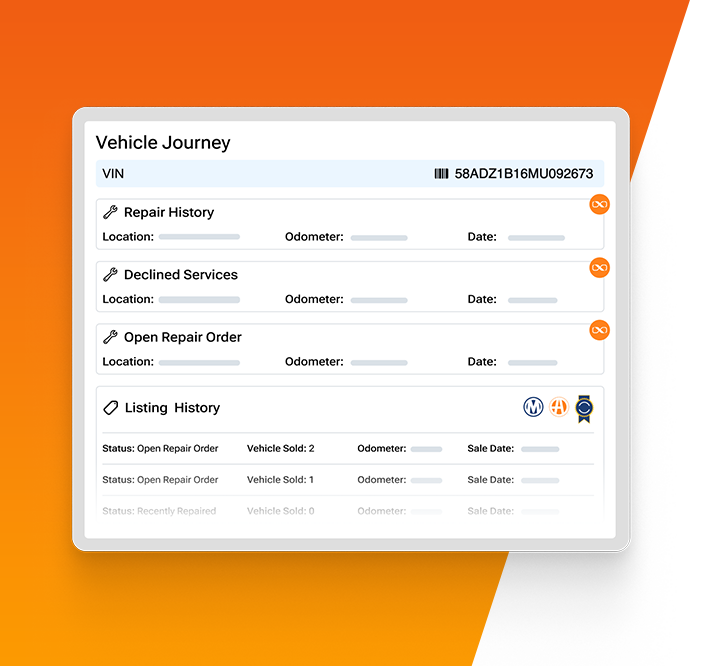
The discipline is copyable. Record the source, enter the value and finalize every appraisal. In January 2026, vAuto’s Patrick Janes warned that unfinished appraisals undermine visibility, including tracking vehicles later appearing at another dealership. Missing records make a tidy report a poor account of reality.
At Global Search’s 2024 launch, existing GPS dealers were promised access at no additional cost. Evaluating the system also requires attention to staff time, inspection quality and execution. Incomplete records, unrealistic repair estimates or ignored recommendations weaken the decisions it can support. The enduring lesson travels beyond car lots: a metric earns its place by explaining returns, and loses it when everyone mistakes motion for progress.