The bed is made. The mountains are magnificent. Somewhere behind this picture, somebody has to check the calendar, collect the payment, tell the cleaner when to arrive and answer a question about parking. A vacation rental sells escape. Running one generates an impressive amount of administration.
Hostaway has built its business around that gap. Its software brings the work of managing short-term rentals into a shared system: reservations, guest conversations, prices, cleaning tasks and reports for property owners. The customer is the operator trying to keep several properties running without hiring another person every time the portfolio grows.
That is a sturdy premise, provided people keep traveling. In 2020, that assumption became a frightening place to stand. Hostaway’s subsequent path, through a change in customers, two large funding rounds and an expanding AI product line, says as much about listening as it does about software.
01 The useful clue came over the phone
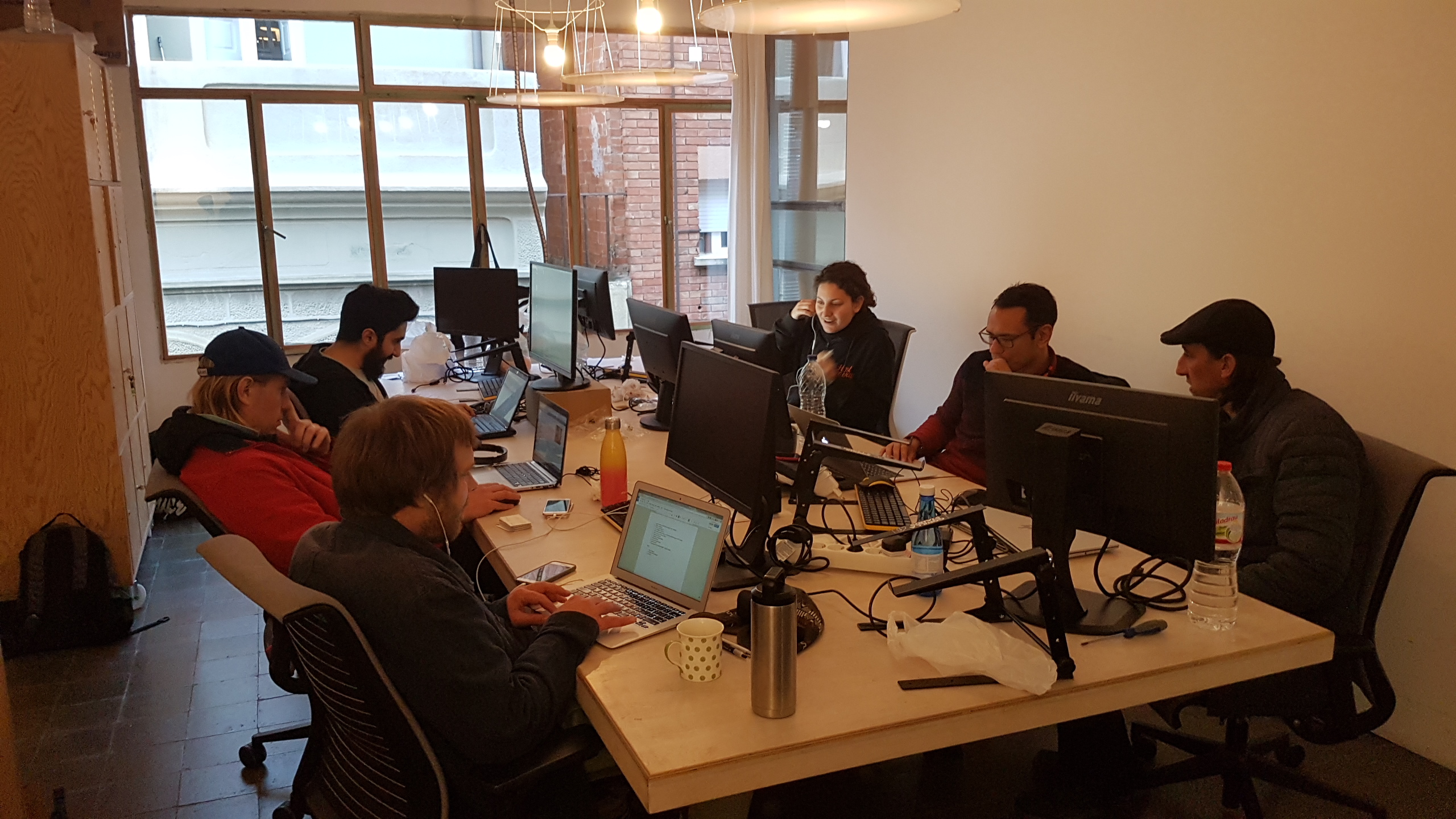
Marcus Räder, usually rendered Marcus Rader in English-language coverage, founded Hostaway in 2015 with Saber Kordestanchi and Mikko Nurminen. They arrived from software. To understand their prospective customers, they tried renting out properties themselves. Rader has said the first customer was in Portugal, with an early office in Barcelona. The business was international before it was substantial.
“We’re software people and had no experience whatsoever in vacation rentals when we started 10 years ago.”
Marcus Rader · Constellation Research interview, 2025

When pandemic cancellations hit, Rader put customers with financial worries on calls with him. In a 2022 PhocusWire interview, he recalled a pattern emerging around the 150th conversation. Managers of large properties in U.S. vacation destinations sounded more hopeful, particularly in Florida, Texas, Arizona and the Carolinas.
“So that’s where we went,” he said. The company shifted its focus toward those operators. The lesson is unusually specific: a crisis can make an average customer profile useless. Talking to enough people may reveal that one group still has a viable business, even while another is running out of road.
02 One booking, several jobs
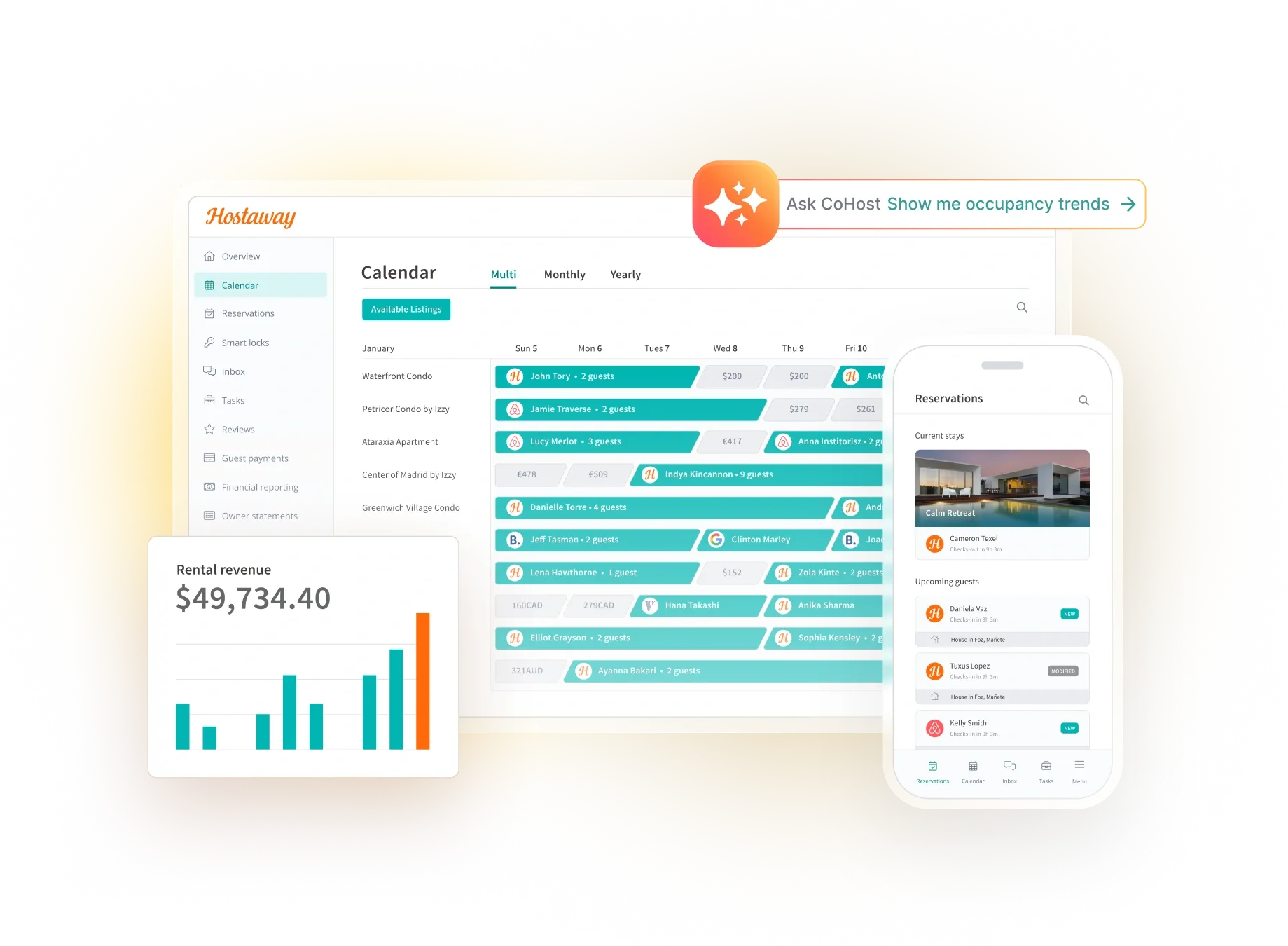
Hostaway sits between the places that sell a stay and the people who deliver it. Airbnb, Vrbo and Booking.com help travelers discover accommodation. Hostaway’s channel manager connects those storefronts to the operator’s calendar, rates and reservation records. The aim is to stop managers from maintaining competing versions of the same property.
Its direct API connections can exchange information within seconds, subject to the booking platforms’ own limits. An iCal connection, used for some other channels, moves calendar information on a schedule and carries less detail. That distinction matters: a calendar feed and a full channel integration are different purchases, even when both appear under the friendly word “sync.”
Update availability
Send instructions
Coordinate the turnover
Account to the owner
One reservation record, several connected workflows. Configuration and channel support determine the details.
The surrounding tools tackle the next handoffs. A unified inbox collects conversations. Message templates cover repeat questions. Tasks help coordinate cleaning and maintenance. Owner statements and a portal give property owners access to information without requiring the manager to assemble every answer in an email. Mobile apps carry that work beyond the desk.
03 A ski-town studio explains the customer
Lifty Life offers a less abstract picture. In Hostaway’s customer case study, co-founder Keiran Griffiths was managing a Domino’s Pizza franchise in Whistler when he and his brother Connor bought a nearby studio. Keiran rented it on Airbnb while visiting family. A place to sleep near work became the beginning of a property-management business.

The published account describes 40 properties across British Columbia and Alberta, 13 full-time employees and a December 2020 start with Hostaway. Those are the case study’s figures, rather than a live inventory. Connor calls Hostaway the company’s “all-in-one.” A vendor-selected success story cannot isolate software’s contribution to growth, but it shows the work that needs organizing.
Imagine applying that same operating routine across distant destinations. A manager needs each property’s instructions, availability and responsibilities to remain distinguishable while the team uses a common process. The attractive feature becomes repeatability: adding another home without inventing another administrative system around it.
04 The funding got bigger than the inbox
In May 2023, Hostaway announced a $175 million investment from PSG Equity. In December 2024, it announced a further $365 million growth investment led by General Atlantic, with PSG participating. Together, the announcements total $540 million. That measures investment announced across two deals, not sales, profit or a software-development bill.
PSG Equity led the 2023 investment. General Atlantic led the 2024 investment, with PSG participating.
General Atlantic described the money’s intended uses as international expansion, product development and AI initiatives. Its announcement also described a fully remote workforce of more than 230 people across 44 countries. Hostaway subsequently said it had reached a $1 billion valuation in October 2025. That is a dated company announcement, not an independently observable share price.
There is a revealing bit of theater in this otherwise operational business. The company’s 2023 fundraising video borrowed from Better Call Saul. Its user conference is called Hostchella. Even the people selling owner statements seem to want an occasional break from owner statements.
05 An all-in-one with room for other tools
Hostaway combines native features with a marketplace and an open API. Its current homepage advertises more than 300 integrations. Beyond, for example, lists a Hostaway connection for its revenue-management service. A manager can buy a central operating system while retaining specialist software for particular jobs.
This is a meaningful part of its positioning, though it does not make the competitive field disappear. Guesty, Hostfully, Lodgify and Hospitable also address overlapping rental-management needs. Buyers are comparing the depth of individual workflows, the quality of connections and the commercial package, as well as counting features.
The useful question in a demo is whether the manager’s actual process survives the trip through the product. Follow one reservation through a date change, a guest question, a cleaning assignment and an owner statement. Then check which steps need another subscription. A long integration directory is valuable only when the connections needed by this particular business work well.
06 The assistant already knows the property
Hostaway’s newer pitch gives AI more responsibility inside that system. AI Replies can draft guest messages and send automatic responses. AI CoHost goes further into the business record: the company describes an assistant that can examine live operational information, answer questions and perform supported actions, with permissions controlling its reach.
The potentially useful difference is context. A general-purpose chatbot may need an operator to supply booking details before it can say anything relevant. Hostaway’s assistant starts closer to the reservations, reviews and listing information. Its examples include examining guest complaints, improving descriptions and answering questions about owner payouts.
Those are product capabilities to test, not a reason to retire judgment. An elegant answer built on an outdated house rule is still an outdated house rule. A sensible rollout starts with routine questions, checks drafts against actual property information and expands automatic action only after the team understands the mistakes it makes. Refund disputes and unusual access problems deserve particular care.
In August 2026, Hostaway reported first place on Capterra’s vacation rental software shortlist, with an 89/100 score. Recognition helps a buyer assemble a shortlist. The reservation test still has to happen.
07 Price the whole shift
Hostaway sells through a custom quote. Its pricing form begins by separating managers into listing-count bands: 2-14, 15-49 and 50-plus. Its service terms distinguish the core platform from add-on services that can carry separate fees. The sensible budget includes the agreed recurring charge, any setup work, optional services and applicable payment costs.
There is also the operator’s time. Someone must prepare property details, connect accounts, check channel settings and decide who can change what. Hostaway’s Booking.com export instructions explicitly leave managers responsible for checking their listings and settings. Automation does not make that setup disappear; it makes the quality of the setup matter repeatedly.
Subscription + optional tools + payment costs + setup time
Compare that with the work you can actually remove.Direct booking tools add another consideration. Hostaway can provide a branded booking website, and eligible Google Vacation Rentals listings can send travelers there. Google’s connection requires a published Hostaway booking website and qualifying property content. A website supplies somewhere to complete a reservation. Attracting a guest to that address remains a separate job.
08 Keep the human where the exception lives
The company’s stated culture emphasizes employee ownership, empathy, critical thinking and sisu, the Finnish idea of grit. Its mission centers on helping property managers grow. Those promises become tangible at the point where software meets an exception: the wrong information, an unexpected cancellation or a guest who needs somebody to understand the problem.
For a small operation with few channels and little administrative repetition, a broad platform may add more setup than it saves. For a growing manager juggling owners, staff and multiple booking sites, the common record can be much more valuable. Neither situation is settled by an AI badge or a funding headline.
The repeatable idea in Hostaway’s story is to study the work closely enough to know what deserves automation. Rent a property. Call the customer. Trace the reservation. Fix the information. Then let the software handle another routine exchange, while somebody keeps an eye on the guest standing at the door.