Imagine the moment a guest arrives at a vacation house. A booking engine has done its work. The photographs have persuaded. The rate has been accepted. Now somebody has to make sure the door opens. That little transition, from a transaction to a threshold, explains a surprising amount about Evolve.
Brian Egan and Adam Sherry founded the company in 2011 around a practical observation: owners needed help selling stays, but buying help did not have to mean handing over every part of the house. Evolve calls its approach hybrid management. Its particular skill is drawing a line through a complicated job.
- Evolve handles the online work: listings, rates, bookings, and remote support.
- Owners arrange the local work: cleaning, maintenance, and a nearby guest contact.
- The fee starts at 10%. More support costs more; the house still has operating expenses.
The job hidden inside the job
A homeowner is really running several small businesses at once. There is advertising, revenue management, customer service, housekeeping, and the occasional plumbing emergency. Some tasks can be handled across thousands of homes. Others require a person who can drive over.
Evolve concentrates on the first group. It creates listings with professional photographs, distributes them across booking sites, adjusts rates, handles reservation inquiries, and provides round-the-clock remote guest support. Its team can recommend local partners, but the owner chooses a local Guest Contact and arranges physical care.
Evolve’s current company-history page reports more than 30,000 owners, 16 million guests hosted, and $5 billion in rental income earned. Those last two numbers are cumulative. The money belongs in the owners’ story: it is rental income generated through the network, rather than Evolve’s own company revenue.
This puts Evolve in an interesting position. Airbnb and Vrbo are channels through which it finds customers. They are also tools an owner could use independently. A local full-service manager offers another alternative, taking responsibility for more of the physical operation. Evolve sells the space between those choices.

A price on the dividing line
The current plans make that division concrete. Core charges a 10% management fee. Plus charges 15%, adding a Dedicated Performance Advisor, a Premium Support Desk, increased listing exposure, and expanded benefits. Pro is priced for portfolios, with multi-property tools and a dedicated booking website.
New owners also face a published $250 onboarding fee, plus $25 per additional property. Management fees begin after guest check-in. Cleaning and maintenance still need a budget. The seductive thing about a percentage is how easily it can look like the whole price.
On an illustrative $1,000 fee base
Management fee only. Equal fee base assumed. Onboarding, local care, taxes, and other applicable charges excluded.
Suppose, purely as an illustration, a property has a $1,000 fee base. Core takes $100; Plus takes $150. The extra support costs $50. For an owner comparing revenue outcomes alone, Plus would need roughly 5.9% more gross revenue to match Core’s remainder, assuming everything else stayed equal. Advice can be valuable. It should still survive arithmetic.
For travelers, the product is less about percentages than predictability. Evolve’s Rest Easy Promise describes homes checked in person, owner background checks, and help when a property falls short. Guests should still read the cancellation conditions for their particular booking and channel.
Then the forecast met the market
By February 2022, Evolve had an expansion story investors liked. It announced $100 million in financing led by Durable Capital Partners, bringing announced funding to $235 million. The company reported more than 19,000 homes and a 78% increase in net booking value during 2021.
The first assumption to break was the revenue forecast. In May 2023, Egan said marketwide supply had grown faster than demand. Rates, bookings, and revenue per property were below expectations. Evolve cut 164 jobs, or 14% of its workforce.
In September came another reduction, approximately 20%. Egan’s explanation went beyond the market: capital had been deployed quickly, priorities had spread, and spending had become harder to distinguish from investment.
“we lost focus”
Brian Egan · September 2023 team update
That admission matters because a business can own few physical assets and still build an expensive organization. Evolve’s reset was about scrutinizing where dollars and working hours went. The useful lesson for another founder is specific: test staffing and spending against weaker revenue scenarios before a favorable market makes them look permanent.
The phone call becomes a setting
The everyday pricing problem keeps changing, too. In its December 2025 update, Evolve described travelers hesitating in slower seasons and booking closer to arrival. It responded with more active midweek pricing, weekly and monthly discounts, and tools for filling awkward calendar gaps. A vacant Tuesday requires a different decision from a holiday Saturday.
The newer product story is smaller and more revealing. Evolve’s August 2026 release says owners can change booking notice windows, turnover days, pet fees, and listing content themselves. They can also control who sees information in the Owner App.
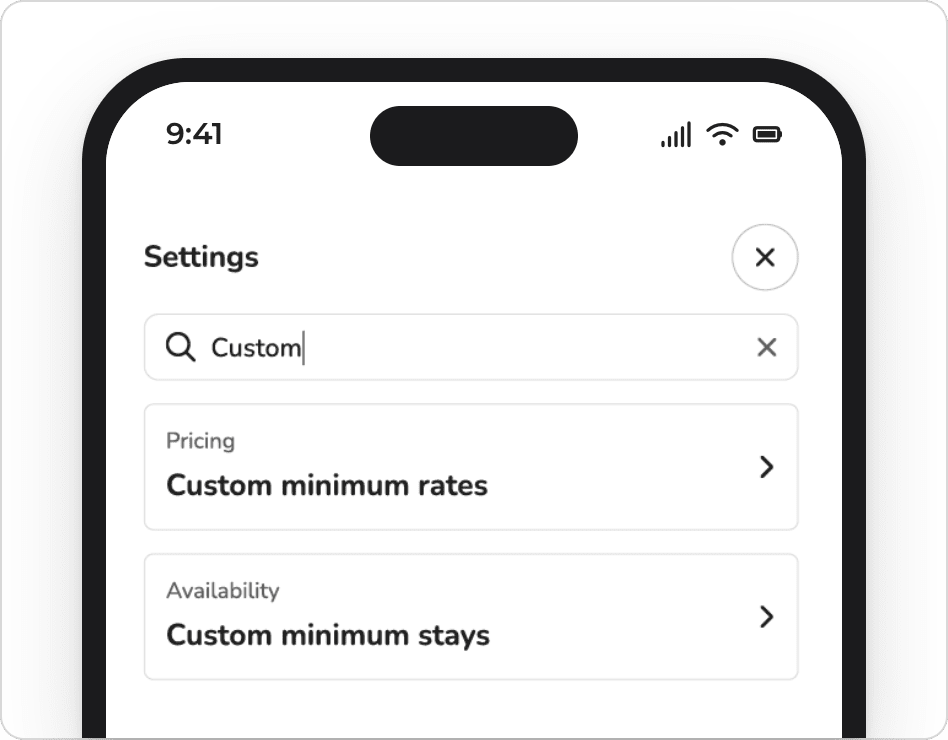
These are modest conveniences with an operational consequence: fewer everyday decisions need a support call. The release explicitly credits owner feedback. It also adds AI-assisted review responses, with drafts owners can edit and Evolve checks before publication. Automation has a defined checkpoint.
The $249-per-listing annual Mid-Term Rental Add-On takes the same idea into longer stays. Eligible furnished homes with minimum stays of 28 nights or more gain marketing on Furnished Finder, Zillow, Apartments.com, and Blueground, plus monthly pricing support.
Someone still has to turn the key
The fit is clearest for owners who can organize reliable local care but want help selling and administering stays. A distant owner without a dependable cleaner or guest contact has a different problem. More distribution cannot solve an unattended house.
The company also connects direct bookings to its Building Hospitality program, which commits to at least $100,000 in annual donations. It is a concrete expression of the care emphasized in its public values. As with the management model, the commitment becomes easier to understand once it has a defined job and a number attached.
That is also the part another business can copy: separate tasks by where they must happen, assign responsibility plainly, and charge for the work you can repeat well. Then examine every handoff. A guest experiences one stay, however many companies helped arrange it. At the door, the organizational chart disappears.