At Locale, a hospitality operator spread across several markets, finding out whether a room was ready could require somebody to walk into it. The cleaning might be finished. The information was still travelling. Housekeeping updates lived in text messages, WhatsApp, and email; managers pieced them together while guests waited for an answer.
- Breezeway connects reservations to cleaning, inspections, repairs, and guest messages.
- Its sweet spot is the handoff between office teams and people doing the work.
- The practical test: can everybody see what changed, who owns it, and whether it is finished?
In Breezeway’s account, connecting Locale’s Mews reservation system to housekeeping changed that arrangement. Booking changes generated or updated tasks; completed work updated room status. Locale reported an 85% reduction in complaints about readiness. This is a customer story published by the vendor, rather than a controlled experiment. Still, the mechanism is revealing: the room and the record of the room finally agreed.
Give the work a visible finish
Breezeway sells software for the interval between a reservation and a guest who can comfortably open the door. Its customers include vacation rental managers, hosts, hotels, serviced apartments, and cleaning businesses. The current homepage reports more than 350,000 properties across 90 countries. That is a measure of its footprint, not a count of hotel rooms it owns.
The useful distinction is between selling accommodation and preparing it. A property management system handles the reservation side. Breezeway plugs into that system and helps turn a booking into work: assign the clean, arrange the inspection, track the repair, check the supplies. Field workers use a mobile app; managers follow progress from a shared dashboard.
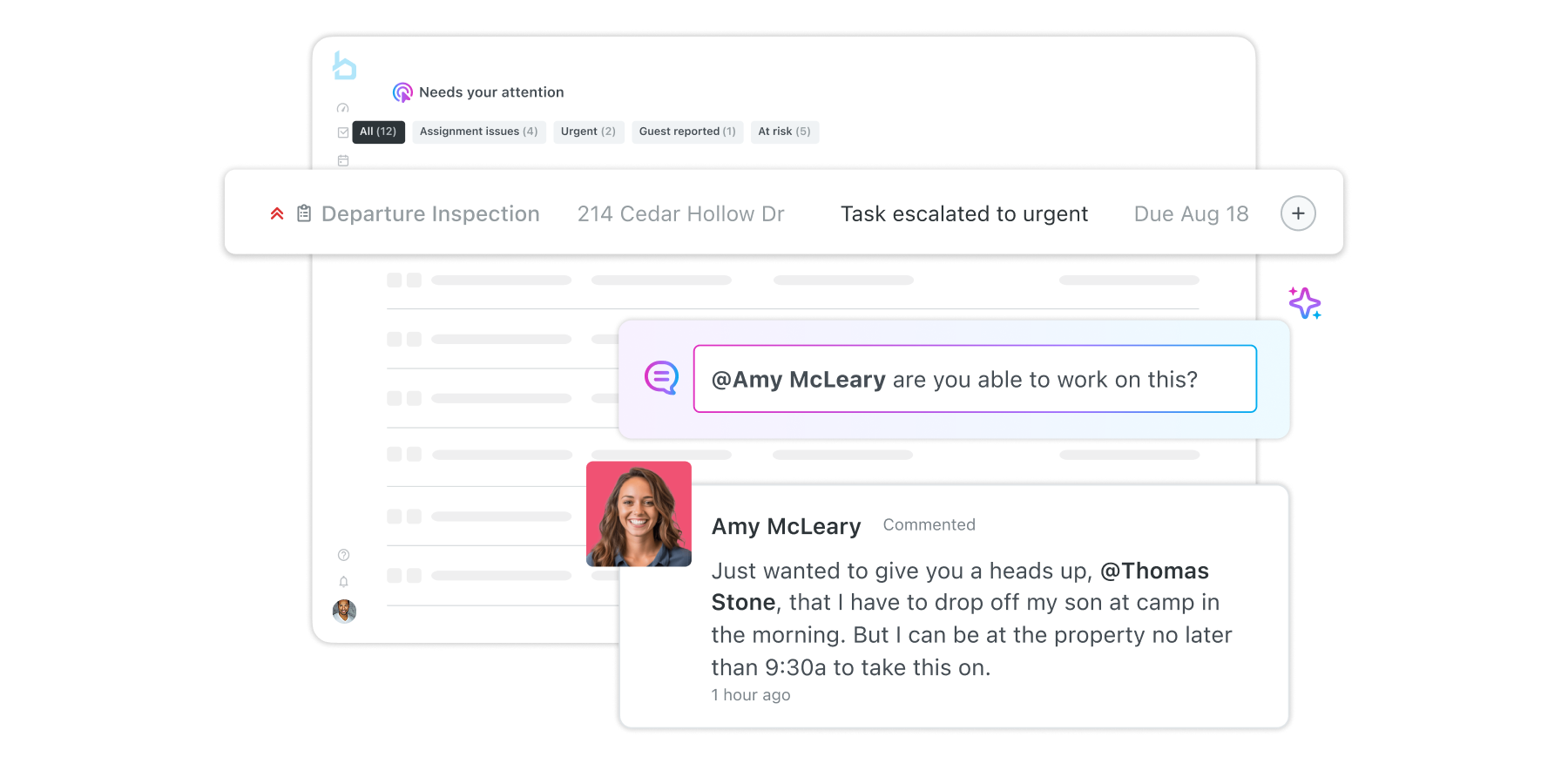
Property-specific checklists matter because homes resist standardization. One has a grill. Another has a deck. A third has equipment that deserves its own instructions. Reference information and required photographs let a manager describe what completion means. A tick beside “done” becomes more useful when everyone understands the work behind it.
- 01Reservation changesThe schedule moves.
- 02Task assignedSomeone owns the work.
- 03Work verifiedChecklist, photos, review.
- 04Status updatedThe next team knows.
The paper had to come back
Lake Tahoe Accommodations had a particularly tangible information delay. Housekeepers collected printed worksheets from the office, filled them in at properties, and returned them. Until the paper came back, management lacked confirmation that a home was ready. Meanwhile, guests called and staff navigated a busy phone tree.
The company initially worried that automation would make its service feel robotic. Breezeway and its Barefoot integration offered a different bargain: move routine coordination into software and preserve staff attention for guests. Digital checklists replaced the daily paper circuit. Its published case study reports 40 hours of manual work saved per week and $35,000 generated through gap-night messaging. Those results belong to this operator, not every subscriber.
fewer guest complaints about room readiness
Illustrative index: before = 100. Vendor-published case study; not an industry benchmark.The price of knowing
Breezeway’s business is property-based software subscriptions, with optional services. Its pricing page advertises a free first-property option and lists Host Essentials Operations at $19.99 per unit per month for managers with fewer than five properties. Larger operations require a quote. Guest messaging, digital guides, and after-hours support can add to the bill.
Digital welcome books extend that shared information to guests, while messaging can deliver arrival instructions or offer an extra night when the calendar allows. These features connect service and revenue, but availability still matters: a late checkout sold without regard for the next clean simply hands the problem to housekeeping. The useful unit of automation is the whole handoff, including the person who must act next.
There is also the operational cost of getting organized. Someone must enter reliable property details, decide which photographs matter, and train the people expected to submit them. The sensible buying exercise is to test one awkward turnover: change the reservation, change the assigned cleaner, flag a repair, and see who receives the update. A tidy demo is easier than a Saturday.
Alternatives include Turno, Properly, Operto Teams, and EZCare. Hostfully’s software guide distinguishes cleaner-marketplace needs from inspection depth and broader operations. For a small portfolio with a dependable cleaner and modest requirements, the existing booking system’s task tools may suffice. Breezeway makes more sense when separate people repeatedly need the same operational truth.
An agent that knows when to wait
The newer pitch is artificial intelligence with property context. Concierge answers guest questions using information the operator maintains. Controller highlights problems such as unassigned work or a task that has not started before check-in. The Q3 2026 recap also describes suggested assignees and guest offers governed by the operator’s rules.
“Recommends and waits; a person always acts”
Breezeway’s description of Controller
That wording sets a useful boundary. Today’s Controller recommends actions for a person to take; broader autonomous capabilities are a direction of travel. The promise depends on the quality of the underlying information. Software supplied with stale instructions or incomplete task records has less to work with. It also cannot supply the missing person who must repair the heater.
Leave room for people

Gall’s background helps explain the focus. Having worked on the booking side of vacation rentals, he now leads a company concerned with the service behind the listing. Breezeway’s expertise also includes safety: Justin Ford leads programs translating property risks into inspections, education, and preventive work. Its Assist service uses hospitality professionals to answer guest calls and messages.
Investors have funded that expansion: an $8 million Series A in 2020, a $15 million Series B in 2022, and a strategic investment announced by Resurgens in March 2026. The latest deal’s financial terms were undisclosed. The stated priorities were product development, AI, and international growth.
The lesson an operator can copy is pleasantly unglamorous. Define the work at each property. Give it an owner. Make completion visible to the next person. Breezeway packages those habits into software. Their value becomes clearest at the front door, when a guest arrives and nobody needs to make a phone call.