Tracey Reed had a perfectly reasonable objection to buying housekeeping software. At Sofitel Brisbane, she already had procedures. She had a team. Things worked. Asked whether the hotel should adopt Optii, her response was economical: “What for?” It is the sort of question that can stop a technology demonstration before the first slide.
- Optii coordinates housekeeping, guest requests, maintenance, and staff communication.
- Its distinctive pitch is predictive routing and live visibility into work.
- The useful lesson: measure the delays around a job before demanding a faster job.
Then Reed moved to Crowne Plaza Terrigal, where management had already decided to install it. Seeing assignments, team progress, and training information together changed her opinion. In Optii’s account, she eventually joined its customer-success team. The skeptic became the person helping other skeptics. That is a tidy sales story, certainly. It also exposes a surprisingly difficult management problem: a department can feel orderly while its wasted time remains invisible.
The corridor is part of the job
A hotel sells a room for a night. Getting that room ready involves a chain of smaller events: departure, assignment, cleaning, inspection, release. Each event has an owner; each handoff creates an opportunity to wait. A paper list may faithfully record the morning’s plan while becoming steadily less faithful to the afternoon.
Optii’s Staycity case study puts numbers on the spaces between jobs. The aparthotel operator had used paper and clipboards, with managers moving through corridors to coordinate work. After adopting Optii, it reported cutting the interval between cleans by two to five minutes. Its stated objective was to shorten that gap, rather than the clean itself.
At Aldgate, the account says room allocation fell from 50 minutes to five. Across the wider story, Staycity reported an 80% reduction in guest queues. These are customer results published by the vendor, rather than a controlled comparison. Still, the mechanism is intelligible: less searching for the next assignment leaves more time to do it.
“we never sought to reduce the time spent cleaning”
Lloyd Green, Staycity / Optii customer account
A room list with a memory
Founded in 2006 by Soenke Weiss, Optii grew from a hotel operator’s view of the problem. Weiss had been a revenue manager. The company describes applying revenue-management principles to operations: use information about demand to make better decisions about capacity. Here, the capacity happens to belong to people carrying supplies through a building.
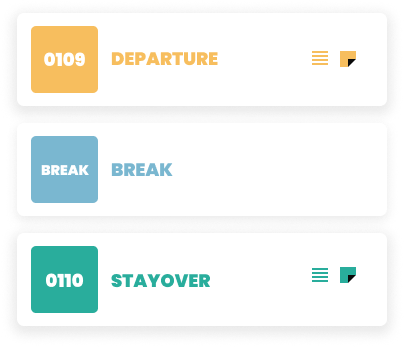
Housekeeping is its clearest expression. Optii’s documentation describes predicted cleaning durations, assignments that consider working hours and credit quotas, and a timeline showing jobs as they progress. The product links to a hotel’s property management system, bringing room information into the workflow. Managers can intervene instead of waiting for a list to return.
That places Optii beside the PMS, handling execution. Its advertised emphasis is time, people, and performance. Buyers can also consider hotelkit, ALICE by Actabl, Amadeus HotSOS, or Quore. Predictive routing is Optii’s chosen distinction; whether it makes a material difference depends on the property’s work, existing software, and adoption.
The towel needs an owner
Optii now offers four principal modules, individually or together. Service assigns and tracks guest requests and internal tasks, with predicted due times. Chat connects individuals and departments and provides in-line translation. Maintenance organizes assets, recurring work, checklists, and projects. The common thread is ownership: an instruction should arrive somewhere useful and remain visible until completion.
Recent partnerships extend that chain to the guest. The October 2025 Medallia Concierge integration creates Optii jobs from chats. In May 2026, Optii and SABA Hospitality described QR-code requests flowing into staff jobs at Meriton Suites. One property reportedly handled more than 600 requests automatically in its first full month. Automatic processing still leaves a person to deliver the towels.
June 2026 brought VSR’s VAIA voice integration, supporting conversations in 26 languages. Coco Key Resort and Water Park was named as the first hotel user. Guests and employees can make spoken requests that enter Optii’s workflow. The commercial logic is straightforward: every avoided transcription removes another place for an instruction to disappear.
A hotel owner buys the handoffs
MCR acquired Optii in December 2021. The announcement kept it a standalone company under its existing management, including CEO Katherine Grass. MCR also said its hotels would be arms-length customers and that their parent would receive no other customers’ data. Ownership by an operator creates a practical opportunity for feedback from people using the product daily.

Customers named in company materials include La Cantera Resort & Spa, The Don Cesar, Le Meridien, and Okada Manila. A 2025 Staypineapple story describes replacing paper housekeeping boards with live updates and cross-department communication. Optii’s market is the hotel operations team, with the front desk sharing in the consequences of every room that becomes ready.
The business runs on software subscriptions. A June 2018 announcement disclosed approximately $4 million in expansion funding, naming Thayer Ventures, Kinetic Ventures, NextGen Venture Partners, HOF Capital, and Select Venture Partners. For a hotel buyer, the useful calculation is closer to the corridor: subscription, devices, training time, and integration effort weighed against paid hours and service quality.
Count the minutes kindly
A manager can copy the diagnostic without buying anything. Measure the interval between assignments. Separate travel from cleaning and inspection. Record when the room becomes ready and when the front desk learns it. Choose a baseline before a pilot, then examine readiness, quality, and paid labor together. Faster status updates have value only when somebody acts on them.
This approach depends on current room data and staff recording their progress. It cannot supply missing linen or make an understaffed shift adequately staffed. Those are practical limits inferred from the workflow. Optii’s team page says it seeks people who have worked in customers’ roles; that experience matters when a performance report must become useful training. Reed’s original question survives. The answer should be visible in the working day.