On a Sunday afternoon in Wakefield, Massachusetts, the useful question is not whether a soccer program can produce a neat photograph. It is whether a player arrives and finds a way into the game. Tim Fitzgerald, the chief marketing officer of hospitality software company Tripleseat, helped his local association ask that question more seriously. The answer became TOPSoccer, a program in which players of diverse abilities gather with coaches and young volunteer buddies for drills, a game, and the ordinary pleasure of belonging to a team.
Fitzgerald described the decision in the language of an operator. The board reviewed what it offered. It looked for gaps. It decided the scope had to widen. Then the volunteers came. He said the response from members was larger than expected, and he quickly directed credit to Paul Paglierani, who took over the program in its second year and became an advocate for its players. A marketer might call that a successful launch. A coach would probably just put the cones out.
This is the revealing overlap in Fitzgerald's public life. His paid work has revolved around demand: how to find it, shape it, measure it, and turn it into a durable relationship. His volunteer work has revolved around participation: how to make room, organize adults, and keep a program dependable enough that children can simply play. One career is full of funnels and software. The other happens on grass. Both begin with the same act of attention.
The overlap did not appear overnight. Fitzgerald attended Saint Anselm College from 1996 to 2000, then built a career that included EF and Dun & Bradstreet before the sequence of demand-generation jobs visible in his later record. Those employers span education, business data, appointment scheduling, low-code tools, professional-services automation, and hospitality technology. The products changed, sometimes radically. The commercial problem stayed familiar: a complicated service has to become clear enough for a particular customer to see what happens next. That is patient work. It favors systems over slogans and an understanding that attention, by itself, is merely someone looking in your direction.
The anti-filler marketer
Fitzgerald's professional trail runs through the less glamorous, highly consequential machinery of B2B software. He led demand generation at TimeTrade, now Engageware, from 2016 to 2018. He moved to Quickbase as senior director of demand generation. By 2020 he was vice president and head of global marketing at Kimble Applications, a professional-services automation company. In 2021 he was promoted to chief marketing officer. Later that year, Kimble combined with Mavenlink; the business eventually became Kantata. In 2024, he took the marketing chief role at Tripleseat.
The company shift put him closer to the literal hospitality his marketing had always implied. Tripleseat sells event-management software to restaurants, hotels, and venues. Its product sits behind proposals, contracts, room blocks, payments, floor plans, and the sudden revisions that are practically an event tradition. Marketing such a platform requires fluency in the mess behind a polished evening. The guest sees the place card. The venue team sees the workflow.
“Think first about what value they can provide the audience, rather than how they'll extract value from the audience.”Tim Fitzgerald on customer-centric webinars
Years before Tripleseat, Fitzgerald offered a compact rule for webinars. They should be “right-sized,” actionable, and free of filler. Companies, he argued, should begin with the value provided to an audience instead of the value extracted from it. The advice is striking because it refuses the usual marketer's impatience. It starts by making the encounter worthwhile. Conversion can wait its turn.
His comments on customer research at Kimble followed the same direction. The practical task was to understand which functions customers used, which they missed, and how the company could help different users gain value sooner. He supported advisory boards and remote focus groups as ways to watch, listen, and make the product more legible. In Fitzgerald's telling, customer-centricity was not a warm phrase placed near a logo. It was closer observation.
A conference that sends ideas home
At Tripleseat, that philosophy found a public stage in EventCamp. Fitzgerald described the 2025 gathering as a place where hospitality professionals could meet like-minded peers, exchange ideas, challenge norms, and bring those ideas back to their venues. The phrase “bring them back” matters. A conference can be an expensive weather system, briefly surrounding attendees with optimism before everyone flies home and reopens the old spreadsheet. Fitzgerald framed success as transfer: something learned in Everett should survive the trip to a restaurant, hotel, or venue.
The same practical test shaped his comments when Mews and Slang AI joined as EventCamp sponsors. Their usefulness, he said, would be measured in better operations, better guest experiences, and profitability. The language is firmly attached to work. Technology enters the room with an assignment.
That sensibility has followed Fitzgerald through organizational change. When Kimble and Mavenlink joined in 2021, he wrote that he was proud of Kimble's work, excited about the other team, and optimistic about what the combined company could do for professional-services organizations. In a later post about bringing Kantata's American business-development teams together in Boston and Irvine, his inventory was revealing: brainstorming, skills sessions, one-to-one conversations, role-playing, certifications, and friendly competition. Alignment was built out of activities, not declared in a memo.
Legacy is what keeps running
Fitzgerald's Wakefield record gives that approach a longer clock. By June 2024 he had coached for 13 years and served three years as president of the Wakefield Soccer Association. He stayed involved after the presidency. In 2023, a grade-eight girls team he helped coach reached the Essex County Youth Soccer League playoffs. The following year, the association gave him its Presidential Legacy Award, recognizing both his leadership and service.
The timing gives 2024 a quiet hinge. Fitzgerald left the president's chair, received an award meant for a past president, and entered a new C-suite role at Tripleseat. One institution marked what he had helped sustain; another hired him to help shape what came next. Yet there was no clean handoff from community work to corporate work. He continued coaching. That detail matters because it separates service from a line on a biography. The presidency ended, but the recurring obligation did not. There were still players, seasons, and teams. Leadership changed back into showing up.
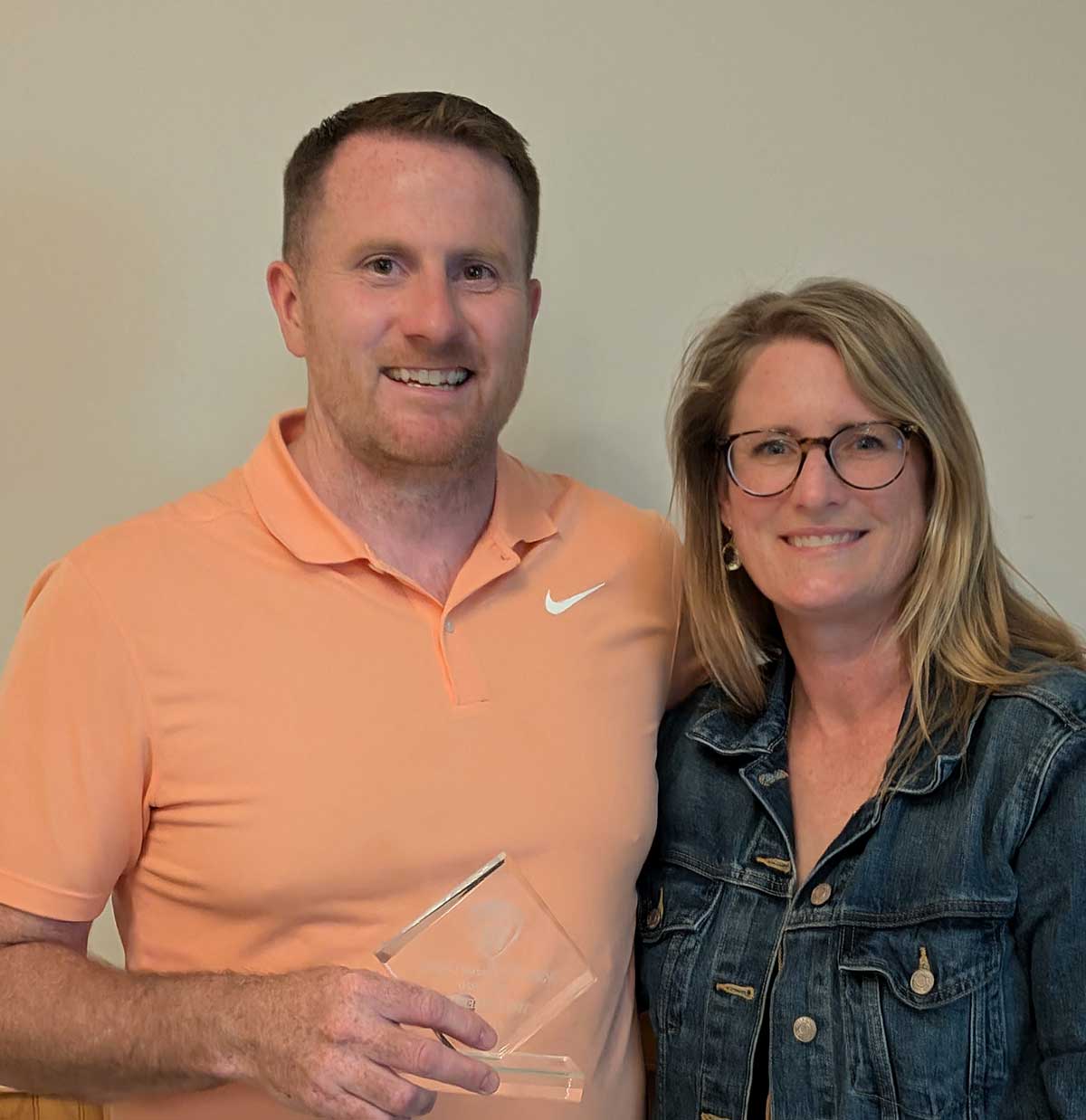
Awards are tidy. Volunteer organizations are not. They run on registration forms, field permits, board meetings, weather alerts, disputed calls, snack diplomacy, and people who keep answering messages after dinner. A three-year presidency in that environment is an exercise in small systems. The outcome is not a personal monument. It is whether the next season begins.
TOPSoccer makes the point concrete. The local program paired about 10 participants on a typical Sunday with association and high-school player buddies. It later connected participants with Wakefield High teams, including a senior-night appearance on the field for the national anthem. The program did not ask players to fit a single version of the game. It arranged the game around the players' stages of development.
“We needed to do more to bring the game to players of diverse abilities.”Tim Fitzgerald on Wakefield's decision to adopt TOPSoccer
Fitzgerald's account of the program avoids claiming the center of the picture. He talks about a board recognizing the need, national resources making a start possible, members volunteering, and Paglierani carrying the work forward. It is the grammar of a functioning community: many nouns, useful verbs, scarce vanity.
The quieter definition of growth
There is an appealing temptation to turn the soccer field into a management parable, as if every sideline must secretly be a boardroom. It is more honest to let the two worlds remain different. A hospitality software company must generate revenue. A youth association must serve children and families. Metrics matter in one place; trust matters in both.
What connects them is Fitzgerald's recurring preference for useful participation. A webinar deserves the audience's time only if it delivers something actionable. A conference earns its keep when ideas travel home. A software customer needs help discovering value. A soccer program improves when people previously at the edge can enter the field. Each problem asks the operator to design a better next step.
That makes Fitzgerald's story less about balancing two lives than practicing one habit in two settings. Notice who is waiting. Reduce the friction. Bring people together. Give the group enough structure to move. Then, crucially, allow the work to belong to more people than the person who began it.
In marketing, the reward might be a stronger pipeline. In Wakefield, it can be 10 players arriving on Sunday, each meeting the game on workable terms. One result fits on a dashboard. The other runs across the grass. Both are evidence that somebody built the invitation carefully.