Before Tim Lamb learned to build a revenue engine, he learned to keep score. He began his career as a journalist, and his earliest documented honor is for sports reporting. The leap from the press box to B2B software looks less peculiar when you consider the shared demands. Both jobs require an ear for what matters, a suspicion of foggy claims, an instinct for the audience and a healthy respect for the final number.
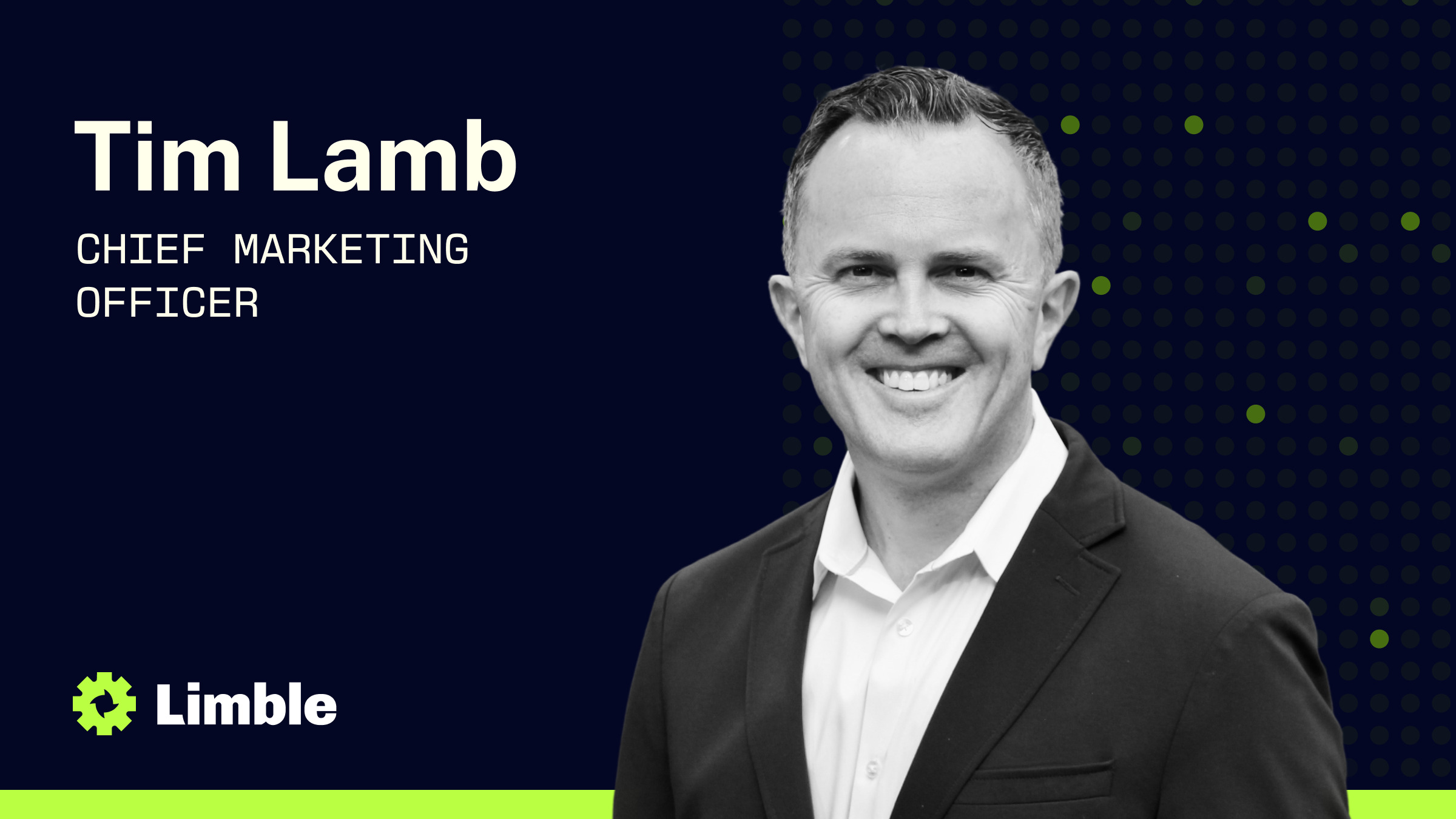
Lamb now works in Atlanta and leads marketing for Limble, the maintenance and asset management software company. He arrived in April 2026 after roughly three and a half years at Simpro Group, where he rose to senior vice president of growth marketing. Before that came PRGX Global, Rubicon Global and Xero. The industries shifted from accounting to sustainability, recovery audit, field service and maintenance. The recurring assignment did not: make marketing legible to the rest of the business.
This is a career built around an unfashionably useful proposition. A campaign can be clever. A brand can be admired. A marketing team can fill a calendar with activity. Influence comes when the work can also be connected to customers, pipeline and revenue. Lamb speaks in the dialect of measurable impact, but his journalism background keeps the language from collapsing into a spreadsheet. His most interesting work sits where narrative and operating discipline meet.
A career spent moving marketing closer to the business
01 / The first draftA reporter learns the shape of a result
Lamb earned a Bachelor of Arts and a Graduate Diploma in Journalism from the University of Canterbury. He began in journalism and received Senior Sports Journalist of the Year recognition in a 2007 Better Newspapers competition. The sports beat offered a tidy education in consequence. Somebody wins, somebody loses, and the reader can see the table. Adjectives cannot rescue the score.
By the time he was working in marketing, that appetite for evidence had found new instruments: marketing automation, demand generation and the sprawling stack of systems that turns attention into an accountable commercial process. At a 2017 conference, he explained the construction of a marketing automation center of excellence through sport. Think about defense when assembling the team, put content on the attack, and create special teams to manage the technology stack. It was a journalist’s analogy fitted to an operator’s problem.
The metaphor also revealed how he thinks about organizations. Marketing is not one gifted striker improvising near goal. It is a set of distinct roles whose work must connect. At Rubicon, Lamb held senior responsibility for marketing and demand generation while the department collected recognition for its corporate blog, online brand work and lead generation. His listed honors include four separate awards in 2018, a Marketo award for a global rollout the year before and two Marketo Champion recognitions.
“The stage Limble is at right now is exactly where I do my best work.”Tim Lamb, on joining Limble
02 / The operating systemMarketing asks for a seat, then brings a scoreboard
In April 2019, Lamb joined PRGX Global as vice president of marketing. His remit was broad: strategy, content, lead generation, public relations and the company’s digital footprint. The list reads like the modern CMO job before the title arrives. It also shows why his career can be understood as operator work. He was not confined to the language at the top of the funnel. He was responsible for the system that carried it.
There was a second classroom nearby. From late 2019 through 2022, he served on the executive advisory board for marketing and sales professionals at Kennesaw State University’s Coles College of Business. He offered input and speaker ideas for a graduate marketing course and shared international marketing experience with students. Teaching is useful pressure on any framework. If an idea cannot survive a room of questions, it is probably decorative.
One former colleague described him as both the face of a marketing department and the motor behind lead generation, emphasizing work ethic and leading by example. Another, welcoming him to Limble, called him an impactful mentor. Together with the advisory work, those recollections add a human contour to all the machinery: the systems builder is remembered for how he led people inside the system.
03 / Take twoThe UK pilot that made alignment concrete
At Simpro, Lamb inherited a problem familiar to global software businesses. Inbound marketing generated roughly 85 to 90 percent of pipeline. Sales and marketing worked in regional silos. The company wanted larger customers but lacked a unified account-based marketing motion. The temptation in such a situation is to declare a transformation everywhere. The team chose one country.
The United Kingdom became the proving ground. Simpro adopted sales-intelligence and account-based marketing tools, created a UK Pipeline Council, and trained sales and marketing together. The initiative did not emerge immaculate. Lamb spoke candidly about relaunching the work with an “okay, take two” posture after hearing at an industry conference how common a second attempt was. New executive backing mattered. So did requiring sales to buy into the same plan.
The results supplied the argument. In the measured period, the UK operation reached 125 percent of its revenue target. Average deal size rose 126 percent year to date. Outbound efforts achieved a close-won rate 1.7 times that of inbound leads. The numbers belong to the team and the program, not to one executive, but Lamb’s role is explicit: he championed the platform and the focused-market strategy.
This is the portion of the playbook worth stealing. Alignment needs more than goodwill. It needs a defined market, a recurring forum, shared training and a number everyone agrees to watch. The first attempt may wobble. A bounded pilot makes the wobble educational instead of existential.
04 / Scale without blurPersonalization meets the machine
Simpro’s next problem was abundance. The group spanned Simpro, BigChange, ClockShark and AroFlo, each serving distinct regions and audiences. Personalizing journeys for thousands of target accounts could easily demand a matching rise in headcount. The marketing team instead connected audience intelligence to tailored web experiences, including industry paths, competitor-comparison content and one-to-one pages for strategic accounts.
The program influenced $640,000 in incremental annual recurring revenue in 2024 and delivered a 142 percent year-over-year increase in demo-request conversions from account-based marketing audiences in the second quarter. Another experiment used AI email agents across inbound response, outbound work, webinars and reactivation. That effort helped Simpro increase marketing-qualified leads 34 percent year over year, save about two hours per business development representative per day, and reduce losses from delayed follow-up by 80 percent. Simpro received 6sense’s 2025 AI Game Changer of the Year award for the team’s work.
The seductive reading is that software did the work. The more instructive reading is organizational. Teams selected bounded use cases, monitored performance, refined prompts and kept people focused on the conversations where empathy and judgment mattered. Automation supplied coverage and persistence. Humans kept responsibility for strategy and trust.
“My job is to pour fuel on that. I’m here to build a marketing engine that doesn’t just generate leads but drives measurable impact at every stage of the customer journey.”Tim Lamb, Limble appointment announcement
05 / The new briefMarketing maintenance without making it dull
Limble hired Lamb in April 2026 to lead its full marketing organization and work alongside go-to-market leadership on new customers, larger accounts and multi-site expansion. His first public observation was not about a channel or campaign. It was about use. Maintenance technicians described Limble as the first computerized maintenance management system they actually wanted to use. Teams adopted it without being told, he wrote, and implementation could be measured in days rather than months.
That is fertile territory for someone trained to find the person inside a system. Maintenance is easy to notice only when it fails. The work itself is quieter: inspections, inventory, work orders, preventive schedules and the thousands of decisions that keep a facility moving. Limble describes its audience as the humans who keep the world’s assets running. Lamb has spoken similarly about tradespeople, calling them the heroes of their industry at Simpro’s 2025 customer gatherings.
His challenge is to preserve that respect while building scale. Product enthusiasm is powerful but not self-executing. It needs a narrative that a finance leader, plant manager and technician can each recognize. It needs a sales motion capable of carrying the story into larger and more complicated accounts. It needs data clean enough to distinguish affection from expansion.
The route here offers no tidy founder myth and no overnight conversion. It is a long apprenticeship across newsroom craft, marketing automation, content, public relations, demand generation, account-based marketing and AI-assisted execution. Lamb’s advancement looks cumulative. Each role added another part of the operating system.
That may be why his language at Limble is unusually direct. The foundation is a product customers value. The opportunity is a business with momentum. The job is to build a marketing engine that helps the whole company grow faster. There is ambition in the brief, but also a scoreboard waiting at the end of it. The old sports reporter would recognize the arrangement.