At the ski hotel in Austria, Axel Lingbert was not allowed the luxury of becoming a single-purpose human. Breakfast needed doing. So did the front desk, the bar and maintenance. The jobs moved; he moved with them. A guest seen over coffee might reappear after skiing and again over an evening drink. Repetition did what a check-in script cannot: it turned transactions into acquaintance. One guest became a friend, and the two later met again on ski trips.
Years later, while demonstrating hotel software, an industry veteran offered Lingbert a thought. If systems demanded less attention, hotel roles could become fluid again. The receptionist might help at breakfast or cross the lobby to solve a small problem before it became a complaint. Lingbert recognized the idea immediately. He had lived its low-tech version.
His question since has been admirably unfashionable for an AI founder: what if hospitality software could lead to friendships?
01 · Useful frictionThe lobby as product lab
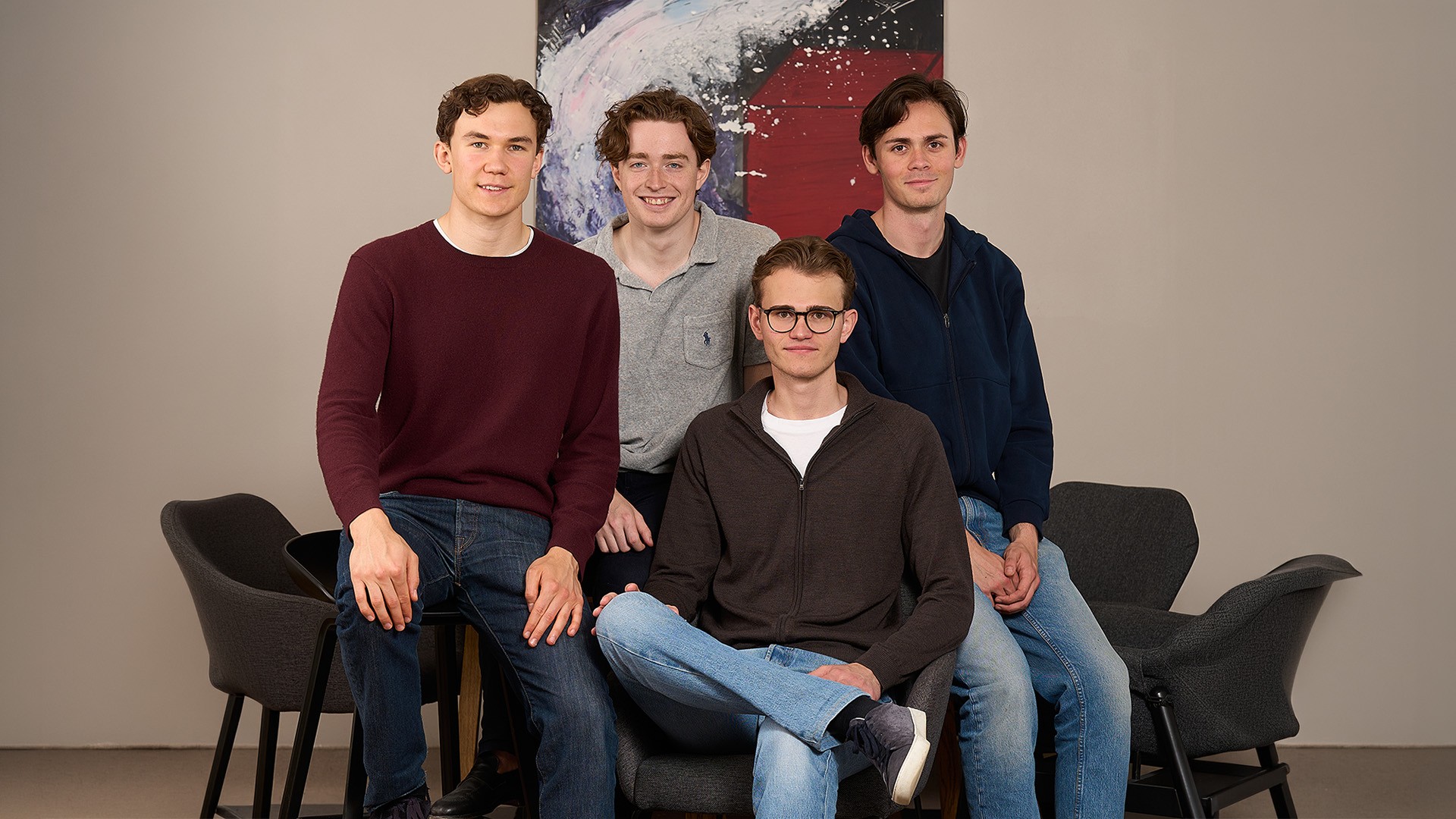
Zaplar, the company Lingbert co-founded with Douglas Solberg, Jon Milles and Oscar Karlströmer, is trying to replace the thicket of systems through which hotels run. Property management, point of sale, booking, channels, housekeeping, guest messages, staffing and inventory often live in separate products. The borders make sense to vendors. They make less sense to a guest waiting for an answer, or to an employee copying information from one window into another.
The founders began with event bookings. The narrow problem soon exposed the larger one: an event touches rooms, spaces, staff, food, prices, contracts and communications. Automating one step while the rest remain islands produces a clever island. Zaplar widened its ambition toward a single hotel operating layer, built for AI agents that can understand the property as a connected place and carry out work for staff to review.
That pitch is expansive. The research practice behind it is gloriously small. In July, Lingbert and a teammate drove more than three hours to visit hotels without scheduled meetings. They walked into lobbies and asked staff what they wanted from their systems. Their best day yielded ten conversations. A respectable outbound machine could send a thousand emails in the same period and return a dashboard wearing a confident tie.
The inefficiency is the point. A hotel is being asked to trust software with the information and routines that keep the property moving. That trust is hard to study remotely. In person, a complaint has a setting. A workaround has three open browser tabs and a handwritten note beside the keyboard. Staff can point to the exact screen that steals their attention. The founder sees not only the task, but the interruption.
02 · A box of useful partsBreakfast, mathematics, compliance
Lingbert’s route to that lobby is less a ladder than a box of useful parts. He worked in hotels and restaurants. He entered the engineering mathematics master’s program at Lund University’s Faculty of Engineering, then left before completing it. He also co-led an anti-money-laundering and counter-terrorist-financing group at a major Swedish bank. Public records from a still earlier chapter list him as a youth ice-hockey goaltender, catching left for Saltsjöbadens IF J18 with Nacka HK as his youth club.
Each part offers a different view of the same problem. Hospitality teaches that timing and attention are inseparable. Mathematics encourages a connected model rather than a pile of exceptions. Financial-crime operations make oversight, traceability and review feel less like fine print and more like architecture. A goalie, meanwhile, develops a professional interest in what happens when the system in front of him fails. The metaphor is almost too tidy, so we shall let it skate by without further decoration.
Zaplar’s stated product values carry those traces. The system should work ahead of its users, but actions remain reviewable. Staff should see what it is doing and why. Automation is not presented as a magic vanishing act. It is closer to a competent colleague who prepares the work, leaves a clear trail and knows when a human decision matters.
The operating-system wager
The distinction matters because a hotel has an unusually wide operational surface. A late arrival, a room change, a conference lunch and a maintenance problem can collide in the same hour. Intelligence confined to one application cannot see the collision. Lingbert and his co-founders argue that the model has to understand the property itself: which resources exist, how they relate, and what a change in one corner means elsewhere.
03 · The expensive versionReplacing the foundation
Most young companies sensibly avoid replacing the software foundation of an industry. They add a useful feature, connect to incumbents and collect subscription revenue without volunteering to become responsible for everything. Zaplar has chosen the expensive version. Its founders believe that attaching AI to old, fragmented systems leaves the agent trapped inside boundaries it cannot reason across.
The company therefore wants to unify the core stack: property management, point of sale, channel management, booking, housekeeping and more. That is a long inventory of ways to be wrong. It is also the logical consequence of the original event-booking problem. Follow a hotel workflow far enough and every supposedly separate system eventually wanders into the room.
Y Combinator accepted Zaplar into its Summer 2026 batch. The company announced the accelerator’s $500,000 investment alongside another $320,000 from Nyman Holding and entrepreneur Michael Ingelög. At the time of its YC launch, Zaplar described an eight-person team with backgrounds spanning hotel operations, engineering, AI research and cybersecurity. New public welcomes soon followed for a founding engineer and a go-to-market hire.
Lingbert is only 21, an age that can make an attempt to replace a hotel’s nervous system sound either wonderfully direct or mildly impudent. He does not possess decades of property-management doctrine. What he has instead is proximity to the work, a founding team with complementary experience and a willingness to let operators complain over coffee. Youth is not proof of correctness. It does, however, reduce the amount of inherited reverence for why fifteen systems must remain fifteen.
04 · Attention returnedThe point of the machine
There is a clean way to misunderstand Zaplar: see the words “agentic operating system” and assume the story is about removing people. The company’s language points elsewhere. It wants the machinery to retreat into the background so hoteliers can rely more on judgment, instinct and presence. Work arrives prepared; staff approve it. The aim is fewer encounters in which the person hired to welcome a guest spends the conversation staring at a display.
That aim supplies a useful measure for any automation product. Minutes saved are an accounting fact. Attention returned is a design choice. Give a hotel employee five free minutes and the value depends on where those minutes go. They might become an unhurried answer, a remembered preference, help with a bag, or a conversation at the bar that continues on a mountain years later.
Lingbert’s public writing returns to this human dividend. He imagines roles becoming less tightly tied to desks and systems. A front-desk employee could move through breakfast, the bar or another part of the property. That is not nostalgia for a hotel without computers. It is a proposal for computers with better manners.
There are plenty of hard questions ahead. Replacing a core hotel stack requires reliability, security, migration discipline and patience. Autonomous action must earn trust one visible decision at a time. The company’s broad architecture will have to survive the untidy exceptions that hotel staff currently carry in their heads. A lobby conversation may reveal those exceptions; only years of operation will show whether the software can hold them.
For now, Lingbert’s contribution is a crisp starting point. He has taken a memory from the breakfast shift and turned it into a product constraint: the system should make room for the host. In a startup culture fond of measuring intelligence by how much work a machine can absorb, he is measuring it by how much human attention the machine can give back.
Somewhere in a hotel lobby, a receptionist is looking down at a screen while a guest waits. Zaplar has chosen that small, familiar scene as the place to begin rebuilding almost everything behind it. The ambition is enormous. The desired result is modest enough to miss if nobody is paying attention: two people looking at each other.