At the ski hotel in Austria, Axel Andersson Lingbert’s workday extended across breakfast, reception, the bar and maintenance. A guest could encounter him several times, in several capacities, during a stay. One became a friend. They have since met again on ski trips. It is a small episode to carry into a company that wants to replace hotel software, but a useful one: a relationship survived long after the booking was over.
Now COO and co-founder of Zaplar, Lingbert has turned that memory into a question about what software should make possible. If employees spend less time attending to a system, could they move more freely around the property? Could a receptionist help at breakfast, or meet the same guest again at the bar? The operating plan would have to change too. A computer cannot arrange a friendship, however enthusiastically its marketing department might volunteer.
“What if hospitality software could lead to friendships?”
Axel Andersson Lingbert
A career with several working parts
Lingbert brings an assortment of experience to this question. He worked in hotels and restaurants, studied engineering mathematics at Lund University’s Faculty of Engineering, and left the programme before completing it. He also co-led an anti-money-laundering and counter-terrorist-financing group at a major Swedish bank. The public outline contains service work, technical study and responsibility for an operation where checking the work matters.
Those experiences belong beside each other without being forced into a convenient origin myth. It would be tempting to announce that every breakfast shift and every mathematics lecture was secretly preparing him to found Zaplar. Careers rarely send such courteous advance notices. What the record establishes is a founder who has worked both in hospitality and in banking compliance, and who now occupies the operating role in a hotel software company.
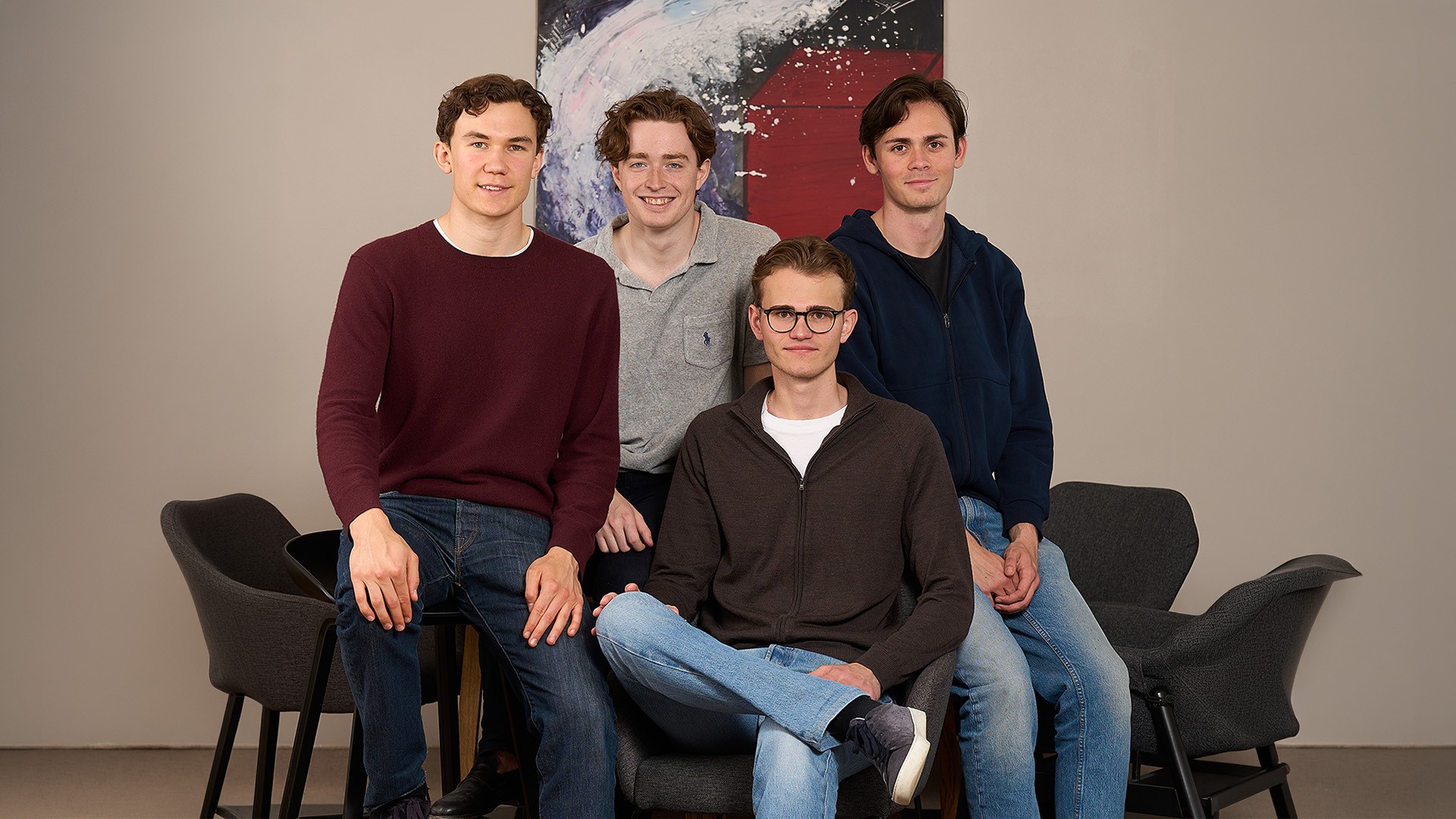
Zaplar was founded in 2026 with Douglas Solberg, Jon Milles and Oscar Karlströmer. Solberg is CEO, Milles CTO and Karlströmer CFO. Lingbert is COO. The division of titles places him within a team whose work extends from engineering to the commercial and operational questions of getting a new system into a hotel. His own public contributions often concern the people who would buy it, use it and live with its decisions.
The lobby is worth the drive
One account of the founders’ research begins with a journey of more than three hours. Lingbert and a teammate drove to hotels, walked into the lobbies without scheduled meetings and asked staff what they wanted from their systems. On their best day, they managed ten conversations. The company published the account in July 2026, describing a deliberate preference for meeting people where they work.
That is a revealing unit of progress. Ten conversations require ten people to stop, consider a question and decide whether to answer it. The employee at reception may have useful information without having the authority to buy anything. Staying to listen still makes sense if the purpose is to understand the work. It makes considerably less sense if every conversation is judged only by its immediate prospect of a sale.
Reported in Zaplar’s July 2026 account
For a hotel, adopting a new core system means changing familiar routines and entrusting operational information to a new supplier. A founder who turns up is providing a modest sample of how that supplier might behave. The journey cannot establish whether the software will be reliable. It can establish that somebody was willing to make the journey.
There is a pleasing fit between the research method and Lingbert’s subject. Hospitality involves people arriving in person, asking questions and hoping somebody takes an interest. A software company studying hospitality can learn something by making an entrance of its own. The lobby is also a place where the buyer’s priorities and the employee’s priorities might become visibly different. Both will matter after the contract is signed.
Follow the booking beyond the booking
Zaplar’s early focus included events. Its founders spoke with more than a hundred hotels before building, according to their account shared by their finance partner Bronn. By June, the company was describing software for hotels and event venues, with pilot customers in several countries. The eventual ambition became broader: a connected operating system for the property.
The logic is easiest to follow through the work itself. An event needs a space, a time and people to run it. It may also involve accommodation, food, a quotation and a contract. These are examples of the connections a system would need to understand, rather than a report of any particular Zaplar customer’s booking. A task that looks contained at the beginning can spread quickly across a hotel.
The company says its architecture maps a property and its resources so AI agents can reason across those connections. The proposed system combines property management, point of sale, booking, channel management and housekeeping, among other functions. Its launch describes work being completed in the background and presented for staff to review, edit and approve.
That last step deserves attention. Completing a task and deciding that the result is appropriate are different responsibilities. Zaplar’s stated values include reviewable actions and a clear trail of what the system is doing. In a hotel, the employee receiving the prepared work still has the guest, the circumstances and the consequences to consider.
A broad operating-system promise also creates a broad test. Each additional function brings everyday details that must fit. A persuasive demonstration can make the connections easy to see. Sustained use has to make them dependable. Lingbert and his colleagues are choosing to take on that responsibility as they ask hotels to reconsider the software beneath their operations.
The question changes during the demo
Lingbert describes operators arriving at demonstrations with complaints about online travel agency messaging, reports, accounting, event-booking administration and guest information. They expect a remedy for a particular problem. In his account, seeing the connected product can lead them to consider changing a much larger portion of their software. That is his account of the conversations, rather than a count of completed replacements.
His writing also asks operators to think about the foundations for future AI use. The concern is whether intelligence will remain confined to separate workflows or have enough context to help across the property. This is an argument about preparation: what should a hotel put in place so that future capabilities have somewhere useful to work?
He returns to his own earlier service roles when explaining the intended benefit. Reception, waiting tables and working behind a bar taught him to value understanding what a guest wants. His ambition is for software to support that intuition and give staff the information to make service more personal. A database may remember a preference; an employee decides how to act on it.
Here the technical and personal threads meet. Lingbert is advocating a connected foundation, but the encounter he wants to improve remains quite ordinary. A guest asks something. A staff member understands it. The answer requires less rummaging through systems. The software has helped if that person can keep attending to the conversation.
Four states, then another conversation
The in-person approach continued in the United States. Lingbert reported travelling through four states in seven days while learning the US market, including discussions at the 2026 AAHOA South Central Texas Hotel Owners Conference and Trade Show. Arkansas was next. The itinerary puts a practical shape around the phrase customer research: travel, meetings and more questions.
He also attended the National Association of Black Hotel Owners, Operators & Developers conference with Karlströmer. One moment he recalled was an audience member asking representatives of major hotel brands how the brands ensured that their hotels received suitable property-management software. The question located the issue beyond an individual desk, within the relationships between owners, operators, brands and suppliers.
For Lingbert, these meetings form another part of the work of understanding the buyer. The person choosing a system may be thinking about a group of properties. The person using it may be thinking about the next arrival. A company proposing to serve both needs conversations at both levels. Conferences widen the view; visits to reception keep the immediate work in sight.
A summer shared, a job still underway
Zaplar joined Y Combinator’s Summer 2026 batch. In June, it announced the accelerator’s $500,000 investment and another $320,000 from Nyman Holding and entrepreneur Michael Ingelög. Those are company funding figures. They describe the resources behind the undertaking, rather than its results in hotels.
After Demo Day, Lingbert reflected on a concentrated summer of building and learning. His highlight was the period when the whole team was together in San Francisco. The account gives the accelerator story a personal centre: colleagues experiencing the progress together. He expected the work and the relationships with the programme’s partners and fellow founders to continue.
The Austrian hotel memory supplies a useful way to judge the next chapter. Software can finish more work, but the value of the resulting time depends on what people can do with it. Lingbert wants hotel roles to become less attached to particular systems and desks. Whether a property chooses to organise its staff that way remains an operating decision.
His aim makes room for a pleasantly undramatic ending to a technology story. A receptionist has enough attention to answer properly. A familiar employee appears at breakfast. A conversation resumes later in the day. Nobody needs to admire the operating system during any of this. A guest might simply remember a person, then meet them on a ski trip years later.