The useful part of the dinner arrived with the complaint. Tobias Estreen was eating with his friend and colleague Oskar Block when Estreen’s father, a patent attorney, described his working day. The tools had changed around the edges, but the central ritual had not: dense technical documents, read one after another, in much the same fashion for three decades. Somewhere between the plates and the paperwork, a company began to take shape.
Block recognized the pattern. Important work was being constrained less by a shortage of intelligence than by a shortage of hours. Patent disputes can turn on a small piece of prior art buried inside a vast field of filings, publications, prosecution histories, court records, and old web pages. The professional looking for it must be exhaustive, skeptical, and able to show exactly where every conclusion came from. A charming paragraph with no evidence is merely expensive confetti.
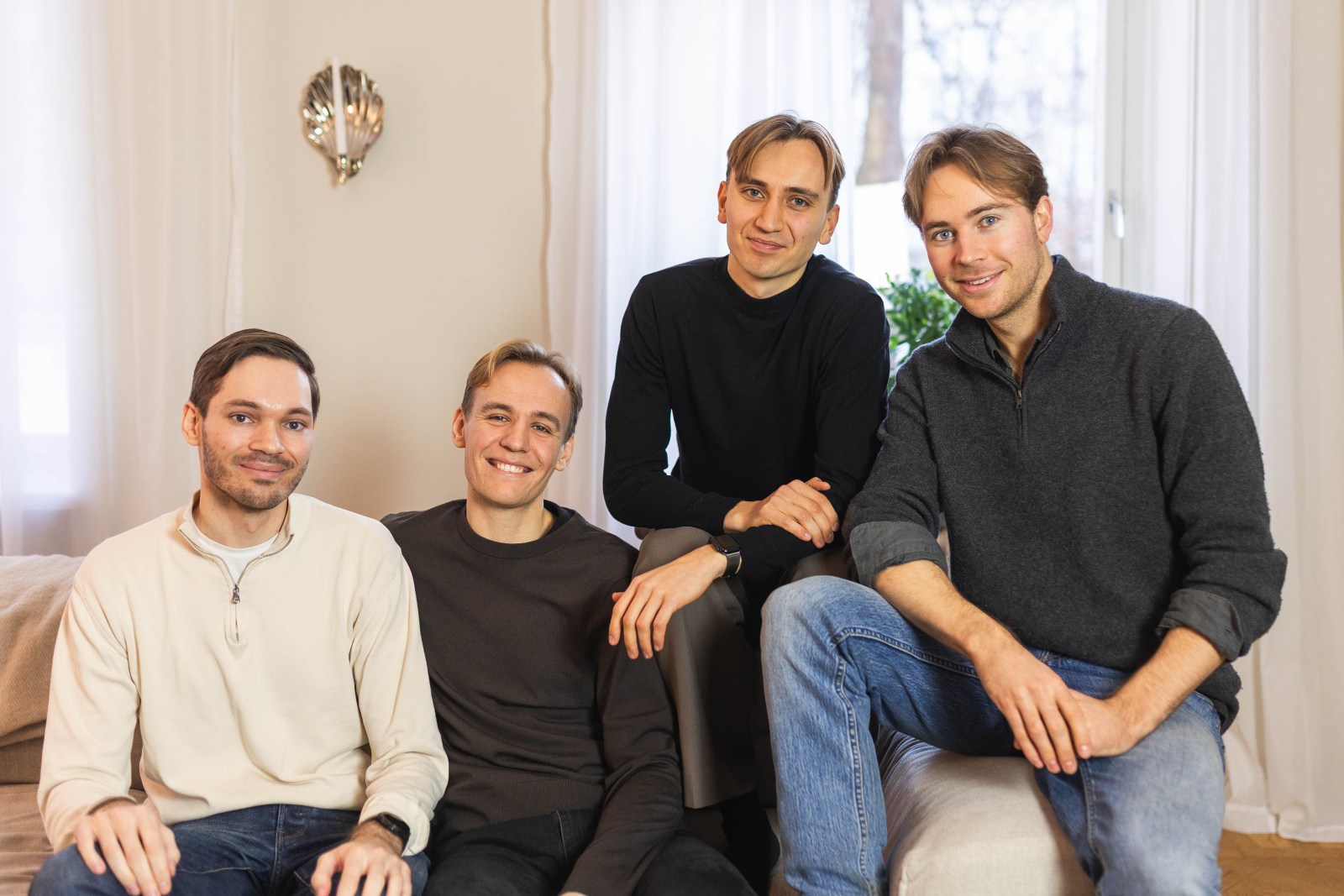
Stilta, which Block co-founded with Estreen, Petrus Werner, and Oscar Adamsson, was built for that gap. Its software deploys specialized AI agents to search and analyze material in parallel. The agents assemble reports and claim charts with references attached. The patent lawyer guides the work and judges the result. Block’s phrase for the division of labor is telling: the professional stays in the “driver’s seat.” The machine gets a larger map and more pairs of eyes.
“I’ve always been drawn to solving difficult data problems.”Oskar Block
A teenage wager on machine learning
Block was 18 when he started his first company, building machine-learning models for sports betting. It is an unusually literal introduction to entrepreneurship: uncertain outcomes, noisy data, and the rude education of being wrong in public. He later built and bootstrapped another business past $1 million in revenue and 25,000 monthly active users. OBG Media, the company he co-founded and led, operated in sports-betting media and software.
The numbers matter, but the correction matters more. Block has since spoken about a mistake in that earlier chapter: he built something he wanted to use while not being representative of the broader market. His stated remedy is almost comically unglamorous. Talk to users excessively. Build around their actual work. The Stilta launch followed that advice in public. When he announced the company, he asked people in IP, R&D, product, and innovation to tell him where the friction lived.
His formal education added a second language to the builder’s vocabulary. At Chalmers University of Technology, Block earned a master’s degree in Management and Economics of Innovation. His 2024 thesis, written with William Wester, examined technology adoption as road haulage moved through electrification and automation. The work connected to Einride, the autonomous-trucking company, and put him near another collision of engineering, institutions, and commercial change.
There were stops in investment banking at Goldman Sachs and in consulting at McKinsey. At McKinsey, he worked on strategy, data-science, and AI engagements, learning how large organizations adopt new systems when the cost of error is real. He also met the colleagues who would become the Stilta founding team. The four did not come to patent work as attorneys. They came as engineers and operators who had watched ambitious AI systems meet enterprise reality.
Block’s student years were not confined to the seminar room. He chaired the sports committee for Chalmers’ industrial-engineering section from late 2019 into early 2021. In 2022, Nova selected him as one of 10 industrial-engineering students in Sweden from a field of more than 1,000 applicants; he later served as a university ambassador. Both roles involved organizing people, a useful apprenticeship for a founder whose current job crosses customers, investors, engineers, and two continents.
Many agents, one accountable answer
Patent analysis is a stern place to test fashionable software. A false citation is not an eccentricity. A missed reference can alter the value of a case. Generative AI is good at producing language, but legal-grade work demands a trail that another person can inspect. Stilta’s product choices follow from this constraint. Agents search different territories, compare what they find, and converge on an analysis. Outputs remain connected to pinpoint evidence.
The founders bring distinct labels to that shared task. Block is chief executive. Werner, the chief technology officer, had built production AI at QuantumBlack and AWS. Estreen, Stilta’s chief architect, grew up in a patent-attorney family and led agentic-AI teams at QuantumBlack. Adamsson, the chief product officer, had worked with chief executives at McKinsey on Sweden’s innovation agenda. Their biographies do not erase the domain learning ahead of them. They explain why the team believed it could translate between technical possibility and professional practice.
The Stilta loop
The matter
A professional supplies a patent and the relevant context.
The search
Specialized agents explore patents, literature, histories, and archived web material.
The evidence
The system returns analysis and claim charts tied to inspectable references.
This is also why the company chose patent invalidity, infringement, and freedom-to-operate work rather than the busier territory of drafting and contract review. The analysis is expensive because the search surface is enormous and the consequences are substantial. Lower the cost of looking carefully, Block argues, and companies can reconsider patents they have never licensed, enforced, or properly analyzed.
The commercial thesis is hidden inside that verb: reconsider. A patent portfolio can sit quietly on a balance sheet because examining it has been too slow or too costly. If analysis becomes cheaper while remaining auditable, dormant intellectual property can become a strategic question again. Stilta is selling speed, but only the sort that arrives carrying receipts.
“The question isn’t really whether the legal system is prepared for AI.”Oskar Block, turning the question toward what cheaper analysis makes possible
Eight days, four founders, one large round
Stilta entered Y Combinator’s Winter 2026 batch and described itself as an AI-native workspace for patent practitioners. Block celebrated the move with the phrase “Silicon Valhalla,” a neat bit of Scandinavian mischief in San Francisco. The company launched into a market where trust is earned slowly, then reported early use by leading firms in Europe and the United States.
In May 2026, Stilta announced a $10.5 million seed round led by Andreessen Horowitz, with participation from Y Combinator and operators connected to companies including OpenAI, Legora, Sana, and Lovable. Block said the round was his first fundraising process. It closed in eight days. He also admitted that he barely slept for a week, which is a less polished and more believable unit of startup time.
Within three months of launch, he said Stilta was being used by multiple AmLaw 100 firms and in-house IP teams at Fortune 500 companies. The team then began expanding beyond the four founders. In an advertisement for the first founding engineer, Block wrote that Stilta cared more about “slope, ownership and speed of learning” than years listed on a CV.
The stealable idea: choose a workflow where accuracy already has a visible standard. Give the machine breadth. Give the expert control. Make the evidence easy to inspect. Then stay close enough to customers to learn where the elegant theory breaks.
That line reveals something about how Block presents the company. The language is fast, but the criterion is learning. Ownership matters because a founding team cannot hide work between departments. Slope matters because the system, customer, and market are all moving. The job is not simply to arrive with expertise. It is to acquire the next piece of it without requiring a committee and a fortnight.
A billboard, with perspective
A few months after the funding announcement, Stilta appeared on a Times Square billboard. Block marked the event by recalling the very small Swedish town where he grew up. The biggest sign there, he wrote, had been the one at the gas station. In Manhattan, Stilta was wedged between a Netflix premiere and an advertisement for a large injury-law firm. His co-founder Werner promptly suggested putting a Stilta sign on the gas station next.
The anecdote is funny because it permits two scales to coexist. There is the public scale of venture funding, New York lights, and a company trying to change how valuable legal work gets done. Then there is the private measuring stick: a hometown sign, remembered clearly enough to keep the billboard from becoming a personality.
By late summer, Block was moving between the geographies that define Stilta. He shared a week on the American East Coast meeting patent attorneys and in-house teams in New York and Washington, D.C., while also promoting a Stockholm conversation about accelerator programs. Different continents bring different laws and processes. He wrote that the core difficulty remained the same: find the right evidence, understand how it applies, and produce an analysis a professional can stand behind.
That sentence is the cleanest account of his aspiration. Stilta’s stated mission is to protect the ideas that move the world forward. Missions are allowed their altitude. Products must still report for work. For Block and his co-founders, that work begins in the thicket of prior art, where the decisive document may be old, obscure, and inconveniently named. The agents can read all night. The lawyer still has to be able to point to the page in the morning.