The origin of LinkSquares is not a courtroom drama. It is a due-diligence scavenger hunt. In 2014, Vishal Sunak and Chris Combs were working at cloud-backup company Backupify as it was being acquired by Datto. Suddenly, executed customer agreements were not inert PDFs. They were evidence. Buyers wanted to know what had been promised, which terms could bite, and where the obligations lived. The answers were scattered across documents that humans had to open one by one.
That annoyance became a company in 2015. Sunak and Combs did not begin by announcing that legal technology needed disruption. By Sunak's account, they did not even think of themselves as legal-tech founders. They began with a narrower observation: companies could sign thousands of agreements and still be unable to answer a basic question about the collection.
Before committing to the product, the team says it spoke with more than 100 in-house legal professionals. The interviews steered LinkSquares toward post-signature analysis - upload executed contracts, extract useful terms, search across the portfolio, set alerts, and report on the promises already made. The first failure was the old method itself: spreadsheets, filenames, shared drives, email memory, and expensive manual review all buckled when diligence demanded an immediate answer.
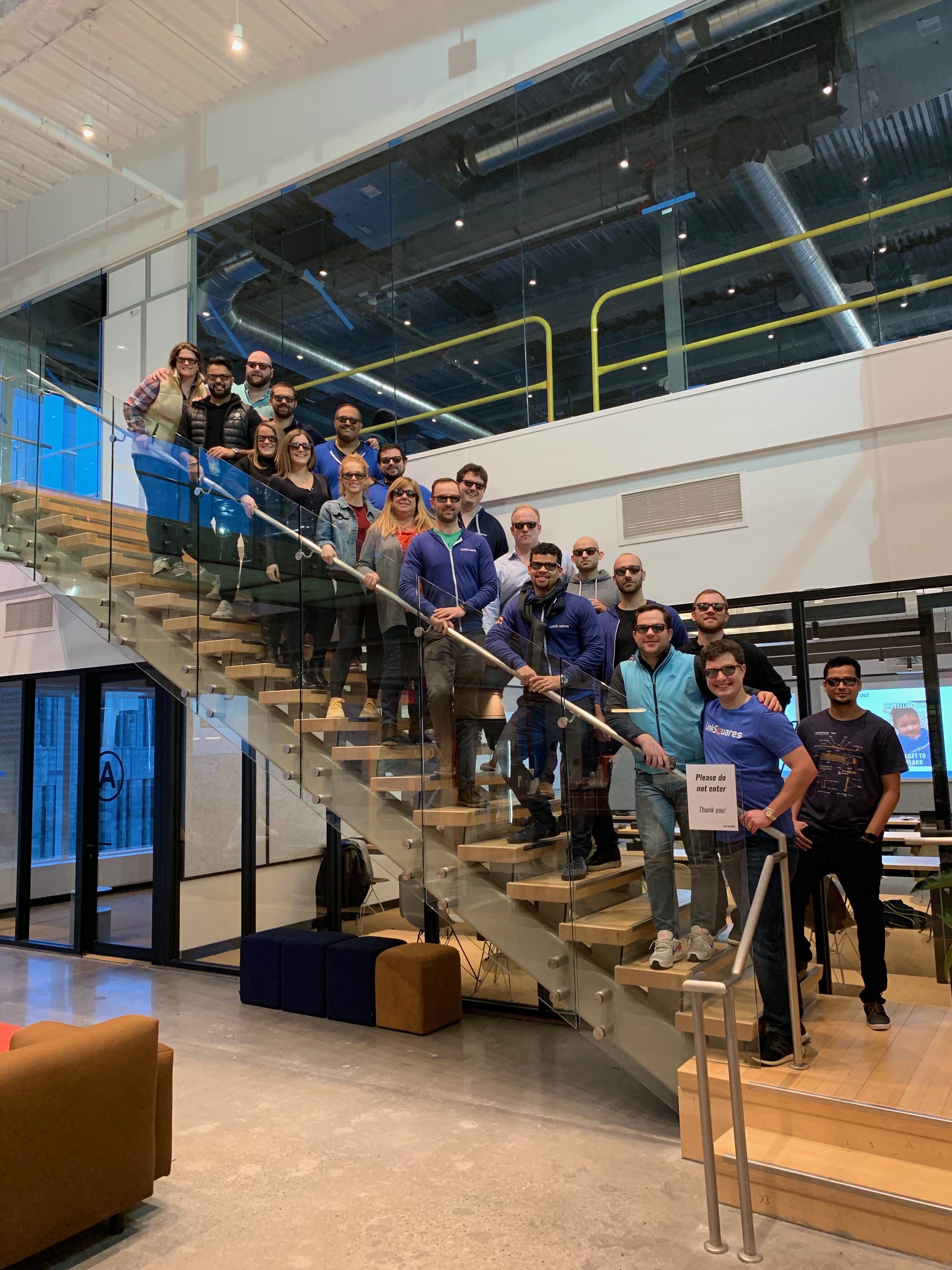
The wedge was the archive
LinkSquares' early insight was that signing is not the end of a contract. It is the start of all the things the contract obliges a business to do. Renewals arrive. Prices change. Notice windows close. Data-handling rules apply. A change-of-control clause becomes interesting at precisely the moment nobody has time to hunt for it.
Its Analyze product converted that archive into a repository with extracted concepts called Smart Values, filters, reports, events, dashboards, and risk scoring. The practical promise was less cinematic than artificial intelligence usually sounds: ask the pile a question without assembling a search party. That was different from e-signature software, which solved the final mile of execution, and from a shared drive, which remembered where a file was but not what the file meant.
Named customers eventually ranged from Wayfair and DraftKings to the Boston Celtics, Commvault, OutSystems, TIME, ProPharma, Softonic, and E.W. Scripps. Scripps' repository reaches back to the 1930s, which is a useful stress test for any product promising to make old paper behave like current data. In customer accounts published by LinkSquares, Accession Risk Management Group reported a $1.4 million return and a 96 percent reduction in contracting time; Softonic reported cutting outside-counsel spending by 40 percent. These are company-selected examples, not universal outcomes, but they show what buyers expect the software to pay back.
“A straight answer about any contract - the first time you ask.”LinkSquares' current product promise
Then the archive grew hands
A useful repository created permission to move upstream. LinkSquares added Finalize for intake, templates, drafting, clause libraries, review, approvals, negotiation, and dashboards. Sign handled electronic signatures. Prioritize organized legal requests and tasks. Connections to Salesforce, Microsoft Word, Slack, DocuSign, Adobe Acrobat Sign, HubSpot, cloud drives, and an API brought the process into tools where non-lawyers already worked.
One agreement, six chances to lose the plot
That expansion changed the business. LinkSquares was no longer merely selling faster contract archaeology. It was selling contract lifecycle management, a crowded enterprise category containing Ironclad, Icertis, DocuSign CLM, Conga, Evisort, ContractPodAi, Sirion, Agiloft, SpotDraft, Juro, and lighter document tools. The low-cost competitor remained stubbornly effective: Word, email, spreadsheets, a shared drive, and one colleague who knows where everything is.
LinkSquares' differentiation rests on joining a legal-specific analysis engine to the workflow around it. The company says LinkAI has trained on more than 10 million real contracts and has been strengthened by more than 6 million human annotations, with legal engineers and data scientists involved. That matters because contracts are full of language whose meaning depends on structure, exceptions, definitions, and the relationship between documents. A general model can produce fluent prose. A contract system also has to preserve permissions, provenance, approvals, and an audit trail.
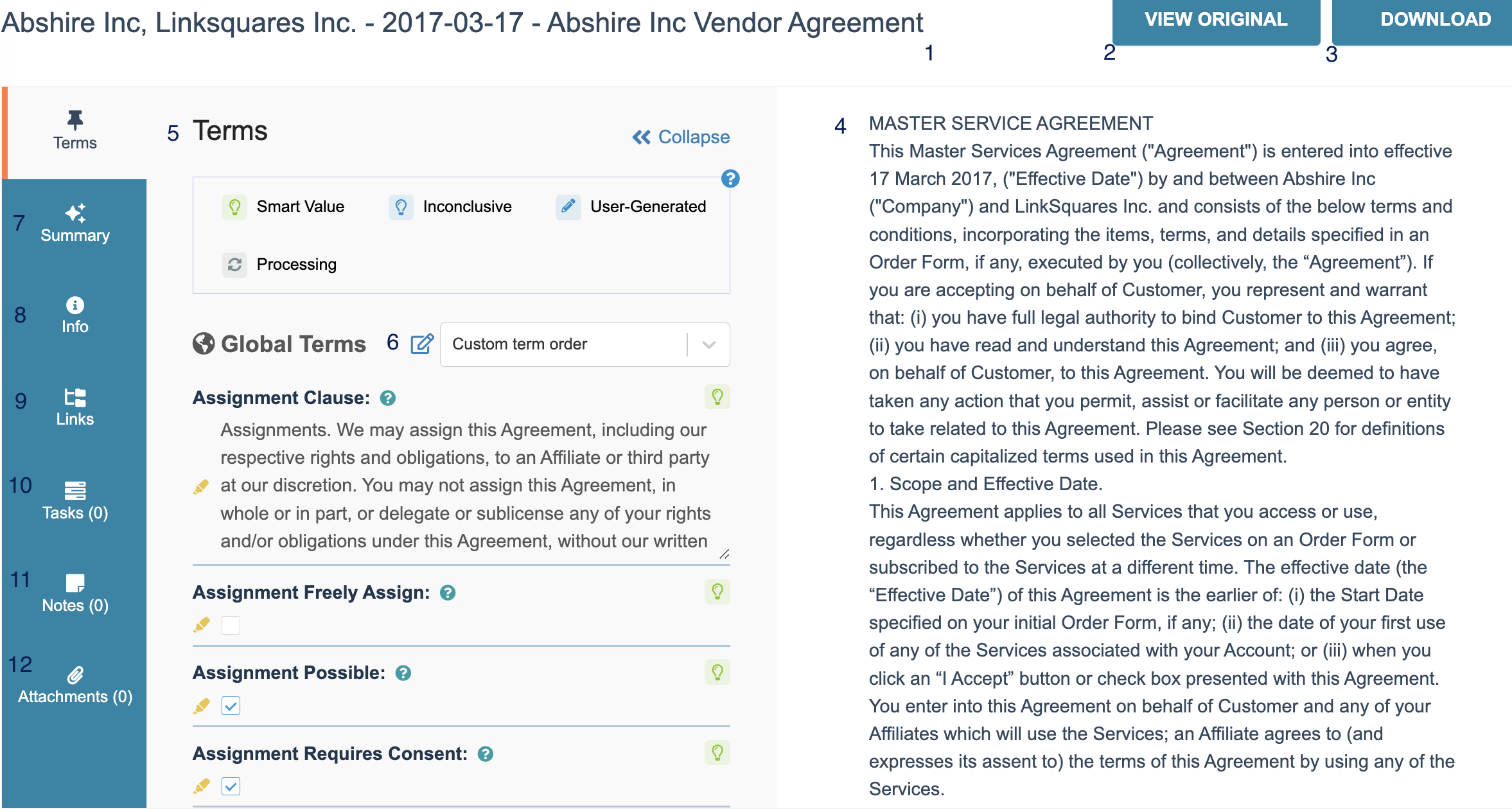
The expensive part was becoming a suite
Capital followed the expansion. LinkSquares announced a $4.8 million seed extension in 2019, a $14.5 million Series A led by Jump Capital in 2020, a $40 million Series B led by Sorenson Capital in 2021, and a $100 million Series C led by G Squared in April 2022. Supplied company data puts total funding at roughly $166 million. The 2022 round valued the business at nearly $1 billion by the company's description.
Money does not automatically make several products feel like one. A repository, drafting system, signature flow, task manager, CRM integration, and AI assistant can reproduce the fragmentation they were bought to eliminate. LinkSquares' answer in 2025 and 2026 was not another tab. It decided to rebuild the platform around an AI-native, agentic architecture.
The leadership changed at the same time. Sunak stepped away from daily responsibilities in February 2025, remaining a founding board member and adviser. Combs became interim chief executive. In March 2026, veteran SaaS executive Bill Hewitt took the interim CEO role, bringing prior experience leading CLM provider Exari. Three months later, LinkSquares made its rebuilt agentic platform generally available.
The new pitch is that agents can surface obligations, monitor renewals, triage intake, guide review, and answer portfolio questions while remaining governed and auditable. In plain English: the database should notice work, not merely wait to be searched. The distinction is important. A chatbot that summarizes one document is handy. A system that understands related agreements, permissions, company playbooks, and deadlines can alter how work is assigned.
What a buyer can copy - and what a founder can steal
For operators, the useful move is to choose one expensive contract question before shopping for a platform. Which agreements renew in the next 90 days? Where are nonstandard liability caps? How long does an NDA wait for approval? What obligations arrived with the last acquisition? Build the initial repository and workflow around that answer. A measurable win is better adoption fuel than a grand “digital transformation” program.
For founders, LinkSquares offers a clean sequence. Start with the information bottleneck that already costs money. Interview the people doing the work until the narrow wedge becomes obvious. Make the archive valuable before asking to control the whole workflow. Integrate with the incumbents users refuse to leave. Only then expand from system of record to system of execution.
When the playbook does not work
A full CLM is a poor cure for a company with few contracts, no repeatable approval process, unclear ownership, or nobody assigned to implementation. AI cannot rescue bad source documents, contradictory playbooks, or colleagues who keep negotiating in private inboxes. Small teams that only need templates and signatures may be better served by lighter software. Large global enterprises with deep procurement, ERP, localization, or bespoke compliance requirements may prefer a heavier platform. The product works when contract volume, risk, and cross-functional friction are real enough to repay the change.
What the software is really replacing
The purchasing comparison is rarely one CLM against another in a clean laboratory. It is LinkSquares against a strange little institution assembled over years: an intake form nobody likes, an approvals spreadsheet, clauses copied from last quarter's deal, a drive arranged according to a former employee's private cosmology, DocuSign for execution, calendar reminders for renewals, and outside counsel whenever the archive becomes frightening. That homemade stack looks cheap because its cost is spread across salaries, delay, missed leverage, and risk.
A serious evaluation therefore needs a baseline. Count how many agreements arrive each month, how long routine reviews take, how often sales asks legal for status, what outside counsel handles, which renewals were missed, and how many people maintain duplicate trackers. Then test LinkSquares on real documents and awkward exceptions, not a pristine sample NDA. Ask who verifies extracted terms, how permissions map to business units, how related agreements connect, what happens when an agent is uncertain, and how data leaves the system if the relationship ends.
The implementation owner matters as much as the model. Legal must define the playbook; IT and security must approve the data path; sales and procurement must agree to the intake doors; an executive must care about the resulting metrics. Without those conditions, even accurate extraction produces a handsome repository that colleagues route around. With them, the contract becomes shared infrastructure instead of legal's private filing cabinet.
Where LinkSquares fits now
LinkSquares sits between lightweight document tools and the heaviest enterprise contract systems. Its center of gravity remains the in-house legal team, but the product makes the strongest business case when sales wants faster paper, finance wants commitments, procurement wants vendor visibility, and executives want risk explained without opening PDFs.
The company sells subscriptions by quote, with different application and user-license levels plus implementation and professional services. That makes fit more consequential than feature counting. Buyers need to price migration, configuration, integrations, training, and internal process ownership alongside the software.
The most interesting thing about LinkSquares is still its first question. What have we already promised? In 2015, the answer required humans to read the archive. In 2026, the company wants software agents to watch the archive, connect it to new work, and tell the right person what to do next. The technology has changed. The awkward business truth underneath it has not.