contract-lifecycle-management
(34)
The Contract Was Hiding in Plain Sight
The clever part of Workday’s contract business is not writing agreements. It is teaching a company to notice what its agreements have been saying all along.

Summize wants your contracts out of the inbox queue
The Manchester company puts contract work inside Word, Slack and Teams. Its customers reveal why the real breakthrough often starts before anyone switches on the AI.

Gatekeeper Wants Your Contracts to Stop Renewing Themselves
The vendor-management company connects contracts, supplier risk and spending in one place. Its most persuasive pitch is the money and hours customers say they recovered from work nobody wanted to own.
Ironclad Wants Your Contracts to Stop Playing Hide-and-Seek
The enterprise contract platform turns approvals, redlines, signatures, obligations, and renewals into one visible process. It is built for teams with enough contract chaos to justify fixing the plumbing.
Contracts Are Finally Ready to Confess
Evisort turns the contract archive from a digital attic into a working source of answers. Now inside Workday, its AI reads the fine print, cites the evidence, and routes the chores - but serious buyers should budget for enterprise pricing and a real implementation.
ContractPodAi Outgrew the Contract Drawer
Now called Leah, the former CLM specialist wants to run the work hiding between legal, procurement and finance. The ambition is large; the buying decision still comes down to implementation discipline.

Devinder Jeet Singh Spent a Decade Making Contracts Interesting
He joined Sirion when contract software meant forms and workflows. Ten years, two continents and one 1,200-registration webinar later, he is its CMO - selling the idea that the fine print can become working business intelligence.
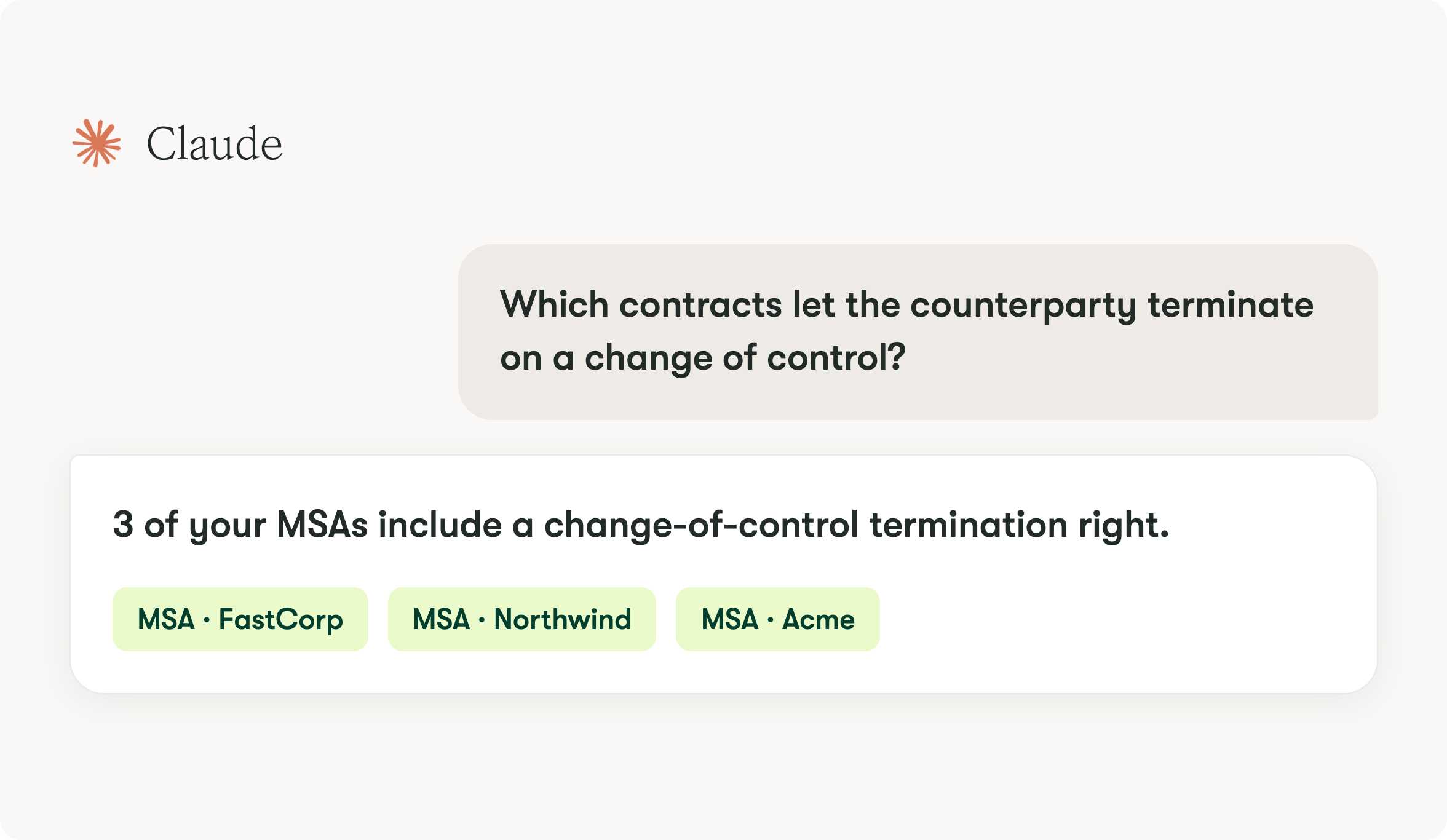
Juro Wants to Make Contract Purgatory Someone Else’s Job
Contracts are where momentum goes to wait for an attachment. Juro puts the draft, redlines, approvals, signature, data, and increasingly the busywork itself into one browser tab - if your team has enough contract volume to justify the bill.

Biju Muduli Spent Two Decades Learning What Makes Enterprise Buyers Move
Her route from electrical engineering to the C-suite runs through CRM systems, global demand engines, cybersecurity and now agentic contract software. The connecting idea is simple: make complicated technology legible, measurable and useful.
Filevine Turned a Lawyer’s Software Headache Into a $400 Million Bet on Legal AI
The Utah company began as an escape from legal software that forced firms to work someone else’s way. A decade later, its configurable case system has become the foundation for a broader - and much more expensive - legal intelligence campaign.

Ed Breault Runs on Data - and Keeps Finding the Human in the Machine
He began by modeling nuclear-plant data, learned marketing through transformation work, and spent 16 years helping Aprimo change shape. At Malbek, the Pittsburgh-based CMO is applying the same patient systems thinking to contracts, AI agents, and the people behind both.

Sirion Put AI Where Contracts Get Expensive: After the Signature
Most contract software helps companies reach the signature. Sirion built its business around the expensive part that comes next - proving that suppliers, customers, and internal teams delivered what the agreement promised.
The $1 Trillion Procurement Bet: Zycus Wants AI to Finish the Job, Not Just File the Form
Zycus spent more than two decades building the plumbing of corporate purchasing. Now it is betting that procurement's next interface is a sentence in Teams - and its next worker is an AI agent with guardrails.
Malbek Wants to Fire the Spreadsheet Running Your Contract Department
The Princeton software company is betting that contracts should behave less like buried paperwork and more like operating data. Its best proof is wonderfully unglamorous: fewer legal touches, shorter cycles and no consultant army hiding behind the setup screen.

Nicole Milstead Took the Scenic Route to the C-Suite - and Kept the Map
A social-work graduate became an enterprise-software CMO by learning to read people, systems and numbers at once. Her useful idea is simple: empathy belongs in the operating model.
LinkSquares Turned Contract Chaos Into a Business Dashboard - Now It Is Rebuilding the Whole Thing Around AI Agents
The Boston legal-tech company began with one painfully specific question: what have we already promised? A decade, more than 1,000 customers and roughly $166 million in funding later, it is betting that contract software should do more than store the answer.
DealHub Bet $184.5 Million That Your Revenue Stack Has Too Many Tabs Open
The Austin-based software company is turning the least glamorous part of enterprise sales - the machinery between a promising deal and recognized revenue - into one governed workflow. A $100 million growth round says the timing is no accident.

Agiloft Spent 35 Years Making Contracts Less Awful - Now AI Is Testing Its Best Advantage
The enterprise-software veteran built a business around one unfashionable promise: your contract system should bend to your company. Its next act is to make the paperwork answer back - without letting customization become chaos.

Jesal Mehta Spent Decades Watching Contracts Leak Value. Then He Built the Fix Into the Workflow.
After building software teams across India and the United States, Jesal Mehta chose a stubborn enterprise problem: contracts full of value, obligations and risk that organizations still manage like paperwork. Aavenir is his attempt to make the work visible, searchable and useful.

Why Most Sales Teams Quietly Buy Both DealHub and PandaDoc
DealHub prices the deal. PandaDoc formats the paperwork. Most buyers who go shopping for one end up needing the other - here is why the choice is rarely either-or.
Conga
Align pricing, quoting, and contracting with shared, AI-driven intelligence so teams stay aligned and move from decision to execution with clarity and speed.

Roger
Roger is a New York eSignature and contract platform (YC W21) that turns clunky PDF signing into an app-like, mobile-first experience. Built for startups, SMBs, and growing sales, HR, and finance teams, it pairs reusable templates, approval workflows, smart reminders, and a searchable contract repository with pay-as-you-go pricing - positioning itself as a faster, simpler alternative to DocuSign.

Checkbox
Checkbox is an AI-powered legal service management platform that acts as the 'AI Legal Front Door' for in-house legal teams. It captures legal requests from channels like email, Slack, Teams and Salesforce, automatically triages and routes them, resolves routine work such as NDAs and contract approvals through self-service and AI agents, and escalates complex matters to attorneys. Built on a no-code, drag-and-drop workflow engine, it gives legal departments a single place to capture, manage, automate and measure their work. Founded in 2016 by Sydney classmates Evan Wong and James Han, Checkbox serves 100+ enterprises including SAP, PepsiCo, Hitachi, Telstra, Woolworths and Xero, and raised a $23M Series A in January 2026 at a reported $100M valuation.

Concord
Concord is an AI-powered contract lifecycle management (CLM) platform that lets any team - legal, sales, procurement, finance and HR - create, negotiate, e-sign, store and track agreements in one place. Founded in 2014 by Matt Lhoumeau and Florian Parain, the company targets the mid-market with fast deployment and transparent pricing, and says its software is used by hundreds of thousands of businesses worldwide.
SpotDraft
SpotDraft is an AI-native contract lifecycle management (CLM) platform built for in-house legal and business teams. Founded in 2017 by Shashank Bijapur and Madhav Bhagat, it handles the full contracting journey - drafting, negotiation, AI-assisted redlining, e-signatures, and an intelligent repository - so legal teams can move faster without giving up control. With its VerifAI Microsoft Word plug-in and a broader 'Legal OS' vision, SpotDraft serves 450+ organizations and is used by growth-stage and enterprise companies to cut contract busywork and surface risk automatically.
Cognizer Inc
Cognizer is a Pleasanton, California enterprise AI company that turns messy contract documents into structured, queryable intelligence. Its patented Genius technology pairs natural language AI with a knowledge graph so legal, sales, procurement, finance and compliance teams can discover, classify and analyze contracts at scale - detecting clauses, mapping parent/child document families and answering plain-language questions across millions of documents.

Aavenir
Aavenir is a Texas-based enterprise software company that builds AI-powered source-to-pay and contract lifecycle management (CLM) applications natively on the ServiceNow platform. Founded in 2019 by Jesal Mehta, the company uses AI agents, machine learning, and natural language processing to automate contracting, sourcing, invoicing, vendor onboarding, and obligation management so procurement, legal, and finance teams can cut cycle times, reduce risk, and gain end-to-end visibility across the vendor and contract lifecycle.

Matt Lhoumeau
Matt Lhoumeau is the cofounder and CEO of Concord, a contract lifecycle management platform used by over 100,000 companies. A French entrepreneur who founded his first company at 17, wrote speeches for Nicolas Sarkozy's 2007 campaign, and once spent six months manually renegotiating 500 contracts for a French telecom giant, Lhoumeau built Concord to make contract management as ordinary as sending an email.

Shashank Bijapur
Shashank Bijapur is co-founder and CEO of SpotDraft, an AI-powered contract lifecycle management platform used by in-house legal teams at companies including Airbnb. A Harvard Law LLM and former corporate attorney at White & Case in New York and Talwar Thakore & Associates in Mumbai, he started SpotDraft in 2017 after realizing that self-driving cars existed while lawyers still copy-pasted contract clauses. The company has raised roughly $90M in total funding, with a Series B led by Premji Invest, and employs around 330 people across India and the US.
Crosby
Crosby is an AI-powered law firm that reviews business contracts - NDAs, MSAs, and DPAs - in under an hour by pairing proprietary AI agents with licensed human lawyers. It charges a fixed price per document instead of billing by the hour, carries malpractice insurance like any registered law firm, and is built for fast-growing companies whose deals get stuck waiting on legal. Founded in 2025 by Ryan Daniels and John Sarihan, Crosby has reviewed thousands of contracts for customers like Cursor, Clay, and Cartesia, and raised $85.8M total across seed, Series A, and a $60M Series B led by Lux Capital and Index Ventures.