Why buy Juro? Because a contract that should take an afternoon has a peculiar talent for becoming a week-long tour of Word attachments, Slack nudges, approval spreadsheets, signature chases, and one final PDF saved under a filename nobody will ever search correctly. Juro is for in-house legal teams that see this little tragedy repeat at volume. It gives them one place to design the route, then lets sales, HR, procurement, finance, and operations move routine agreements along it without asking a lawyer to play traffic cop.
The useful word is routine. A company processing five bespoke acquisitions a year does not need the same machinery as one sending 2,000 NDAs, order forms, employment agreements, and vendor contracts. Juro earns its keep when repetition is the problem: familiar documents, recurring approval rules, structured fields, predictable negotiation positions, dates that matter later. If contracts are still occasional, a folder and an e-signature service may be less glamorous and more sensible.
The origin: a lawyer picks a fight with Word
Co-founder and CEO Richard Mabey trained in corporate law at Freshfields. The founding irritation was not obscure doctrine. It was watching expensive people shuffle documents among Microsoft Word, email, and PDF. During an MBA at INSEAD, Mabey developed the idea and won the school’s venture competition, which helped fund an early prototype. After a spell learning product craft at LegalZoom, he teamed up with software engineer Pavel Kovalevich. They went full-time in March 2016, from Mabey’s kitchen.
Their first build was an editor. That detail matters. Rather than bolting a database around files created elsewhere, Juro wanted the contract itself to begin as structured, machine-readable information in the browser. Deliveroo became an early customer in 2017. The company has since raised $38.5 million by its current count, opened a Boston office, and says it has processed three million contracts in more than 85 countries.
The real Juro product is a route through the company, with a contract attached.YesPress verdict
What happens inside the tab
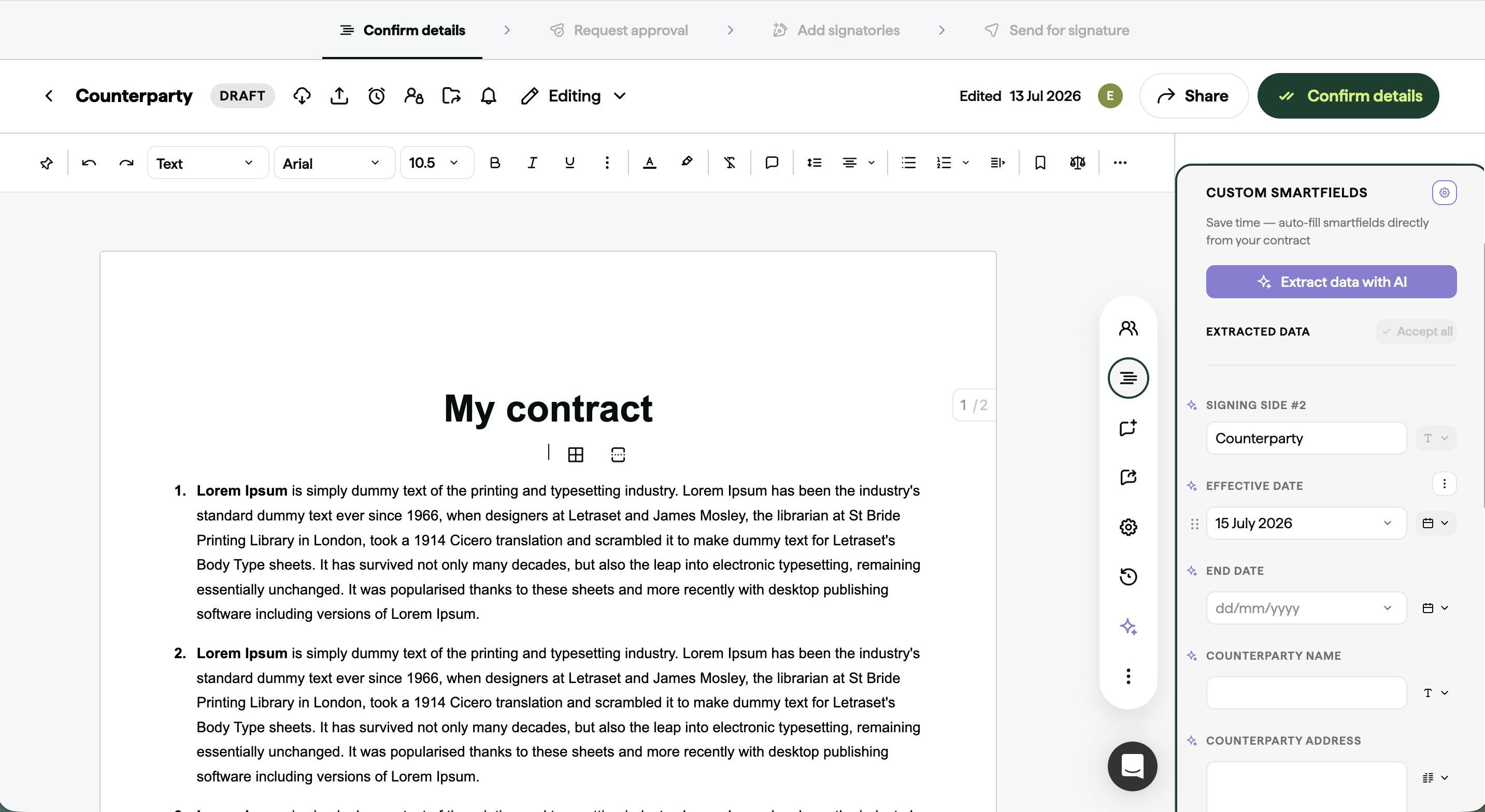
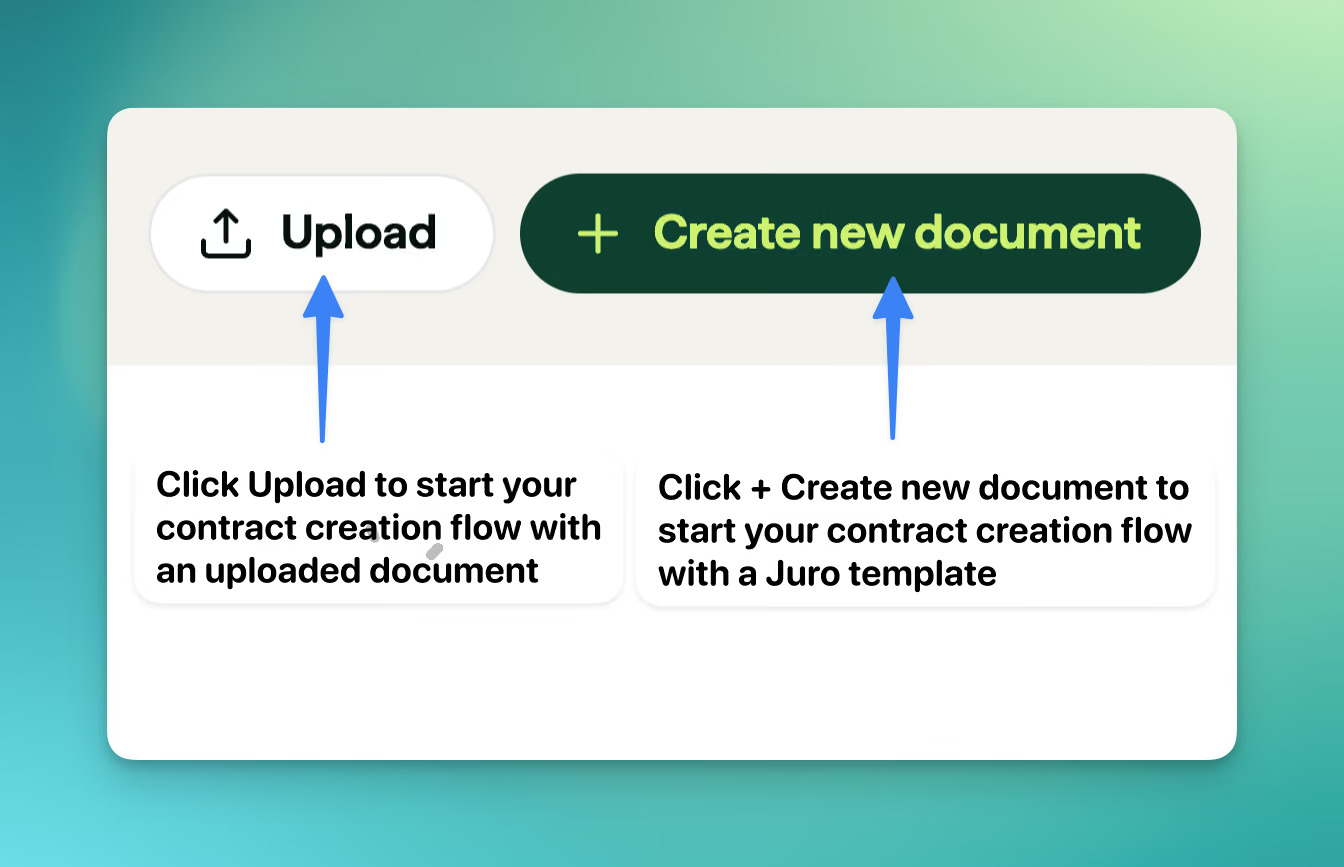
Legal starts with templates, smartfields, conditional rules, permissions, fallback language, approval routes, and signatories. A salesperson can generate an order form from the CRM. HR can create an employment document. Procurement can upload a supplier’s paper. The parties edit, comment, suggest, and redline; approvers get routed in; signatures happen; the executed agreement lands in the repository with its dates and data intact.
or upload
and redline
and track
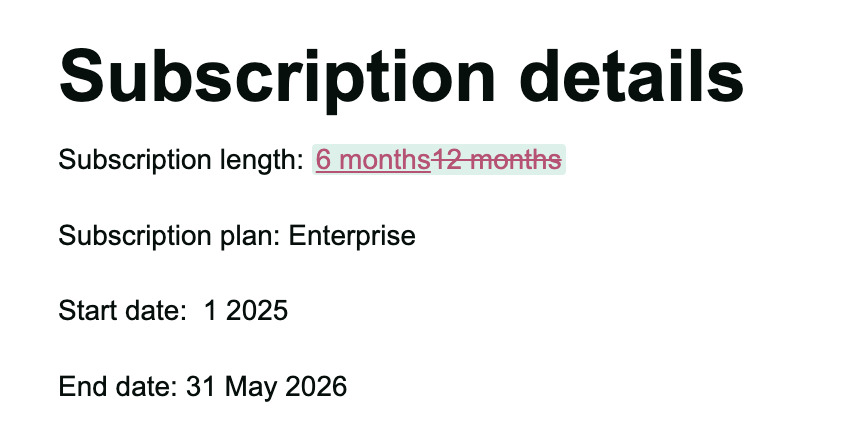
The editor is where Juro feels distinct from a collection of add-ons. Its July 2026 update made DOCX changes to smartfield values appear as visible redlines, added a progress bar for each contract stage, and allowed approvers to be assigned to particular fields. A pricing change can wake finance without forcing every approver to revisit an unrelated typo. This is unflashy product work, the sort that prevents automation from becoming a faster way to annoy people.
Now the contract can answer back
Juro’s newer layer is a set of AI tools spread across the lifecycle. AI Draft proposes and revises language. AI Review checks a document against a playbook and produces redlines. AI Extract pulls dates, clauses, risks, summaries, and other data from uploaded contracts. Operator, released in open beta in April 2026, lets a user ask questions across the repository in ordinary language and returns answers with links to the contracts behind them.
A general counsel can ask which high-value agreements auto-renew this quarter. Finance can look for payment terms. A commercial operator can pull together the history of one counterparty across a master agreement and amendments. Juro has also connected its repository to ChatGPT and, in June 2026, Claude through the Model Context Protocol. The stated goal is to let people find, analyze, edit, upload, or download contracts from the AI tool where they are already working.
There are limits, helpfully written down. As of August 2026, Juro’s fair-use policy allows 500 completed Operator tasks per customer each month, ten AI Reviews per user every two hours, and 200 documents in one bulk AI Extract job. The regular AI Assistant and individual-document extraction had no published cap. Juro says it uses zero-retention APIs and does not send customer data to train large language models. Any legal buyer should still put security, retention, model providers, permissions, audit logs, and incident terms through its own review. Yes, the contract software needs a contract review.
Where Juro lands well
| Job | What Juro contributes | What still needs an owner |
|---|---|---|
| Routine creation | Forms, templates, rules, CRM data, and self-service | Template design and change control |
| Third-party paper | AI review, playbooks, redlines, Word sync | Escalation logic and legal judgment |
| Approval | Conditional routes and field-specific approvers | Clear internal authority |
| After signature | Repository, extraction, reports, and reminders | Clean migration and accountable data owners |
Public review patterns are consistent. G2’s snapshot showed 4.6 out of 5 from 182 reviews, with ease of use, support, intuitive design, and efficiency appearing often among the positives. Capterra showed 4.8 from 46 reviews. One 2025 G2 reviewer praised flexible templates and the bidirectional HubSpot sync; another said tailored workflows made different contract types easier to handle. Juro’s own customer stories put numbers on individual deployments: Talentful reported an 86 percent reduction in time to sign, Funnel an 88 percent reduction in manual reviews, and Paddle a saving of three and a half hours per contract. Those are customer-specific outcomes, useful as possibilities rather than promises.
The bits buyers should not wave through
Pricing is private and usage-based. Juro’s calculator asks about monthly volume, contract types, AI features, integrations, support, SSO, and API access, then requests an email. Mabey said in a January 2026 interview that customers pay according to annual contract volume. This can map cost to value, but it makes casual comparison harder. One G2 reviewer called Juro a good middle-priced CLM; another said it could feel expensive for the features their company actually used.
Setup is the other bill, even when the invoice calls it implementation. Templates, smartfields, playbooks, rules, permissions, migration, and integration mappings encode how your company agrees. Someone must make those decisions and maintain them. Reviewers have mentioned time-consuming workflow setup, limited advanced customization, template constraints, and formatting issues. Juro’s recent releases directly address Word sync and creation guidance, which is encouraging, but a buyer should test its own ugliest document rather than admire a clean NDA demo.
The alternative is not always another CLM
Ironclad, DocuSign CLM, Contractbook, LinkSquares, SpotDraft, and PandaDoc overlap from different directions. Some emphasize enterprise workflow, some repository intelligence, some document generation or signature. The closer comparison depends on where your pain begins. If it begins before signature, compare editing, playbooks, approval logic, and adoption. If it begins after signature, stress-test extraction, search, reporting, and linked agreements. If all you need is a signature, buying a full lifecycle platform is like hiring an orchestra to play a doorbell.
Our take
Juro is a strong fit for a growing in-house team with repeatable commercial contracts, a real appetite for self-service, and somebody willing to own the operating model. Its browser-native foundation gives the AI features useful context instead of leaving them as a floating chatbot. Small-volume teams, law firms, and buyers seeking a public, swipe-the-card price should look elsewhere first. Everyone else should run a pilot around one measurable workflow and bring the messiest DOCX they can find.
Seven questions for the demo
- What counts toward annual contract volume and an Operator task?
- Which integrations, API features, and SSO controls sit in our quote?
- How will our existing contracts, metadata, and relationships migrate?
- What happens to formatting on our most awkward Word document?
- How are AI answers cited, logged, corrected, and permissioned?
- Who maintains templates and playbooks after implementation?
- Which turnaround time will the pilot measure before we sign?
A decent pilot should be narrow enough to finish and awkward enough to teach you something. Pick one contract family with visible volume, such as sales NDAs or supplier agreements. Record the current median time from request to signature, the number of legal touches, and how often a document goes missing or returns with the wrong language. Build that route in Juro, include the people who usually avoid new software, and run it for a full cycle. Then inspect the exceptions. A polished happy path proves very little; the odd discount, overseas entity, changed liability cap, and absent approver reveal whether the rules help or merely move confusion into a tidier screen. Agree in advance who can change a template, who audits AI output, and what success would justify expanding to the next document type.
The final test is social, not technical. Will colleagues actually leave email and use the route legal designed? Juro tries to dodge that problem by appearing inside Salesforce, HubSpot, Slack, Word, Claude, and ChatGPT. Sensible. Software cannot eliminate the politics of approval, but it can stop hiding them in attachment chains. For the right company, that alone can feel like getting Friday afternoon back.