Somewhere in every large company, a contract is hiding. It may be buried in an inbox, marooned in SharePoint or saved as a file called FINAL_v7_USE_THIS_ONE.docx. The document contains a renewal date, a price increase or a promise that someone has to keep. Nobody remembers which someone. This is the quiet, expensive absurdity Agiloft has spent more than three decades trying to remove.
Agiloft is contract lifecycle management software, usually shortened to CLM. Its platform handles the journey from request and drafting through approval, negotiation, signature, storage, reporting, renewal and post-signature obligations. Legal may own the system, but procurement, finance, sales and operations all touch the result. A customer can route a supplier agreement for approval, compare language against a playbook, extract its dates and duties, and send those details into the business systems where people already work.
That description makes CLM sound tidy. Real companies are not. A pharmaceutical business may need different review rules by geography. A manufacturer may have procurement approvals that change with contract value. A sales team wants speed; legal wants consistent language; finance wants the numbers to match the forecast. Agiloft's defining bet is that the software should be configured around those wrinkles without turning every change into a software-development project.
The original trick
A database wearing a legal suit
Founder Colin Earl started the company in 1990 as Integral Solutions Corporation. He developed the customizable software that became Agiloft's technical foundation and led the business for decades. The company says it reached $10 million in annual revenue in 2015. In 2020, FTV Capital invested $45 million in growth equity, the first publicly announced institutional round in a long, largely self-directed history. Eric Laughlin, a legal-technology executive from EY and Thomson Reuters, became CEO in 2021.
The platform's underlying idea is less about documents than data. A contract is a cluster of connected facts: parties, products, prices, dates, clauses, approvals, obligations and relationships. Treat those facts as records and workflows, and the agreement can trigger action. A renewal alert can reach procurement. A signed customer term can appear in Salesforce. An obligation can become a task with an owner and a deadline. The contract stops being a PDF mausoleum.
This is where Agiloft differs from lighter contract repositories and fixed-template tools. Its no-code model lets trained administrators change fields, rules, permissions, tables and workflows. The Integration Hub advertises connections to more than 1,000 applications. That can matter more than a beautiful contract screen, because an agreement process fails when people must duplicate data or leave the tools they use every day.
“A no-code platform is not a no-work platform.”The useful lesson hiding in Agiloft's customer stories
What they actually did
The five-month rollout that started before the software
FMC, the agricultural-sciences company, offers the most copyable case. It had seen vendors overpromise and underdeliver. Its team initially planned a cautious North American deployment covering a small set of agreements. The general counsel pushed for a larger launch. FMC ultimately went global with six templates in seven languages, moving from contract signature in December 2022 to launch in May 2023.
The speed did not come from clicking a magic configuration button. FMC's legal operations team had mapped workflows and contracting processes before selecting a system. That preparation changed the risk calculation: a global launch became plausible because the organization had already made many of the decisions the software needed. What changed their mind was not a vague innovation pitch but confidence that Agiloft would deliver what it had described.
The reader can steal the sequence. First, document the current path of a real agreement, including exceptions and approvals. Second, choose a narrow set of agreement types with visible pain. Third, name the administrator who will own configuration after consultants leave. Fourth, connect the platform to systems people already use. Finally, measure cycle time, exception rates, renewal misses and adoption. “Install CLM” is not a strategy; it is an invoice.
Copy this
- Map the process first
- Give configuration an owner
- Launch around real agreement types
- Measure adoption and cycle time
Watch this
- Customization without governance
- Automating a broken approval chain
- Moving data without cleaning it
- Treating training as a launch-day event
What it costs
Enterprise pricing, with one public clue
Agiloft's core CLM is quote-based, so there is no complete public rate card for a typical global deployment. A current AWS Marketplace listing provides one hard reference point: $25,000 for a 12-month Core Platform contract configured with 20 power-user licenses and one administrator. A real total can also include configuration, data migration, integrations, training, support and partner services. The company offers Essentials, Advanced and Premium packaging, but buyers need a tailored proposal to learn the full number.
The price is more than the subscription
Budget for licenses + implementation + data cleanup + integrations + internal administration + change management. A cheap license attached to a failed rollout is still expensive.
Agiloft's newer Astra product changes the entry point. Astra offers contract review, redlining, portfolio analysis and natural-language questions. Its free plan includes unlimited users and uncapped use of the Microsoft Word add-in; analysis is credit-based. A Pro plan is listed at $120 per month, while advanced enterprise use is custom-priced. That is a deliberate contrast with a full CLM deployment: upload contracts and find value quickly, then connect deeper workflows later.
The AI turn
Buy the playbook, then open the front door
KKR agreed to acquire a majority stake in Agiloft in May 2024. JMI Equity joined as an investor and FTV retained a minority position; the transaction price was not disclosed. The product pace accelerated. Agiloft acquired Screens, an AI contract-review startup founded by lawyer Otto Hanson, in late 2024 and announced the deal in January 2025. Screens evaluates language against configurable playbooks and suggests redlines. Its community model lets legal experts publish standards others can use.
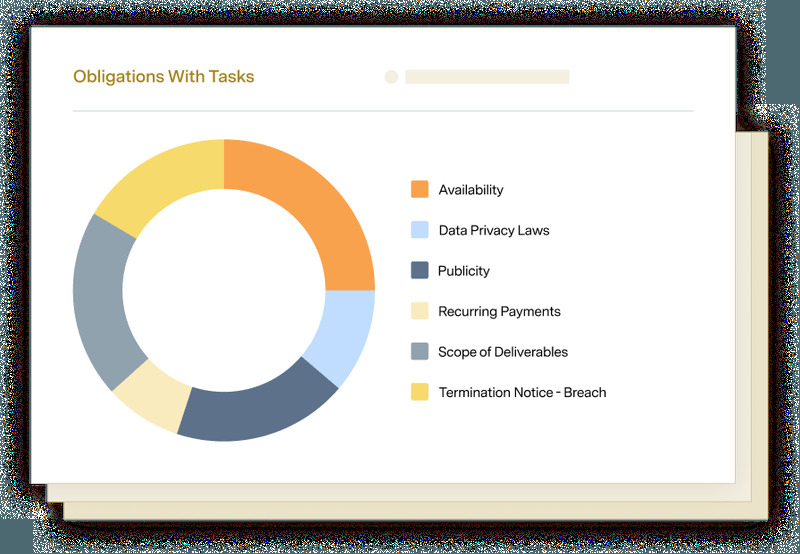
By April 2025, Agiloft had placed Screens review inside the core platform. In December it added AI-driven obligation management, extracting commitments and turning them into assigned tasks, reminders and escalations. Astra arrived in early access in April 2026 and became generally available in July. The progression is coherent: use AI first to read and compare language, then to surface portfolio patterns, and finally to help create or update governed records.
The distinction matters. A chatbot hovering beside a document is easy to demonstrate and hard to trust. AI inside a playbook, permission model and approval workflow has narrower freedom and clearer accountability. Agiloft says customer data in Astra is not used to train AI models. It also frames AI as an extra set of eyes, with people retaining final review. For legal teams, that modest description is more useful than robot-lawyer theater.
The clever part is not making a contract talk. It is deciding which answers can safely become work.
The catch
Flexibility has carrying costs
Agiloft fits organizations with meaningful contract volume, unusual approval logic, multiple departments or systems that need contract data. Public customers span CDW, Alkermes, TaylorMade, Rush University Medical Center, FMC and nonprofits. The platform competes with Icertis, Ironclad, DocuSign CLM, Sirion, Coupa, LinkSquares, Juro and SpotDraft. Its most stubborn competitor, however, remains the familiar bundle of Word, email, shared drives and spreadsheets. That bundle is messy, cheap and already installed.
The Agiloft approach will not work well when the problem is small, the workflow is simple or nobody can own the system. A ten-person company with modest contract volume may get more value from a focused repository or review tool. A large company can also fail by configuring every historical exception into the new platform. No-code makes changes accessible; it does not make every change wise.
The first thing to fail in a CLM program is usually not document storage. It is agreement about the process: who owns intake, who can approve an exception, which data must be clean, and what happens after signature. Agiloft itself recommends professional services or a certified partner for initial implementation. That is an important admission from a no-code vendor. The product can bend, but the organization still has to choose a shape.
Agiloft reports a 99 percent implementation satisfaction score and a 96 percent renewal rate. Those are company figures, not audited market statistics, but they reveal what the business chooses to optimize and sell: the contract you keep. Its six consecutive Gartner Leader placements through 2025 reinforce the company's position among established enterprise CLM vendors. The open question is whether Astra can create a simpler path into that heavier platform without weakening the governance that made it valuable.
After 35 years, Agiloft's story is not really about paperwork. It is about the uncomfortable space between how a company says it works and how work actually moves. Contracts expose that gap because they record promises with dates and prices attached. Agiloft gives those promises fields, rules, owners and now an AI assistant. The software can make the gap visible. Closing it remains a human job.
Keep exploring