In Palm Springs, Acme House Company had a problem that looked like a marketing problem. Its homes were already on Airbnb and Vrbo. The business knew its busy season. Yet city regulations were making the market harder, and better visibility on booking channels had become a priority. Acme joined TrackDistribution in September 2023. A subsequent audit produced a surprisingly modest candidate for change: the cancellation policy.
- Track connects the work of selling a stay with the work of running it.
- Its customers are professional property managers, with guests and homeowners to keep happy.
- The buying decision includes migration, training and accounting, as well as software.
- Small operational experiments can matter as much as another marketing campaign.
Twenty homes, one less reason to hesitate
Acme managed 165 units. For a smaller group of 20, it changed Airbnb cancellation terms from Super Strict to flexible or moderate. Track’s case study reports an average 40% revenue increase against the previous fourth quarter, with individual increases ranging from 6% to 88%.
That is an intriguing result, with a limited meaning. This was a vendor-published account, not a controlled trial. It does not isolate cancellation terms from every other change in demand or operations. What it offers is a method worth borrowing: identify a point of friction, change it on a manageable slice of the business, then examine the result. A booking policy is also part of the sales pitch.
The booking is only the beginning
TravelNet Solutions, now called Track, sells software and services to businesses that manage vacation rentals. Those businesses occupy an awkward middle position. Guests expect an easy holiday. Homeowners expect understandable statements and dependable income. Staff must translate both sets of expectations into reservations, clean rooms, repairs and money that reaches the right place.
TrackPMS sits at the center of this arrangement. Its functions include booking management, trust accounting, housekeeping, maintenance and owner communications. Around it sit tools for payments, distribution, guest records, reservations calls and direct booking websites. The current company website advertises more than 80 integration partners and an API for connecting outside tools.
The product is easier to understand by following a reservation than by reading a catalogue. An inquiry needs a response. A quote needs current availability. A confirmed stay creates work for property care. A payment must connect to accounting. The homeowner eventually needs a statement. At every handoff, there is an opportunity to copy something incorrectly or ask somebody else to explain it.
- 01 / InquiryCRM + reservations team
- 02 / BookingAvailability + payment
- 03 / StayProperty care + communication
- 04 / SettlementAccounting + owner statement
This workflow illustration is an editorial simplification, not a claim that every operator follows identical steps. It captures Track’s competitive argument: connected information should reduce the work of maintaining several versions of the same business.
How many properties does ambition require?
Third Coast Vacations makes that argument concrete. In a February 2025 case study, the southwest Michigan operator had 80 properties and a goal of growing the portfolio by at least 25% within six months. Its team felt it had outgrown LiveRez. Recommendations from other regional property managers helped put Track on the shortlist.
Owner Dan Saunders described the frustration plainly: “I was sitting on my hands waiting for Ignite to get there”. The switch was meant to support years of operation, rather than another near-term replacement. Track says implementation began three days after signing. That is a kickoff date, not a claim that migration finished in three days. The planned portfolio expansion is likewise a target, rather than a documented result.
Elsewhere, the requirements were larger. SkyRun’s January 2024 partnership announcement described adding Track and its booking engine to a franchise network with more than 1,200 properties. The planned website overhaul would connect that inventory to a more consistent booking experience. These two customers illustrate the range of the proposition: preparing a regional operator to expand, and standardizing tools across a franchise brand.
Buying the pieces, then changing the name
The company’s early history has a pleasingly specific setting. Integration partner ICND traces the idea to Ryan Bailey, Charles Bailey and Darin Anderson anticipating online booking engines for hunting and fishing lodges. The company later accumulated the machinery around those bookings.
In October 2020, TravelNet acquired Gueststream’s hospitality website and booking engine platform. That technology supported the launch of Atlas Commerce, bringing websites and checkout closer to the operating software. In July 2022, Blue Star Innovation Partners acquired a majority stake. The deal’s terms were undisclosed. Rented, a revenue management company, followed that November.
Gueststream adds website and booking technology.
Blue Star investment; Rented acquisition.
Products brought under TrackSuite.
TravelNet Solutions rebrands as Track.
The branding happened in two stages. In April 2024, TravelNet gathered its products under TrackSuite, including TrackPMS, TrackCRM, TrackPulse, TrackPayments, TrackDistribution, TrackEcommerce and TrackRevenue. That announcement explicitly retained TravelNet Solutions as the company name. The corporate rebrand arrived on March 9, 2026. An established product name had become the name on the door.


Leadership changed along the way. In November 2024, founder Ryan Bailey became Executive Chairman and president Odus “Boogie” Wittenburg took the CEO role. Wittenburg brought experience at technology businesses including ARCOS, Q2 and Rackspace. The move placed a leader experienced in mission-critical software at the head of a business whose customers depend on its daily operation.
The bill includes people
Track’s commercial model combines subscription software with services such as implementation, websites and digital marketing. Fees and selected services are specified in customer order forms. For a buyer, a useful comparison includes recurring subscriptions, migration, training, payment processing and optional products. A tidy monthly figure can conceal a rather untidy project.
The company’s own PMS evaluation guide recommends comparing total cost of ownership, including upfront, subscription and implementation costs. The practical question is how much staff time a proposed system saves, and whether that gain survives the effort needed to configure it. A cheaper subscription can be expensive if an employee must spend the afternoon reconciling its output.
Track describes an onboarding process with a pre-sales evaluation, a roadmap, a dedicated project manager and support through the first month-end cycle. Track University’s preparation curriculum covers subjects as specific as unit policies, ledger setup and reservation fees. This is useful evidence of what a switch involves. Someone still has to know which rule belongs to which property.
“We Make Go-Live Anticlimactic”
Track’s implementation promise
That promise has an appealing lack of glamour. In operational software, the exciting launch is often the one nobody wanted. Buyers can copy the discipline: ask the vendor to demonstrate their actual workflows, assign people to data preparation, and rehearse the accounting cycle before it becomes a live deadline.
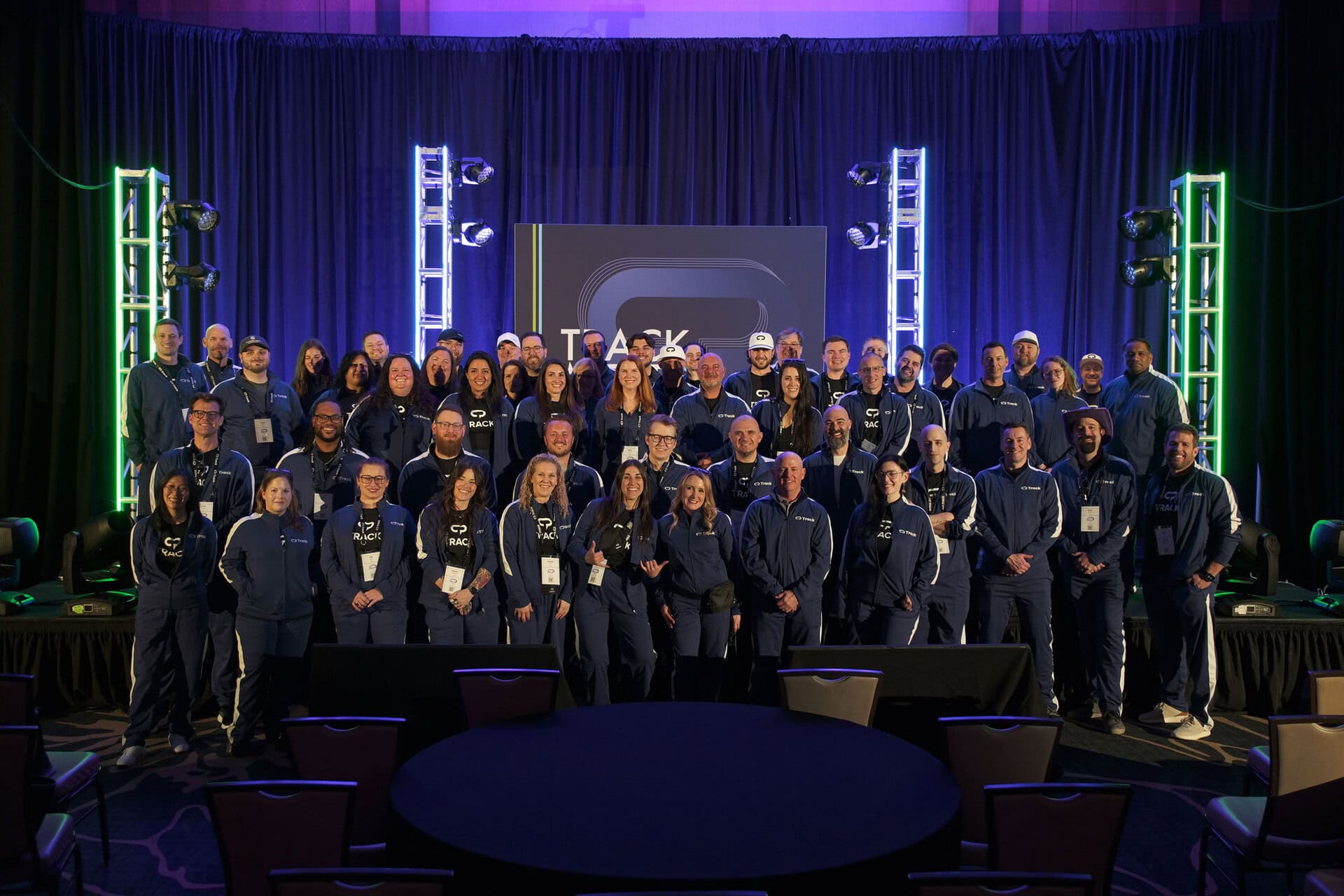
The company names service, grit and creating the future as its core values. Those are statements of intent. A harder operational fact arrived in April 2024, when Skift reported layoffs of about 15 people, roughly 7.5% of a 200-person workforce. Bailey told the publication resources were shifting toward engineering and the core property management business. Building a connected suite still requires choices about where the company puts its people.
A connected suite still has neighbours
Escapia and LiveRez are established alternatives in this market. The sensible comparison concerns the buyer’s accounting needs, team structure, portfolio complexity and existing tools. Track’s emphasis on native functions and connected services is a positioning choice, not proof that competitors cannot provide integrations or support.
Nor does Track require every capability to be invented in-house. Its published webinar describes TrackRevenue transitioning to Wheelhouse, and a May 2026 article discusses that pricing integration alongside Key Data’s embedded dashboard. The useful distinction is between a connected workflow and a closed system. Outside expertise can remain valuable when it reaches the employee without another manual handoff.
The latest reservations tools extend that idea. September 2026’s Pulse AI update describes summaries, transcripts, configurable call scoring and the automatic filling of empty lead fields. Managers can review or override AI-generated scores. The pitch is less time writing up calls and more visibility into what was said, while the staff still perform the work of judgment.
Fit matters. Track’s own product page says TrackPulse primarily serves professional operators with 100-plus units and desk-based reservations teams; some 50-99-unit teams also fit. It says the product is not designed for mobile or distributed teams. Buying a sophisticated contact center for a business without that operating pattern would miss the point.
The Acme experiment offers a similar boundary. More flexible cancellation terms can change the balance between booking demand and cancellation exposure. The editorial lesson is to measure net outcomes and workload in your own market. Copy the small test and the careful comparison. The percentage belongs to the case study.
Keep following the reservation
Explore Track’s website, its industry blog and product updates. For a closer look, watch the TrackPulse overview or the Track and Wheelhouse webinar.