ai-automation
(73)
William Armstrong Is Building the Connective Tissue
A run club, a campaign war room, a student SaaS product and a $55 server all point to the same instinct: William Armstrong likes finding the awkward gap between people and systems, then building the missing connection.

House of Designers turns the pre-show into the show
A drifting championship, a food trade show, and a video-editing app share an Orange County creative partner. House of Designers connects the thing that catches your eye with the thing you do next.

Shiftr’s next product is the agency itself
The California software and design company is automating the work behind the work. Its founder reports 217% revenue growth in 2025 - and a business increasingly built around longer client relationships.
Hostaway made a business out of your vacation’s busywork
Behind the holiday photos sit calendars, cleaners and a small mountain of messages. Hostaway turned that administrative mess into a software business, survived a travel shutdown and is now betting on AI to handle more of the shift.
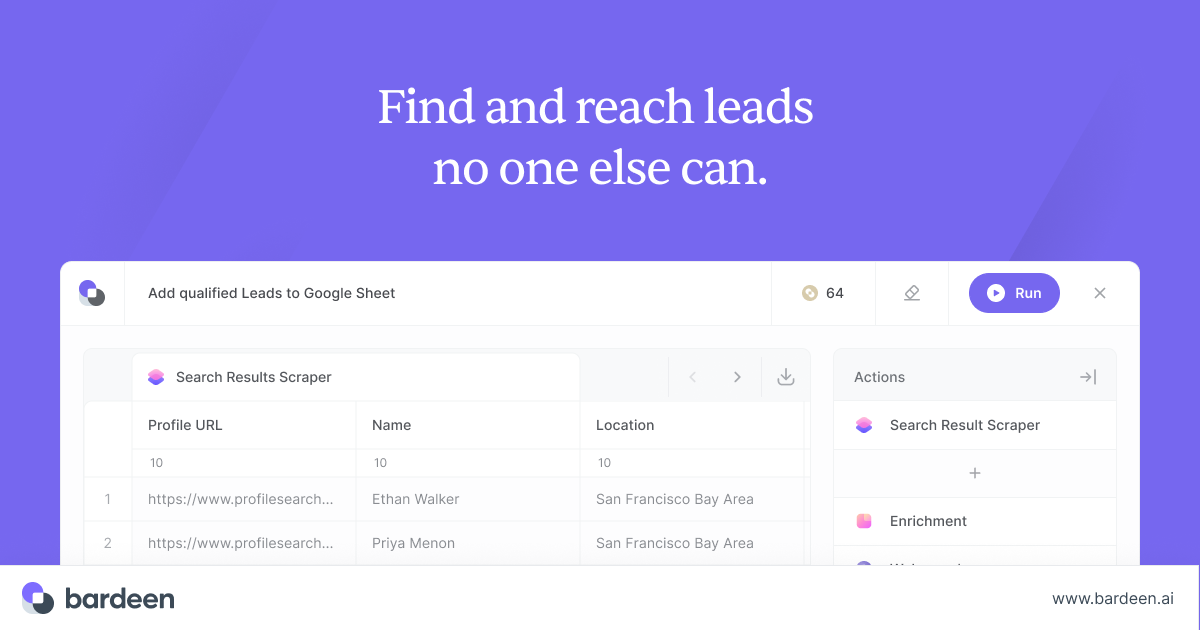
Bardeen Put a Sales Robot in Your Browser
Bardeen can turn a messy hunt across tabs into a tidy lead list. The clever bit is where it works - inside the browser - and that is also where buyers should look closely before handing over the keys.

Geoff Blaine Has Made a Career of Explaining the Invisible
From cyberthreat reports to AI automation, Jitterbit's chief marketing officer has spent two decades turning technical complexity into a story people can act on.

TravelPerk Grew Up. Your Expense Report Came Along.
The booking tool once known as TravelPerk now wants the whole awkward trip - approval, receipt, invoice and all. Here is where Perk earns its keep, where the fees bite, and who should put it on the shortlist.

PlanSource Wants to Make Benefits Admin Boring - and That’s the Point
HR teams do not need another dazzling demo. They need the newborn to be covered, the carrier file to match and open enrollment to end without a fire drill. PlanSource has spent nearly two decades turning that unglamorous promise into enterprise software.

The $47 Billion Back Office You Use Without Knowing It
Xplor Technologies stitched together the software behind gyms, golf clubs, parks, preschools and plumbers. Now it is betting an eight-figure sum that AI can turn a sprawling portfolio into one quietly useful machine.

Rentvine Turned Property Managers’ Least Favorite Chore Into a $74 Million Growth Story
The Florida software company spent years listening to the people who reconcile rent, deposits and owner payouts. Then it built the accounting-first platform they kept asking for - and made switching systems the product’s hardest, most valuable feature.

Max Brodeur-Urbas Built the AI Company That Knows When Not to Use AI
Gumloop began as a three-day experiment for people who could not install AutoGPT. Its co-founder turned that failed-agent lesson into a more useful idea: let AI make the judgments, and let people keep hold of the map.

Kesava Dinakaran Solved 290 Cubes. Then He Took On a Bigger Puzzle
A cube record, 4,000 kilometers by bicycle and more than 100 unanswered investor emails taught Luminai's founder the same lesson: complicated systems yield to patient, repeatable moves.

Lucas Ochoa Is Teaching Software to Watch, Learn and Get to Work
Before Lucas Ochoa built agents that click through office software, he designed wallets, robotic hands and expressive machines. Now the Automat CEO is betting that the future of enterprise AI will be won in the least glamorous corner of work: the stubborn space between one screen and the next.
Amit Bhardwaj’s Bet: Make Healthcare AI Feel Like Infrastructure
With 27 years across IT and operations, the Elevance Systems CEO is pursuing a practical idea: technology earns its place when it fits the workflow, secures the foundation, and helps people get on with the job.

Amar Bandaru Built a Career in the Machinery Behind the Moment
Before AI became a boardroom reflex, Amar Bandaru spent two decades doing the quieter work beneath it: building applications, leading distributed teams and translating technical possibility into something a client could use.

Alex Marantelos Is Turning Customer Support’s Blind Spot Into a Feedback Loop
Before he taught AI to inspect customer conversations, Alex Marantelos learned operations by putting hundreds of artists onstage. Now the Intryc CEO is turning support quality from a tiny sample into a living system.

Richard Zhang Is Teaching Software to Take the Side Door
The Integuru co-founder began with a tax problem, found a browser problem underneath it, and built a company around the requests most people never see.

Loki Cheema Learned Freight From the Hold Music
Before he built an AI operating system for trucking, Loki Cheema learned the business one favor, one form and one interminable phone call at a time. Hemut is his attempt to give freight back its hours.

Moody Abdul Is Building AI for the Work Around the Work
The Klarify co-founder has moved from selling enterprise software to automating meetings and, now, the back office of therapy. His bet is simple: AI earns its place by returning attention to people.

Parker Ence Wants AI to Take the Notes - So Advisors Can Stay in the Room
A guitar teacher turned four-time tech CEO found his next company hiding in the least glamorous hour of a financial advisor's day: the paperwork after a good conversation.

Dan Carr Built the Shortcut, Then Followed It Somewhere New
Before AI workflows, Dan Carr made smart contracts less intimidating. His career keeps returning to the same practical question: how much friction can a careful system remove?

DynaNet Wants Customer Support to Pay for Itself - Here’s the Playbook Behind the Pitch
The Toronto-area outsourcer mixes human agents, automation and system integration to turn the help desk from an expense line into a retention tool. Its Arcade1Up case offers a useful blueprint - and a reminder to demand the baseline, the price and the measurement rules.

Chitrang Shah Is Building for the Work Between the Cells
After two decades inside enterprise data products, the Savant Labs founder is betting that AI earns its place at work through repeatability, governance, and fewer wasted hours - not a clever demo.

Arjun Vora Is Redesigning the Shift
After designing software for millions of Uber drivers, Arjun Vora noticed who enterprise technology kept leaving behind. Teambridge is his attempt to put flexibility, self-service, and better tools into every hourly worker’s pocket.

Alex Babin Is Making AI Do the Work Nobody Puts on a Slide
After two decades of chasing hard technical problems, the Hercules co-founder has settled on a stubbornly practical thesis: AI becomes valuable when it checks every invoice, contract and exception before the mistake gets expensive.

Fusion CX Is Turning the Call Center Into an AI Test Kitchen
The global outsourcer built its reach one delivery center and acquisition at a time. Now it is using millions of real customer interactions to turn contact-center software into an operating advantage.

The Blockchain Agency That Started With $10,000 and a Newborn
Jarred Winn left Binance, spent his last $10,000, and built one of the Bay Area's first blockchain-focused marketing agencies. Eight years later it runs on brand, automation, and AI agents.

The Company That Teaches Your Software to Talk to Itself
Two former NetSuite engineers spent a decade turning the least glamorous job in software - getting one app to speak to another - into a business ranked the #1 iPaaS and worth an estimated half a billion dollars.
Userlike
A student side project in Cologne became the live chat behind Toyota, Nivea and Hermes - and then bet its future on AI that answers before a human has to.

BaseFrame
BaseFrame is a San Francisco AI startup from Y Combinator's Winter 2026 batch, founded by UC Berkeley classmates Anshul Paul and Vaibhav Agrawal. The company has iterated quickly across the AI stack - launching first as an AI copilot that catches hardware design flaws before boards are built, then as a desktop app that scans a team's own work history to find what AI can automate, and most recently pivoting to Clam, a 'Semantic Firewall' that adds enterprise-grade security around broad-access AI agents. Across all three, the thread is the same: make powerful AI safe, useful, and grounded in real work.