At twelve, Kesava Kirupa Dinakaran watched a school friend solve a Rubik's Cube. The friend showed him the method. Five days later, Kesava could solve one himself. Three years after that, in 2015, the Chennai student sat down with a stockpile of scrambled cubes and completed 290 in an hour, beating the previous Guinness mark by 80. A cube is a small machine for humiliating improvisation. Twist without a plan and every bright square seems to wander farther from home. Learn the states, however, and apparent chaos becomes a sequence.
That distinction - between a mess and a system whose moves have not yet been mapped - has followed Dinakaran from speedcubing to long-distance travel to enterprise software. His company, Luminai, now asks a related question of work that sprawls across documents, inboxes and old applications: can the whole sequence be understood well enough for software to execute it, while knowing when a person should step in?
A road measured in rotations
Dinakaran attended UWC Mahindra College from 2016 to 2018. The school put him among classmates from different countries, which led to an adventure whose ambition was charmingly out of proportion to the age of its planners. Dinakaran, Magdalena Girasole, Jerry Huang and Raghdan Al-Hennawi set out to cycle the Silk Road. Over 80 days, they covered 4,000 kilometers through nine countries, traveling from Bosnia toward China.
The group called the project Silk Road Biking. Its point was not simply to collect distance. They wanted to encourage environmental sustainability and complicate stereotypes about the Middle East and Central Asia. Near borders, they interviewed people about a subject broad enough to cross one: dreams. Dinakaran was later described as one of the youngest people to cycle the route.
Long rides are grand only from a distance. Up close, they are breakfast, weather, visa rules, sore legs, repairs and one more hill. The journey offered a practical education in keeping a large intention alive through small decisions. Dinakaran spent his gap year on more cycling projects designed to connect people. Soon the terrain changed from roads to startups, but the daily unit remained the same: handle the next constraint without losing the route.
The hackathon economy
Dinakaran came to the United States at 19 without a work visa. His family, he has said, largely comes from coconut farming in India. Silicon Valley supplied no automatic network and very little financial cushion. He and co-founder Dmitry Dolgopolov lived in a San Francisco hacker house and paid bills for a period by entering hackathons. Prize money covered food and rent. One competition project contained the beginning of DigitalBrain, the company that would become Luminai.
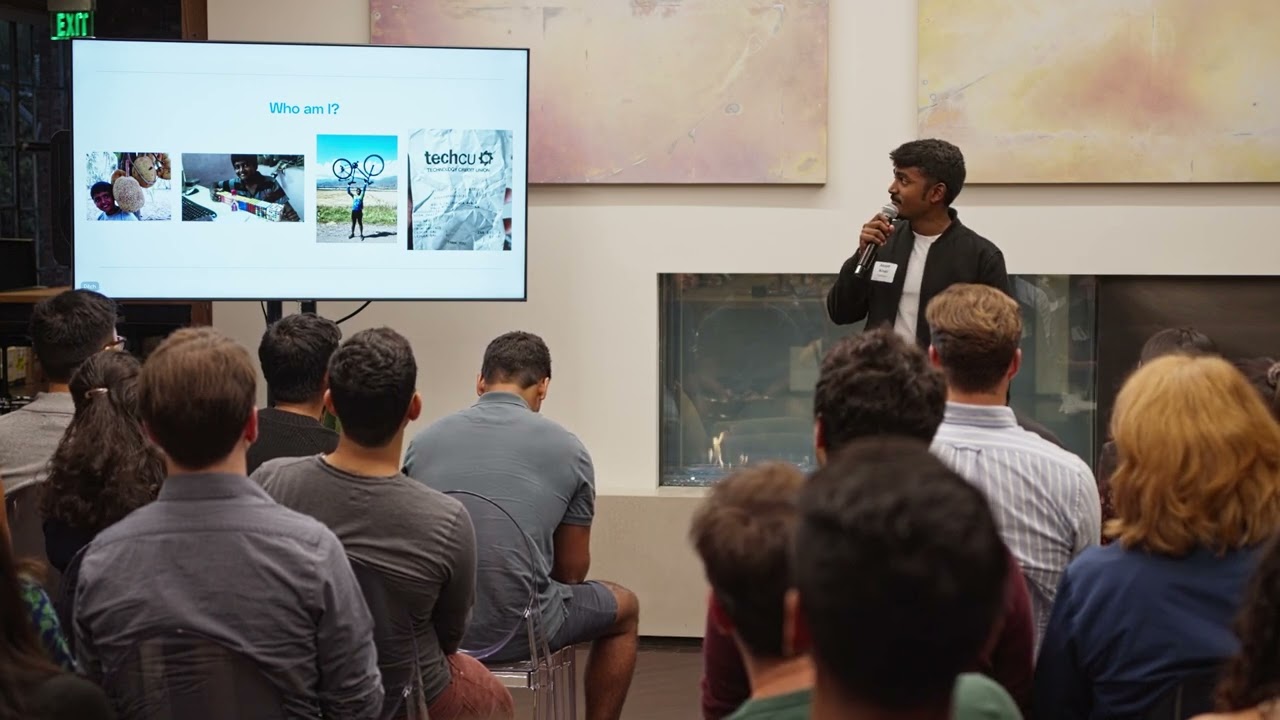
Fundraising was another endurance event, except the scenery was an inbox. Dinakaran wrote more than 100 cold emails to investors after launch. Three replied. In one account of the company's early days, he said 99 percent of his outreach was ignored. A last effort, written in Tamil to PagerDuty co-founder Baskar Puvanathasan, led to a call and an early check. Unshackled Ventures also became an early backer. The useful detail is not that persistence magically dissolved every objection. It is that the founders manufactured more chances for the right conversation to occur.
“I wrote over 100 cold emails to investors after we launched. Only three wrote back.”Kesava Kirupa Dinakaran
DigitalBrain entered Y Combinator's Summer 2020 batch and announced a $3.4 million seed round that October. The money changed the founders' daily arithmetic. They no longer had to treat food and rent as existential product dependencies. Dinakaran later said the milestone also gave him joy because cousins in India could now see a path to becoming founders themselves. Success had become less abstract in the family group chat.
The feature that ate the roadmap
The first product was broad. Dinakaran has said the team built roughly ten features. Working with early customers revealed that one kept mattering: take a multistep process across different systems and compress it into one action. A user could record the clicks and keystrokes of a workflow. The software would reproduce it, using APIs when available and browser-style automation when they were not.
That behavior became the product. In 2022, DigitalBrain changed its name to Luminai and announced a $16 million Series A led by General Catalyst. The company was lean, with 11 employees at the time, and most of its seed money still in the bank. Dinakaran made the Forbes 30 Under 30 Enterprise Technology list for 2023. The young speedcuber had found a commercially useful version of his favorite maneuver: reduce many moves to a reliable sequence.
The market focus later moved from customer-support work toward the administrative operations of large health systems. The technical difficulty rose with it. Important work often arrives as unstructured documents. Systems do not share context. Exceptions are normal. Humans compensate by reading, interpreting, retyping and routing information between tools. In other words, the people become the integration layer.
“The biggest barrier was the amount of unstructured data. Without structuring that data, you can't actually automate the workflow.”Kesava Kirupa Dinakaran
One proof, then the next
Luminai's current pitch is larger than making many clicks into one. The platform turns unstructured information into usable data, builds a model of how a particular organization works and deploys AI agents across the process. In a publicly detailed referral workflow with Cleveland Clinic, incoming documents can be classified, relevant information extracted, records matched and work routed. When confidence falls below a set threshold, the system hands the case to staff with much of the processing already complete.
The expansion logic is deliberately incremental. Solve one specialized operational problem. Agree in advance on success. Prove the outcome. Then add the next workflow on shared infrastructure. Dinakaran has described the contract plainly: if Luminai hits the agreed outcomes, the expectation is to expand. If it does not, the company does not. It is a refreshingly unpoetic sentence for an industry fond of future tense.
In April 2026, Luminai announced a $38 million Series B led by Peak XV Partners, with Define Ventures and existing backers General Catalyst and Y Combinator participating. The company said the round brought total capital raised to $60 million. Dinakaran's founder letter places the ambition beyond individual tools: an AI-native operating system in which people and software work together across an organization's processes. In July, he co-authored the announcement that Jordan Silvergleid had joined as head of strategy, another sign that Luminai was adding operational experience around its technical platform.
The change in scale is easy to miss if the company is viewed only as a sequence of funding announcements. The seed-era product watched a support worker move between tabs. The current platform is asked to absorb institutional knowledge: which document matters, what rule applies, where a case belongs, which exception requires a person and what evidence that person needs. Each new workflow is less like installing a shortcut and more like teaching a careful colleague. The attraction of shared infrastructure is that the second lesson can reuse pieces of the first. The danger is equally clear: a wrong assumption can also travel. That is why inspectability, access controls and human review are part of the product rather than decorative compliance language.
The algorithm and the exception
A Rubik's Cube is a closed world. It has fixed pieces, legal moves and a solved state everyone recognizes. A company is impolite enough to change shape while you are solving it. An enterprise workflow is worse: the input may be ambiguous, the rules local, and the cost of a confident mistake higher than the pleasure of an elegant demo.
Dinakaran's career has steadily increased the number of exceptions. First came the cube, then nine countries, then immigration and fundraising, then software that must operate amid institutional complexity. The aspiration has grown, but his public method remains specific. Observe the real sequence. Structure what is unstructured. Decide where judgment belongs. Deliver a result today. Expand only after the proof.
There is personality in that method, though not the loud founder theater one might expect from a two-time world-record speedcuber. Luminai's published company commandments include chasing uncomfortable truth, leading with vulnerability and making excellence a habit. The phrasing is earnest. The operating idea beneath it is sterner: reliability is not a launch event. It is the accumulation of correct moves.
At fifteen, the scoreboard was a neat row of solved cubes. At twenty-something, it is a process that moves correctly through old systems, loose documents and human judgment. The bigger puzzle has no final face where every square clicks into place. There is only the next workflow, waiting to be learned well enough that its complexity stops looking mysterious.