At a toy store in Chennai, a teenager sat down to do something most visitors would have preferred to watch. Kesava Kirupa Dinakaran had spent months preparing to solve a succession of scrambled Rubik’s Cubes against a running clock. Family, fellow cubers and shoppers gathered around. A toy normally purchased to keep someone occupied had become the center of attention.
On August 2, 2015, he completed the attempt that Guinness records as 290 cubes solved in one hour. The number has a satisfying firmness. Every cube needed an answer. Every answer had to arrive before the hour ran out. There was little scope for a persuasive explanation of why an unfinished yellow face should count as nearly finished.
Today, Dinakaran is the co-founder and CEO of Luminai. Between the toy store and the software company lie an international school, a bicycle journey across the Silk Road, a friendship formed at a hackathon and a period when winning those events helped pay his bills. The cube is a useful place to begin, partly because it is so small. His world kept getting larger.
A small object, a larger world
Dinakaran’s family roots are in southern India and coconut farming. His parents moved to Chennai. A friend taught him how to solve a cube, and competitive cubing brought him into contact with people pursuing careers far removed from the ones familiar to his family.
There is a social achievement hidden inside a sporting one. A competition gives strangers a reason to be in the same room. Age and occupation remain visible, but everyone has agreed to care about the same object. A schoolboy can arrive with a question and discover that the adult beside him has one, too.
He attended Chettinad Vidyashram. By early 2016, he had also posted a 6.56-second solve at IIT Madras’s Shaastra event, a national record at the time. Yet his remarks as a Class 11 student sounded less like a victory speech than an objection to getting comfortable.
“Only when I’m not in my comfort zone will I learn something new.”Kesava Kirupa Dinakaran, 2016
He connected that thought to life beyond cubing. His mother, Geethanjali, spoke about giving children room to miss something and learn from it. That matters in a story easily reduced to results. The people around him were allowing space for an experiment whose value could not be decided solely by the next mark or medal.
A fast solve and an hour-long attempt also ask different things of a competitor. One rewards an exceptional short sequence. The other requires returning to the task, repeatedly, with the clock still moving. A founder biography can become too fond of speed. Dinakaran’s first memorable number contains endurance as well.
An education with border crossings
From 2016 to 2018, he attended UWC Mahindra College. The school’s international community introduced him to students from countries he had previously understood through other people’s assumptions. Meeting them changed those assumptions. Silk Road Biking grew from the desire to extend that kind of encounter beyond a campus.
In 2018, Dinakaran rode with Magdalena Girasole from Germany, Jerry Huang from China and Raghdan Al-Hennawi from Syria. Their trip covered 4,000 kilometers across nine countries. It took 80 days. The geography was considerable; the purpose was to encourage intercultural understanding and share the stories of people along the route.
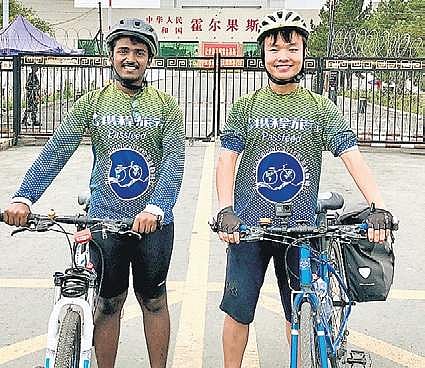
They asked locals about their dreams. It is an appealing interview question because it gives the person answering a choice. Someone encountered at a border can become more than a representative of that border. They can talk about what they want, which may have little to do with what a traveler expected.
The ride included practical surprises. A road toward China turned out to be longer than the group had been told. Darkness and rain arrived before the destination. A passing truck driver helped them understand the distance; later, a woman offered food and a place in her home. The encounter gave their stated purpose a concrete setting: strangers helping travelers through an awkward evening.
Dinakaran’s own writing supplies another, quieter scene. In an essay published in 2019, he described joining a man at a café in Uzbekistan and eagerly awaiting plov. He had built up the dish in his imagination as something unfamiliar. When it arrived, it reminded him of the biryani his mother made at home.
The charm is in the deflation. He had traveled thousands of kilometers to be surprised by recognition. Dinner interrupted the tidy division between familiar and foreign. His essay used that moment to reflect on shared food, trade and the connections that people can discover across cultures.
It is tempting to turn every journey into advance training for a startup. This one had its own purpose and its own people. That is part of what makes the later story interesting. He arrived in business carrying experiences that had asked him to listen, travel and revise an assumption before they had asked him to sell anything.
When the weekend had to pay for Monday
In 2019, We Are Family Foundation named him a Global Teen Leader for his Silk Road work. That year, he came to the United States. In Silicon Valley he found a community of people trying to build things, and he met Dmitry Dolgopolov, an immigrant from Russia, at a hackathon.
Their partnership began under practical constraints. Neither had legal full-time working status. For seven months, hackathon winnings helped them get by. The competitions were a source of cash, which gave the weekend a rather different meaning from the recreational coding exercise advertised to many participants.
A prize looks cheerful in a photograph. Rent gives it a less decorative function. There is an important difference between choosing an uncertain experiment with savings behind you and needing the experiment to fund the next stretch of ordinary life. Their early company story carries that distinction.
At one event, they built the beginnings of DigitalBrain, software intended to help customer service representatives work through tickets more efficiently. Then came the difficult transition from a competition entry to a business. Investor conversations were hard to obtain. The events could keep them going for a while, but entering another hackathon could not answer every question the company faced.
Unshackled Ventures eventually invested. Y Combinator followed. A source of funding beyond the next prize meant the founders could devote more attention to the product and its customers. The friendship, meanwhile, had become a working partnership with something longer to build than a weekend demonstration.
Three replies were enough to begin
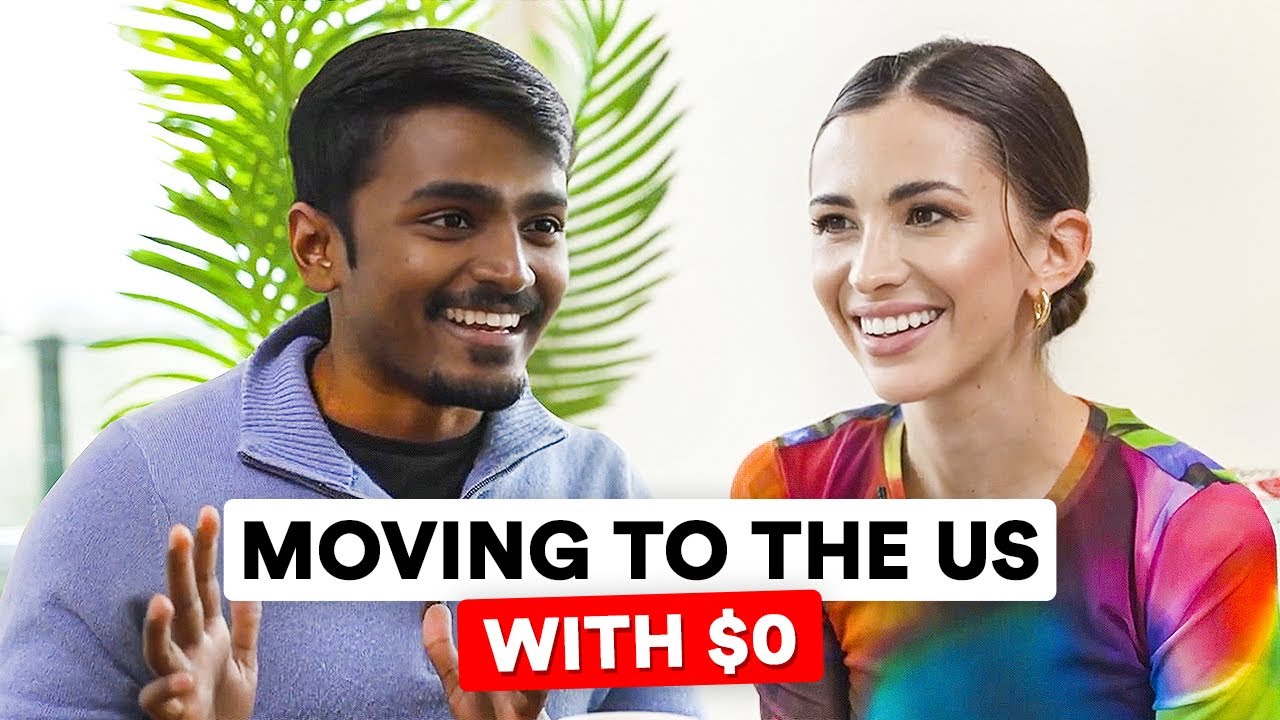
Dinakaran later recalled sending more than 100 cold emails to investors. Three replied. Unshackled was the firm that backed the team. That is a small response rate with a large consequence, and a reminder that an inbox can function as a gate even when no one has formally announced that it is one.
“Only three wrote back.”Kesava Kirupa Dinakaran, recalling his investor outreach
The story can be read from both ends of the email. The sender has to keep making the attempt. The recipient has to decide whether an unfamiliar background deserves consideration. Determination alone does not send the reply. Someone else has to take an interest.
His relationship with formal education had its own closed doors. In a public reflection on joining the Thiel Fellowship, he said every college he applied to in 2018 had rejected him. He also described struggling with his high-school classes. The disclosure gives the later recognition a texture that an uninterrupted list of honors would erase.
The Thiel Foundation named him to its 2023 class. Its fellowship provides money and a network for young people concentrating on their projects and companies. For Dinakaran, it recognized a route already underway rather than providing the first permission to begin.
He had learned about the fellowship through Ritesh Agarwal’s journey building OYO. In 2023, he publicly marked meeting Agarwal as a full-circle moment. Here again, another person’s example had helped make a possibility visible. A biography can travel ahead of its subject and open a door for someone else.
Learning which move matters
Luminai joined Y Combinator’s Summer 2020 batch under its original name. The product’s early direction changed when customers responded particularly strongly to workflow automation. A refund action that removed repetitive work drew attention. Dinakaran and his co-founder revisited customer calls and narrowed their focus, eventually rebuilding around that function.
The decision is interesting because it required giving up work. Founders have to care enough to build something, then remain willing to dismantle parts of it. A feature that people admire and a feature that changes their working day may receive different reactions. Listening closely can make the distinction expensive, especially when it leads back to the code.
Forbes named Dinakaran to its 2023 Enterprise Tech 30 Under 30 list. Its account put his bank balance at $9.48 around the company’s March 2020 founding. That figure belongs beside the later milestones because it measures something financing announcements leave out: how little room there once was between an ambition and an immediate practical problem.
When he shared the Forbes recognition, he credited the Luminai team. He described his aim as helping customer experience teams save time and bring joy back to their work. There is a human scale to that aspiration. The unit is a working day, with fewer repetitive actions and more time for the task someone actually came to do.
In April 2026, Luminai raised a $38 million Series B led by Peak XV Partners, bringing its stated total funding to $60 million. The money is intended to support product development, engineering and deployment teams. It marks another stage in a company whose founders once relied on competition prizes.
The sequence remains the interesting part: a friend with a cube, a school full of unfamiliar perspectives, fellow riders, a co-founder, an investor who answered. Dinakaran’s life has changed through both repeated effort and other people’s participation. The cube gave him a reason to enter the room. What happened afterward depended on whom he met there.