Ian Lee lasted three months at university. The short stay had a family logic. He had told his parents he did not want to study; they wanted him to give it a try. His mother pointed out that entering university and leaving carried a different meaning from never going in. Even a departure, apparently, could benefit from a little preparation.
He had a scholarship to study software engineering at the University of Waterloo. He also had experience building software at Houm, a property startup, and an appetite for work that did not require waiting for graduation. The bargain was awkwardly elegant: attend, discover whether the place fitted, then decide. He left. Years later, the fact still occupies a conspicuous position in his public biography.
Leaving became a recurring decision. In October 2024, he handed the CEO job at Examedi to Mariano Werner and moved into product. In February 2025, he announced that he would leave daily management for the board. By 2026, he was CEO of another company, Nexor. The interesting part of that sequence is how often a person associated with impatience has had to reconsider where his own time belongs.
Before the title, there was the keyboard
The first fascination was video games. Lee and friends, including future cofounder Andrés Kemeny, could spend long stretches playing League of Legends. Eventually, being consumers of technology became insufficient. They wanted to make something themselves. The ambition was broad enough to be almost useless, which at least left plenty of room to begin.
Lee began programming at fourteen. In his teenage years, online courses became a second school day. He described spending nine or ten hours learning after regular classes, teaching himself through repeated attempts. There was no neat institutional path for the work he wanted to do. There was a screen, an internet connection, and the possibility that the next attempt might work.
While still at school, he built a small consulting business making platforms for companies. Customers included businesses in Chile, Asia and Europe. What caught his attention was the practical effect: software could automate a process and give people time back. That discovery gave his interest a commercial shape. A working program could become something another person would pay for.
At Houm, he joined a small founding engineering team. He later described the company as having six people when he arrived. His route into startups therefore began with actual work inside one, before his own name appeared beside the word founder. The young programmer had already seen how a team could build a business around software. University would have to compete with that experience.
Three months, then a borrowed office
His father was an entrepreneur, so running a company was already part of the family landscape. Lee described himself in a 2023 interview as “súper impaciente”. A conventional job had never appealed to him as a long-term destination. That self-description explains something about the pace of his decisions, although it hardly settles whether each decision was wise.
His own account of leaving Houm includes turning down an offer to become CTO and cofounder. That was a substantial alternative to walking away and starting from scratch. The choice put him back at the beginning, with fewer established arrangements and more room to choose the work. He and Kemeny started coding from his father's office. A borrowed room is a modest address for an ambition.
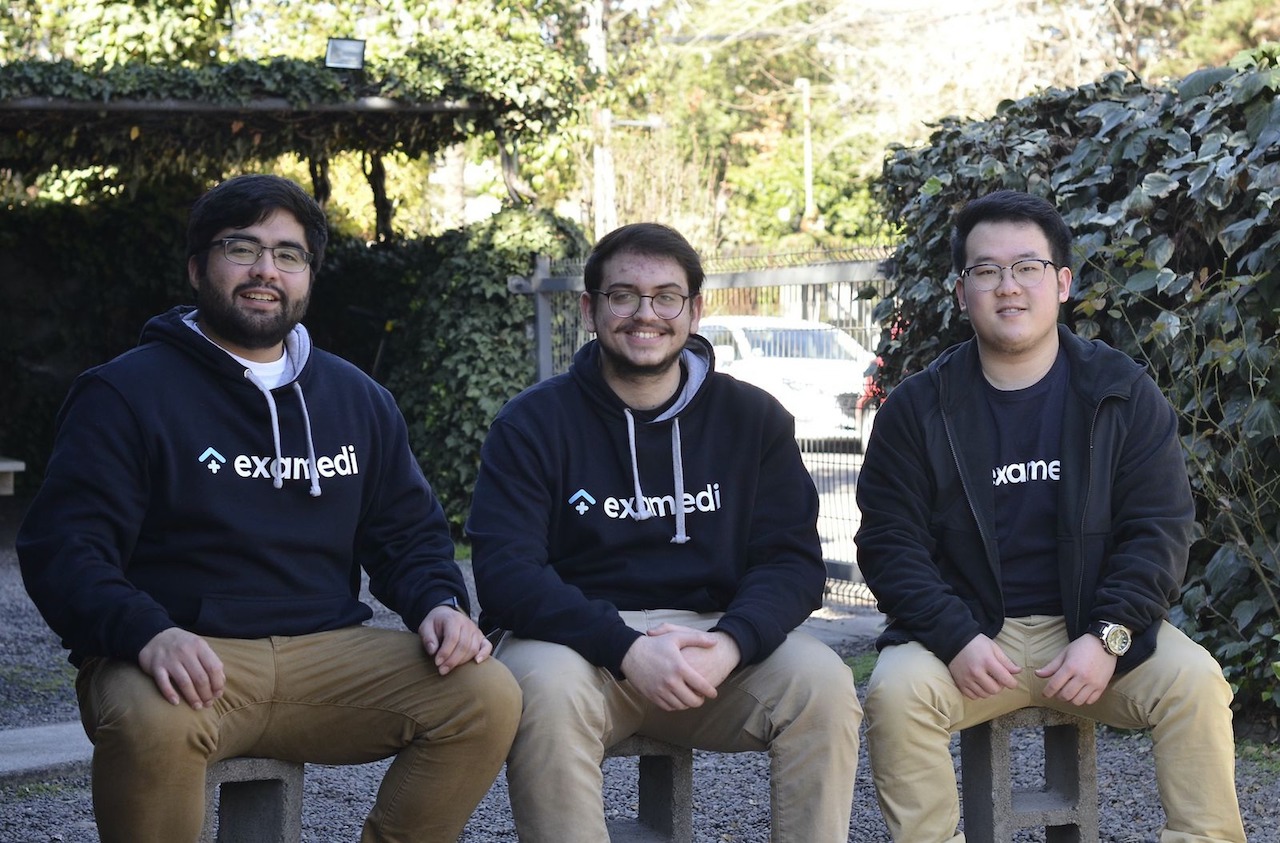
Their early idea involved business management software. It helped them enter Platanus Ventures, but they changed direction toward a broader consumer business. Examedi joined Y Combinator's Summer 2021 batch. The important movement here was from a proposed product to a company that could keep changing its proposition. They had committed to building; the exact form of the business was still being worked out.
The value of a room full of other founders
By the end of 2021, Lee was counting milestones in public. The team had travelled to San Francisco and raised $3.9 million from investors including 8VC, Quiet Capital and Goodwater Capital. It had grown from three founders to twenty-six people. His year-end post lingered on the people involved. Choosing colleagues had become one of the pleasures of founding a company.
He was also learning how to use the institutions around him. In a December 2021 interview, Lee compared Platanus Ventures and Y Combinator in terms of relationships, access and the willingness to learn. His account put considerable weight on the network. A programme's usefulness depended partly on what a founder did with the people it placed within reach.
In 2022, he became Chile's first Thiel Fellow. The fellowship's $100,000 award gave his decision to leave university a recognisable Silicon Valley credential. Examedi also raised a $17 million Series A led by General Catalyst that year. Money, recognition and a growing company arrived close together. Each made the early choices easier to explain to an audience.
The more revealing detail is his attitude toward inexperience. In discussing accelerators, he emphasised openness to learning and the value of a technical team. Those are workable habits for someone whose responsibilities are expanding faster than his résumé. Youth can get a founder an interview. The ensuing business still requires people who can build, decisions that can be revised, and help that can be accepted.
“súper impaciente”Ian Lee, describing himself in 2023
The coffee that changed the organisation chart
In September 2024, Lee met Mariano Werner for coffee. Friends in the startup world had encouraged the introduction, including Ignacio Canals and Daniel Guajardo. Lee was not initially looking for a new CEO. They knew he liked programming and wondered how much of his current job let him do it. It was a pointed question to put to someone who had built his identity around building.
Werner had led Lemontech and brought management experience from other businesses. Lee came away convinced that he belonged on the team, even before deciding in which role. The company eventually made the arrangement explicit: Werner became CEO in October, and Lee became chief product officer. Lee described his strengths as lying in product development more than company management.
That distinction became harder to keep merely theoretical. By February 2025, Examedi had undergone a substantial restructuring. A business that had once employed 160 people was down to thirty-five. Juan Pablo Zepeda and Alberto Albagli had left their daily roles; Kemeny remained CTO. Lee moved toward the chairmanship. The change involved colleagues, authority and the shape of a company they had created together.
He announced his departure from daily management at an all-hands meeting. Afterwards, some employees sent messages saying they had joined the company to work with him. That is the human complication in a founder succession: people may have signed up for both a business and a particular person. Changing the organisation chart can change what they thought they were joining.
Lee said he felt happy with his decision. In his own public announcement, he also called it difficult. Both can be true. By then his friends were reaching university graduation, while he had already spent years inside the demands of running a company. He began talking about participating in a new wave of innovation, possibly involving AI. Another beginning was becoming conceivable.
- 2021Examedi
Cofounder & CEO - OCT 2024Examedi
Product chief - FEB 2025Examedi
Board transition - 2026Nexor
Cofounder & CEO
A smaller team, a wider map
Nexor made that beginning concrete. Founded in January 2026 with Gabriel Cid and Daniel Jiménez, it builds software infrastructure for AI agents handling commercial conversations and revenue tasks. Lee returned to the CEO role. The return gives his earlier admission about management an interesting sequel: the title came back, alongside a different business and a different combination of partners.
Cid had built Capitalizarme, and Jiménez brought experience organising sales teams. The three founders said they each contributed $30,000 at the outset. They entered Andreessen Horowitz's Speedrun programme. In July, they reported $1.9 million raised and described an approach that would avoid an elaborate office and a workforce numbering in the hundreds. Their stated goal was profitability from the beginning.
The company established its headquarters in San Francisco. By July, the founders were discussing Dubai as a possible next commercial base. That was a plan, rather than an accomplished expansion. The shift in geography is nevertheless clear: Lee's next company was being organised around customers across borders, with partners whose experience covered both technology and selling.
Nexor reports eight employees, $2.5 million in annual recurring revenue after five months, and 270 clients in nineteen countries. Those are company-reported operating figures, and annual recurring revenue is a rate, rather than money already collected over a full year. Read with that distinction, they describe the scale Nexor says its small team is handling.
The contrast with Examedi's former headcount is striking without requiring a victory lap. The two businesses have different operating demands. What has changed in Lee's public language is his attention to the structure supporting growth: the size of the team, its cost, the partners around him, and the aim of earning more than the company spends. The programmer has acquired some expensive questions.

Watches, saxophones and an open invitation
Outside the job titles, Lee's interests are pleasingly specific. He plays saxophone, drums and piano. He likes watches and has described them as an investment interest. His public GitHub account includes a Chilean parliament visualiser, a parliament web scraper and projects recreating Zoom functionality. The collection gives the biography a texture that fundraising totals cannot supply: there are things he has wanted to make simply because he could work on them.
He still uses a very ordinary tool for meeting people: a public invitation. Ahead of a 2026 San Francisco visit, he recalled posting an invitation to meet during his first trip in August 2021. That had led to someone he described as especially influential in his entrepreneurial life. He did not name the person in the post. He did repeat the invitation, this time bringing the team building his new company.
That gesture fits the career better than a tidy lesson about dropping out. He has learned from friends, accelerators, investors, colleagues and a coffee with a future successor. His story contains considerable haste, but also occasions when someone else's knowledge changed the plan. Leaving early has repeatedly put him in need of new people. At Nexor, with another title and another set of decisions ahead, he is once again asking who is around.