Most enterprise technology performs its work offstage. A firewall blocks the attack nobody sees. An integration moves information between two applications while everyone else gets on with Tuesday. A useful automation is often recognized by the irritation that failed to occur. This presents a peculiar assignment for a marketer: make the invisible matter without dressing it in a cape.
Geoff Blaine has spent more than two decades doing precisely that. The Dallas-based chief marketing officer at Jitterbit did not arrive in enterprise software through engineering or sales. He came through journalism, earning a Bachelor of Arts from the University of Oklahoma's Gaylord College of Journalism and Mass Communication. The route makes sense once you look at the work. His subject has changed from networks, to cyberthreats, to integrated applications and artificial intelligence. His essential task has remained translation.
Technical companies tend to speak in nouns. Platforms. Connectors. Endpoints. Threat vectors. Orchestration. Customers, being human, live among verbs: waiting, fixing, approving, losing, buying, worrying. Blaine's career occupies the narrow bridge between the two. It is a place where a tidy sentence can carry as much commercial weight as a feature list and where a badly chosen abstraction can turn a useful product into expensive wallpaper.
The reporter's instinct survives the boardroom
Journalism does not guarantee clarity, as any reader of a municipal zoning report can confirm. It does, however, teach several useful reflexes: find the consequence, identify the audience, and ask whether the sentence contains anything that can be checked. Blaine carried those habits into corporate communications roles associated with Entrust, Armor Defense and A10 Networks, companies selling into markets where the machinery is sophisticated and the tolerance for imprecision is low.
A small moment from A10 in 2016 reveals the instinct. After the networking company acquired Appcito, Blaine wrote that a press release could deliver the nuts and bolts but often missed the context that makes an organization human. His answer was to record the founders explaining the deal themselves. Corporate communication usually prefers complete control. The former journalist knew that a voice, a face and an unscripted cadence can carry information that approved paragraphs cannot.
The press release carried the mechanics. The people supplied the meaning.A lesson visible in Blaine's A10 Networks work
By 2020, he was director of corporate communications at SonicWall, writing about threat research at an awkward moment in the life of the internet. Fileless malware, encrypted attacks and ransomware were climbing into general conversation. The raw numbers were large, alarming and easy to sensationalize. The useful story required more discipline: which attack categories were rising, what had changed, and what an organization could do next.
He rose through senior corporate marketing leadership and into SonicWall's chief marketing officer role. The remit stretched beyond prose to brand, demand generation, public relations, field programs, events, creative work, advertising, web and social channels. The journalist had become an operator. Yet the public-facing job still depended on arranging evidence into a shape that could be remembered.
The translation brief widened
Selling the disaster that did not happen
Cybersecurity is a brutal school for communications. The product is essential, the language is forbidding, and a successful outcome looks like an uneventful afternoon. It also teaches respect for the gap between technical capability and executive attention. In a 2022 PRovoke Media podcast, Blaine joined communications strategist Anna Ruth Williams to discuss preparing for cyberattacks. The premise was sober: every industry had become a target. Preparation mattered before a breach turned an abstract risk into a public event.
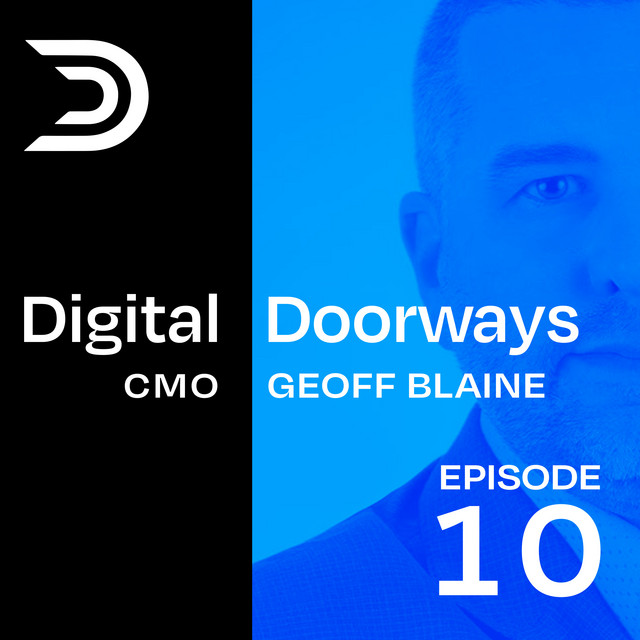
That same year, he appeared as a cybersecurity marketing leader on the Digital Doorways podcast. The title promised to unlock successful cybersecurity marketing, but the more durable lesson lies in the role itself. A CMO in this category has to talk to practitioners who distrust ornament, partners who need a usable story, executives who want business consequences, and reporters who can smell fog from across a conference hall.
Colleagues describe the temperament required. One longtime coworker, Lindsey Lockhart Flynn, wrote publicly that she had worked with Blaine at three cybersecurity companies over 16 years. She watched his writing and messaging develop alongside his organizational skill, and called him a cool and collected problem solver. Another recommendation emphasized the way he built collaborative teams and mentored people beyond the marketing department. Recommendations are testimonials, not laboratory findings, but the repeated picture is consistent: calm, clarity and team building.
His own public bio supplies the lighter footnotes. It describes a B2B marketing leader and team builder, then adds tech aficionado, dog owner, sports fan and amateur scotch drinker. There is also the cheerfully impolitic phrase “cybersecurity shill.” Executive biographies often emerge from a dry cleaner in a navy suit. Blaine's version leaves a little lint on the lapel.
A new invisible system
In 2024, Blaine moved from the security world to Jitterbit. He first served as vice president of corporate marketing and communication, then was announced as chief marketing officer in June. The company was assembling its pitch around Harmony, a platform bringing together integration, API management, electronic data interchange and low-code application development. Artificial intelligence was being worked into the suite. There were, in short, plenty of nouns.
Blaine's writing recast them as questions of pace and agency. Teams could use natural language to help build applications and connectors. Organizations could automate work across systems without abandoning every existing investment. AI features could be adopted quickly or gradually. The insistence on choice is more revealing than the obligatory futurism. Enterprise technology is littered with revolutions whose first act was an exhausting migration.
“The advancement of NLP within the Harmony platform is making it easier than ever to develop, manage and integrate applications faster than ever.”Geoff Blaine on Jitterbit's AI capabilities, 2025
The argument lands on operations: synchronize applications and data, remove repetitive work, and let the people closest to a process improve it. In Blaine's account, AI is less a synthetic colleague with excellent cheekbones than a new interface. Natural language narrows the distance between an employee's intention and a system's capability. The grand future arrives disguised as one fewer ticket in the IT queue.
Cybersecurity communication turns hidden attacks and preventive systems into decisions leaders can understand.
Automation communication shows how connected applications remove delays without pretending change is effortless.
The metrics in his 2024 Harmony essay were pointedly practical. Jitterbit cited a 1.8-month average time to go live in G2's Summer 2024 enterprise results, compared with an industry average of 3.34 months. Customers reported an average return on investment in 10.5 months. These are not moonshot numbers. They are calendar numbers, the native language of the manager who has promised a working system before the next planning cycle.
The marketer keeps studying
Blaine's education did not end with his Oklahoma degree. His public record lists recent training in content marketing, sales enablement, digital advertising and brand strategy, followed by Pavilion's CMO program in 2024. For someone already holding senior posts, the certifications suggest a useful lack of ceremony about learning. The tools change. The audience changes. The executive who treats yesterday's fluency as permanent soon becomes a museum guide.
Pavilion placed him on its 2025 list of 50 CMOs to Watch. Blaine's public reply was brief: “It's an honor to be included, Pavilion. Thank you!” It is tempting to inflate an award into destiny. Better to read it as a marker along a longer progression, from writer to communications leader, from the person explaining the strategy to one of the people responsible for setting it.
In 2026, Jitterbit put Blaine beside CEO Bill Conner for the introduction to jTalk, a video series about AI, security and automation. The circle is neat. At A10 a decade earlier, Blaine had reached for video because acquisitions needed human context. At Jitterbit, he again used conversation to make a technical transition legible. Formats recur when they solve a real problem.
A career measured in shorter distances
Blaine's story is not a tale of sudden reinvention. It is a series of shorter distances. Between threat data and public understanding. Between a platform architecture and a buyer's problem. Between an employee's plain-language request and an application that can carry it out. His job is to reduce those distances while keeping the important detail intact.
That restraint matters in the AI market, where language is cheap and certainty often arrives wholesale. Blaine's public work favors a measured case: connect the systems, keep control of the adoption pace, improve the workflow, count the time saved. The vision is ambitious, but the proof is expected to turn up at work on Monday morning.
Perhaps journalism was not an unusual beginning after all. Enterprise software is forever producing facts in search of meaning. Geoff Blaine has made a career by editing the distance between them.