The moment benefits software becomes important is rarely cinematic. It is a parent at a pharmacy learning that a newborn is not on the plan. It is an HR manager discovering that the enrollment file and the carrier invoice tell two different stories. It is the week before open enrollment closes, when a clean dashboard suddenly produces a swamp of exceptions.
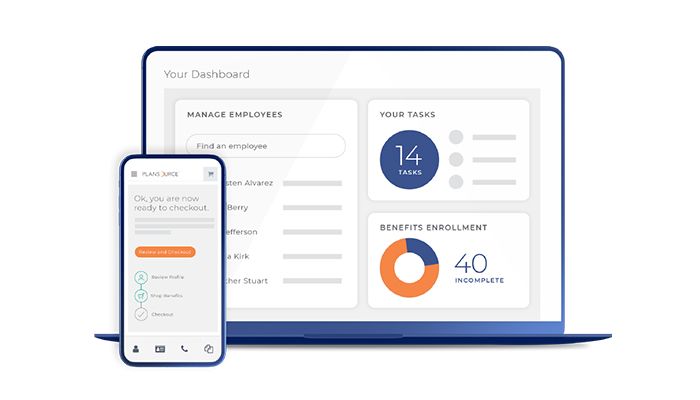
PlanSource lives in that swamp. The Orlando company sells a cloud platform and a stack of services for choosing, enrolling in and administering employee benefits. On the employee side, it looks like shopping: compare health plans, estimate costs, submit evidence of insurability and finish enrollment on a phone. Behind the screen, it handles eligibility rules, plan configuration, payroll and HCM connections, carrier feeds, billing, ACA and COBRA administration, dependent verification, communications and support.
That scope is the point. Employee benefits are not one transaction. They are a relay race among employer, broker, payroll system, insurer and worker. A polished enrollment form does little good if the baton falls two handoffs later. PlanSource’s proposition is that one specialist should own more of the race.
A system of record grows tentacles
PlanSource dates to 2008, when founder and first chief executive Scott Carver positioned the business around benefits management for small and midsize employers and insurance brokers. The company expanded through products, capital and acquisitions. It bought ClearBenefits and BENU in 2015, then Next Generation Enrollment in 2017. Three disclosed rounds brought in $94 million, including a $70 million Series C led by Great Hill Partners. Vista Equity Partners acquired the company in 2019 for an undisclosed price.
The 2019 deal did not turn PlanSource into a household name. That would be a strange ambition for benefits middleware. It did give the company an owner known for scaling enterprise software and arrived in a year when PlanSource said new-business bookings grew 33 percent and more than 1,500 employers, associations and resellers began using the system.
Today, PlanSource says it serves thousands of customers and more than 5 million consumers. Its named users and partners range from grocery chain The Fresh Market to a consortium of independent schools, PAISBOA, and the Intergovernmental Personnel Benefit Cooperative. Brokers and resellers also use the platform for their own books of business. UKG goes further: PlanSource sits behind UKG Pro Benefits Administration.
The first thing to fail is the handoff
The old benefits stack is an archaeology dig. An employer configures plans in one place, sends enrollment data to a carrier in another, deducts premiums in payroll and reconciles invoices after the fact. Much of the industry still relies on scheduled EDI files rather than instant transactions. Every delay creates room for a stale record, a typo or an employee who quits midway through an extra form.
PlanSource attacked that failure with Boost, its carrier partnership program. Boost connects insurers to the platform through APIs for plan setup, enrollment and evidence of insurability. It can place provider search inside the shopping flow and consolidate billing. PlanSource says customers can receive a bill for each participating carrier’s products, pay PlanSource and let it handle payment and discrepancies. One company product sheet estimates that conventional reconciliation can consume more than a week each month.
rules + workflow
The clearest reported result comes from The Hartford. Its evidence-of-insurability integration gives eligible employees a decision inside the enrollment experience instead of sending them elsewhere. The insurer reported completion moving from 27 percent to 87 percent. In 2026, Lincoln Financial said its EOI API typically saves employers 15 to 30 minutes per applicant. Those are small pieces of plumbing with very visible consequences.
The product changed when the obstacle did
For years, benefits vendors competed over the annual shopping trip. PlanSource still offers decision support, mobile enrollment and personalized communications, but its newer work targets a thornier blocker: companies are afraid to replace bad software because implementation can be worse. Requirements live in documents and inboxes. Plan designs change. Rules must be translated into configuration and then tested. A mistake goes live with a human consequence.
In January 2026, chief executive Mike Morini described an 18-month transformation that added benefits and implementation expertise, tightened service processes and improved delivery consistency. Chief Marketing Officer Ana Perez gave the accompanying rebrand a refreshingly practical explanation: the company had accelerated implementation, strengthened EDI performance and improved the platform before changing the wrapper. The new look followed the operating work.
Then came Delivery Hub in June. The new workspace turns implementation and ongoing configuration into a guided sequence. PlanSource says AI translates requirements, flags discrepancies, runs tests and keeps eligibility, rules and integrations aligned. The important product insight is not “AI does benefits.” It is narrower: machine assistance checks repeatable details while benefits experts approve the consequential decisions.
The same restraint appears in PlanSource’s decision-support language. Rather than present a mysterious machine verdict, the company says its models show plan options and tradeoffs. Its responsible-AI principles call for observable, auditable systems with human approval. Elsewhere, generative AI drafts benefits communications, image recognition helps verify dependent documents, dashboards summarize trends and a virtual assistant answers routine questions. These are deliberately unromantic jobs.
Software, service and the price of calm
PlanSource makes money through enterprise subscriptions, implementation and add-on administration services. Pricing is quote-based, generally shaped by the employee population, chosen modules and service scope. There is no public rate card, and the company does not report revenue. That opacity makes a neat dollars-per-seat comparison impossible. Buyers must compare a proposal with the labor and risk it intends to replace: reconciliation time, call volume, compliance work, integrations and the cost of errors.
Its service menu is unusually broad. An employer can add ACA reporting, COBRA administration, health-account administration, carrier billing and payment, custom communications, dependent verification, total-rewards statements and an employee contact center. That makes PlanSource closer to an operating partner than a standalone app. It also explains the company’s favored word - accountability. A dedicated lead is meant to remain responsible from implementation onward, backed by specialists.
This is where PlanSource differs from Workday, ADP, Paylocity, Rippling and other broad HCM suites. Those vendors can put benefits beside payroll, HR records and talent tools. PlanSource argues for depth: more configurable benefits rules, more carrier connections and more adjacent administration under one roof. Against direct specialists such as Employee Navigator, bswift, Benefitfocus and Ease, the fight is over implementation, service, integrations and usability. Reviews reflect the tradeoff. Customers often praise flexibility and support, while some say a robust system brings a learning curve and navigation can get complicated.
Its market position is therefore a narrow bridge across a wide ecosystem. PlanSource does not manufacture insurance, advise an employer which carrier to choose or replace the payroll ledger. It makes those systems cooperate. That can look less exciting than an all-in-one suite until a company has multiple eligibility classes, union rules, acquisitions or a carrier lineup that changes every year. Complexity turns specialization from an indulgence into infrastructure.
There is also a flywheel hiding in the plumbing. Each reusable HCM connection can shorten another employer’s project. Each carrier API can improve enrollment for many customers. Each configured rule and resolved exception can inform testing and service practice. PlanSource calls this an ecosystem; a buyer should call it leverage, then verify how many of its own carriers, products and workflows are genuinely ready on day one. A long partner list is useful only where the connections reach production.
The playbook worth stealing
PlanSource offers a useful pattern for operators in other unglamorous verticals. First, map the entire workflow, including every point where data crosses an organizational boundary. Second, connect directly to the parties that create or consume the record. Third, automate predictable checks but surface exceptions to a named human. Finally, treat migration as a product, not a professional-services fog bank. Buyers experience implementation before they experience long-term value; a chaotic launch can erase a sophisticated roadmap.
The model is strongest when the customer has real complexity: several plans, populations, carriers, locations, compliance duties or partner organizations. It is weaker for a tiny employer with simple benefits, a buyer that needs payroll and talent management in one suite, or a team unwilling to standardize data and ownership. APIs cannot rescue a carrier that does not support them. AI cannot settle a policy decision nobody has made. And an accountable partner works only if the customer is equally clear about who owns the answer.
The YesPress take
PlanSource’s best idea is not a chatbot or a shopping interface. It is recognizing that confidence is an enterprise feature. When the data arrives, the invoice agrees and a human owns the exception, benefits software disappears into the background. Boring, at last.