The trouble began with an address. In January 2021, UC Berkeley reported that some employees’ flexible spending account cards had been delayed. The vendor, Discovery Benefits WEX, had received incomplete address information from the university’s UCPath Center. The center corrected the data. Employees awaiting cards were told they could pay expenses themselves and submit reimbursement claims.
It was a small administrative mishap with a large explanatory power. A benefit exists on paper. Money has been allocated. Yet getting that money into someone’s hands depends on a chain of records, rules, messages and payments. Break one link and the employee becomes the integration department.
- WEX connects benefits software, account administration and payments.
- Its customers include employers and partners that sell under their own brands.
- The useful test is whether the whole journey works, including the mistakes.
The card is the last inch
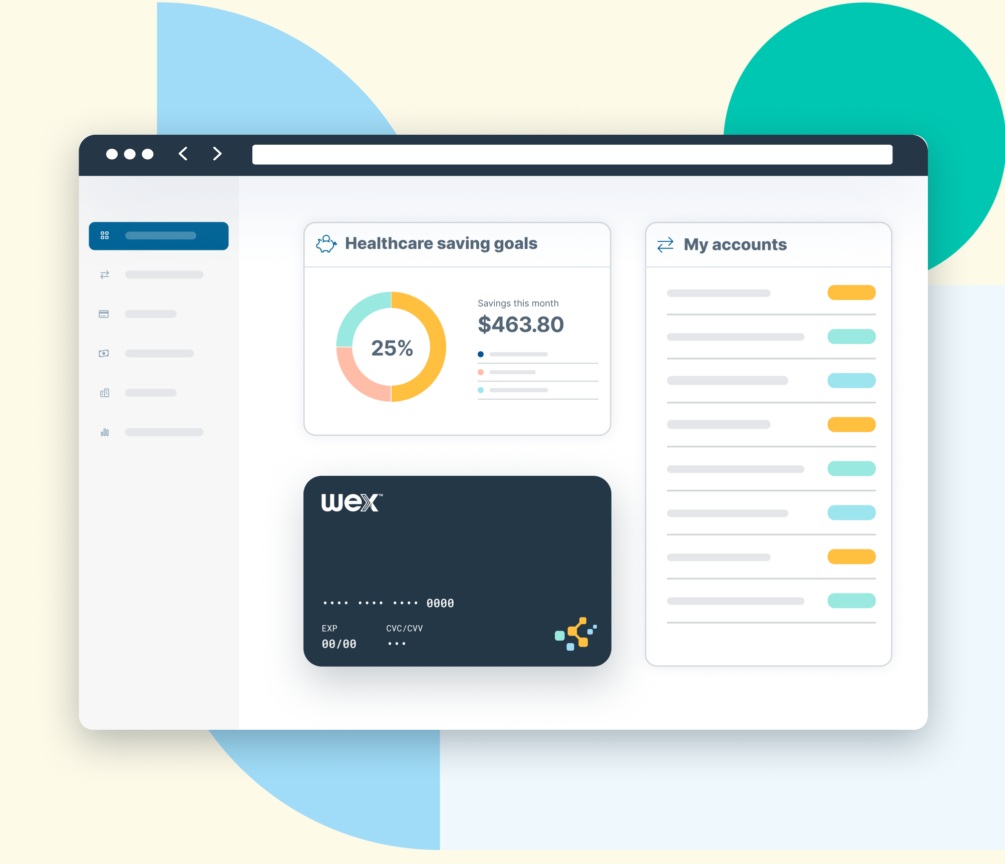
WEX Benefits occupies the territory between an employer’s promise and an employee’s purchase. It administers health savings accounts, flexible spending accounts, reimbursement arrangements, lifestyle accounts and commuter benefits. Its wider offering includes enrollment, COBRA continuation administration and compliance services. The expertise lies in coordinating money and eligibility across institutions that keep separate records.
For participants, that can mean checking balances, submitting a receipt photograph or scanning a product barcode for eligibility in the Benefits by WEX app. Available functions depend on the account. For an HR team, it means managing the account and enrollment machinery that employees understandably expect to behave like one service.
The letters matter. An HSA is an individually owned savings account with eligibility requirements; an FSA operates under different spending and plan rules. An HRA is funded by the employer. WEX supplies administration across these categories. It cannot make their underlying rules interchangeable, however similar the screens might look.
A customer worth buying
The lineage runs through Discovery Benefits, founded in 1987. By the time WEX announced its purchase in January 2019, Discovery administered benefits for more than one million consumers across all 50 states. It had already used WEX Health technology for more than a decade. The buyer knew the plumbing because it supplied some of it.
The announced cash consideration was about $425 million, including $50 million deferred until January 2020. Discovery had generated approximately $100 million in 2018 revenue. WEX was buying an administrator with established customer relationships and access to brokers and consultants, alongside complementary technology. Distribution was part of the product.
“our longer-term strategy to further reduce exposure to macroeconomic forces”Melissa Smith, WEX CEO, explaining the acquisition in 2019
That rationale helps explain the attraction for a company also associated with fleet payments. Employee benefits offered another market for payments expertise. The expansion continued: WEX Health completed the roughly $275 million benefitexpress acquisition in June 2021, adding enrollment, decision support and related services. The business could now reach further back into the employee’s benefits journey.
A business with three tills
Calling this SaaS is accurate, but incomplete. WEX earns account servicing revenue, payment processing revenue and income associated with HSA custodial cash. In 2025 its broader Benefits segment recorded $797.4 million in revenue. Account servicing contributed $453.9 million; payment processing contributed $104.2 million. Other revenue was $239.2 million, with finance fees rounding out the total.
Rounded shares. “Other” includes custodial income; it is not entirely interest.
WEX attributed much of that year’s growth to higher average HSA balances held at WEX Bank, which generate investment income, alongside account growth. The economics therefore depend on balances and banking conditions as well as software adoption. An employer evaluating the service should examine its contract and participants’ fees; a corporate revenue chart cannot reveal what a particular plan costs.
The brand can disappear
WEX sells directly and through partners, with white-label and co-branded options. Banks, health plans, payroll providers and administrators can deliver WEX-powered services within their own customer relationships. Employee Navigator’s documented Discovery Benefits integration illustrates the appeal: connect enrollment information with benefit account administration and give brokers fewer separate processes to manage.
This puts WEX among several overlapping competitive groups. HealthEquity and Alegeus compete in consumer-directed benefits technology and administration. Businessolver, bswift, Alight and others compete in enrollment and benefits administration. WEX’s argument is breadth: combine the financial accounts, software and operational work. Buyers still have to establish whether that combination fits their existing systems.
When Discovery became WEX in 2021, Johns Hopkins told participants they could keep their existing account, app and debit card. A corporate identity changed while familiar tools continued working. That continuity is a useful measure of infrastructure: employees should not need to understand an acquisition to pay an eligible bill.
For employers, the buying decision reaches beyond a list of supported accounts. A bank wanting its own brand on the experience has a different brief from an HR team seeking daily administration. WEX can serve both. The practical advantage of that range depends on how much responsibility the customer wants to keep, and how clearly the contract assigns the rest.
The next handoff
In November 2024, WEX announced employer pilots for Benefit Assistant and BeneFITwise Premier, bringing AI guidance and claims-informed decision support into My Benefit Express. These addressed another gap: choosing a benefit and understanding when to use it are separate tasks. Announcing a pilot establishes intent, rather than proving better health or financial outcomes.
On July 16, 2026, WEX launched a Developer Center with API documentation, testing environments and tools for partners. That is a more prosaic development, and a revealing one. A benefits platform must be understandable to the people connecting it before it can feel straightforward to the people spending through it.
The lesson a buyer can copy is practical. Demonstrate an address correction. Follow a payroll change into an account. Submit a receipt that needs attention. Ask who resolves a mismatch. An integrated platform needs accurate incoming data, appropriate plan configuration and effective service. Berkeley’s delayed cards made those dependencies visible. The promise of WEX Benefits is to make that chain easier to operate. Its test arrives whenever someone needs the money.