Consider the small indignity of a benefit card declined at a pharmacy. There is money in the account. There is medicine in the basket. Somewhere between the two, a rule has become an obstacle. The member encounters a refusal; the administrator inherits a phone call. Lynx has built a business around that unromantic interval.
- Lynx powers accounts, cards and healthcare shopping for other businesses.
- Customers can embed its APIs or launch their own branded experience.
- Priority Health’s case study reports a 10-week launch and 95% in-store approval.
The Boston company sells infrastructure to health plans, banks, benefits administrators and digital health businesses. Members may encounter their insurer’s name throughout. Lynx supplies the machinery underneath: balances, funding, payment controls, eligible purchases and the records that keep the operation intelligible. Its ambition is to make a complicated benefit behave like something you can use.
The trouble began inside the system
Co-founders Matt Renfro and Ken Abel had worked inside Optum and financial services. Renfro held leadership roles in healthcare accounts and payments; Abel was CIO of Optum Bank. These were people acquainted with the awkward plumbing behind an apparently ordinary card.
In a 2025 interview with Goodwin, Renfro described the integration difficulties that followed acquisitions of HSA businesses. Inherited platforms dated to the late 1990s and were designed around claims processing. Meanwhile, members watched their balances closely because those balances helped determine what care they could afford. The mismatch between old infrastructure and immediate personal need helped motivate Lynx.


Lynx emerged from stealth in March 2022 with $17.5 million in equity financing. Its February 2025 announcement added $27 million, led by Flare Capital Partners alongside CVS Health Ventures, McKesson Ventures and returning investors. The disclosed rounds total $44.5 million. That is capital raised, rather than a measure of sales or the price of a customer deployment.
A benefit card with a working memory
A pharmacy is a poor unit of eligibility. It sells things a healthcare allowance may cover and things it may exclude. A merchant-category restriction can identify the kind of shop. A SKU restriction can identify the product. That extra precision is central to Lynx’s payment offering.
The platform supports restrictions by merchant, merchant category and product SKU. Multiple accounts and funded benefits can connect to one card, while retaining their separate rules. Behind it sits banking and ledgering infrastructure: the record of what belongs to whom, what remains available and what has moved.
- 01FundA benefit has a balance
- 02CheckPlan rules meet the item
- 03PayEligible spending proceeds
- 04RecordThe ledger catches up
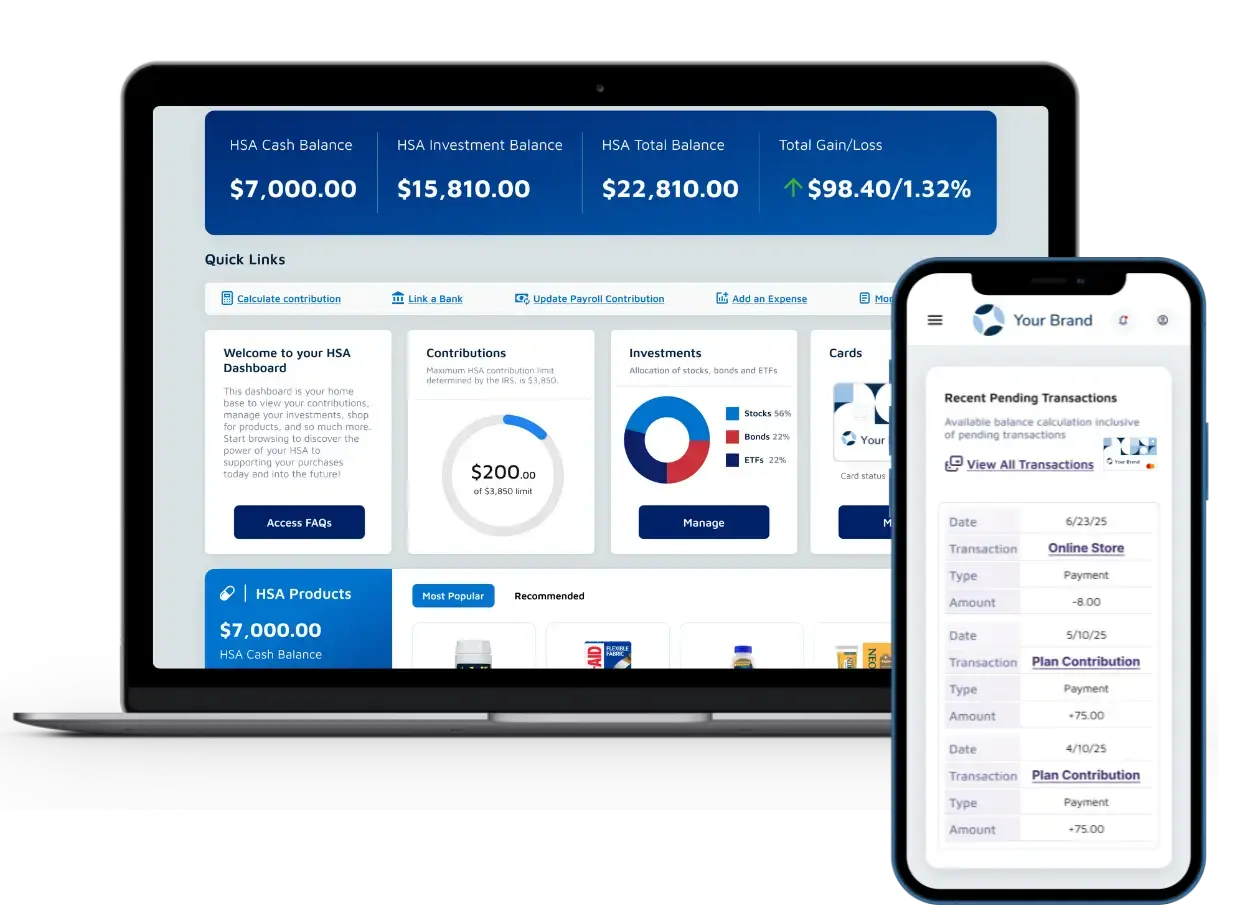
CDH Core, formally announced in September 2023, brings together health savings accounts, flexible spending accounts, reimbursement arrangements and other benefits. Investment functionality comes through brokerage and registered investment adviser partners. E-commerce connects eligible products with payment, order handling and fulfillment. The proposition is practical: fewer separate systems for a consumer to navigate and an administrator to reconcile.
Ten weeks to make the promise spendable
Priority Health offers a concrete test. Its previous experience, according to the published Lynx case study, included unclear eligibility, prices above retail, slow fulfillment and fragmented vendors. The operational trouble reached members through the simplest possible question: can I buy this?
The teams launched a Priority Health-branded e-commerce site and mobile app in 10 weeks. Balances, transactions, eligibility information and shopping moved into one destination. The case study reports that every card was delivered, and every benefit balance loaded, before the effective date. An insurance promise acquired a working start date.
The same account records more than 2.4 million in-store transactions. These are company-published program results, rather than a guarantee for another buyer. Still, they make the value proposition legible: the front end, checkout rules and operational deadlines were treated as parts of one service.
“Lynx is fantastic comparatively as far as communication and speed at which they resolve issues.”
Jacob Maichele / Medicare Customer Care Center, Priority Health
The bank keeps its name. Lynx runs the machinery.
The distribution strategy extends beyond insurers. Avidia Bank announced Spark Benefits with Lynx in January 2024, expanding its offering beyond HSAs. Nexben’s partnership addresses ICHRA payments, including pre-tax payroll withholding. The Helper Bees connects a benefit card and shopping experience with its network of in-home service providers.
These relationships explain the B2B model. Lynx supplies APIs or managed white-label experiences; the partner keeps the customer relationship. Its commerce offering also supports merchant-of-record arrangements, and it promotes banking, investments and commerce as revenue opportunities for customers. Implementation includes configuration, operational support and reporting, as well as software.
Buyers have alternatives. WEX and Alegeus operate benefits infrastructure; HealthEquity and Optum Financial serve healthcare accounts; Optum’s Healthy Benefits+ addresses supplemental benefits. Lynx’s pitch centres on configurable infrastructure spanning several use cases. Whether that breadth matters depends on how many accounts, vendors and shopping experiences a buyer needs to connect.
The receipt gets its turn
In 2026, Lynx added embedded claims automation with Silver. A submitted receipt or other document is analysed, expense information is checked against benefit rules, and a recommendation or decision returns to the existing workflow. Routine claims can proceed automatically; exceptions go to people. The member need not learn a second portal merely because the machinery has changed.
The technical starting point is revealing. Lynx’s developer guide asks teams to choose an integration path, establish authentication and complete one workflow end to end in a sandbox. A single employer and an administrator managing many employer groups need different organizational structures. Benefit funding also has to be configured. Moving the screens is only one part of moving the service.
The choice between APIs and white label follows the same logic. A customer with an existing application can embed the pieces it needs. A team without the resources to build a member experience can use Lynx’s branded web and mobile offering, with design, maintenance and operational support. The buyer’s capacity shapes the implementation.
There is a useful lesson here for anyone building benefits: follow one purchase all the way through. Establish account ownership, funding, eligible items and exception handling before polishing the screens. A connected experience still depends on accepted retailers, valid eligibility and available funds. Lynx’s wager is that handling those details together makes the allowance in the brochure more likely to become the item in the basket.