Consider the underarm. It is an awkward place to begin a beauty story, which is precisely its charm. Most of us encounter it as a problem to manage before leaving the house. Arcaea encounters it as a community of organisms whose behavior might be changed. The distinction determines what goes into the bottle, what gets measured in the laboratory, and what a customer is eventually asked to believe.
- For brands: ScentARC is an ingredient technology designed to influence the microbes that produce underarm odor.
- For consumers: Future Society sells fragrances, a fragrance primer and a daily personal-scent treatment.
- The wager: biology can supply beauty with new functions and fresh creative material.
The underarm has a menu
Arcaea launched ScentARC in March 2023. Its prebiotic blend is intended to influence particular underarm microbes so that they produce fewer odorous compounds. The development combined skin microbiology, high-throughput screening and machine learning. Instead of treating a living population only as something to suppress, the company looked for inputs that could change what it did.
That makes ScentARC a proposition for formulators, rather than a finished deodorant that a shopper picks off a shelf. Arcaea reported sampling interest from hundreds of brands worldwide at launch. An interested brand still has to make an actual product: choose a format, combine ingredients, test performance and persuade customers to try it. The laboratory solves one problem; the bathroom cabinet imposes several more.
The practical instructions are revealing. Arcaea’s technical literature recommends a 3% to 4% use level and gives prototypes for sprays and sticks. In an emulsion, the ingredient belongs in the water phase. Here, the grand promise of biotechnology meets a familiar manufacturing question: how do you put this into a formula that behaves?
Discovery earns its place in beauty through a usable formula.
Six flowers, three perfumers
The other side of Arcaea’s business asks a more entertaining question. If a flower has vanished, can it still inspire a perfume? Future Society, its consumer brand, debuted in 2023 with six fragrances informed by the DNA sequences of extinct flowers. The original sequencing data came from work at Ginkgo Bioworks, the platform on which Arcaea was incubated.
The genetic evidence helped identify scent molecules those flowers might have produced. Then came the people: Jérôme Epinette of Robertet, and Daniela Andrier and Olivia Jan of Givaudan. They interpreted the material into wearable compositions. These are imaginative reconstructions with scientific starting points. A bottle cannot certify exactly what a vanished flower smelled like.
That distinction makes the products more interesting. A scientific clue can become a constraint, and a constraint can give a creative person somewhere unusual to begin. The perfume is neither a specimen jar nor a lecture. It must be pleasant enough that someone wants to wear it again tomorrow.
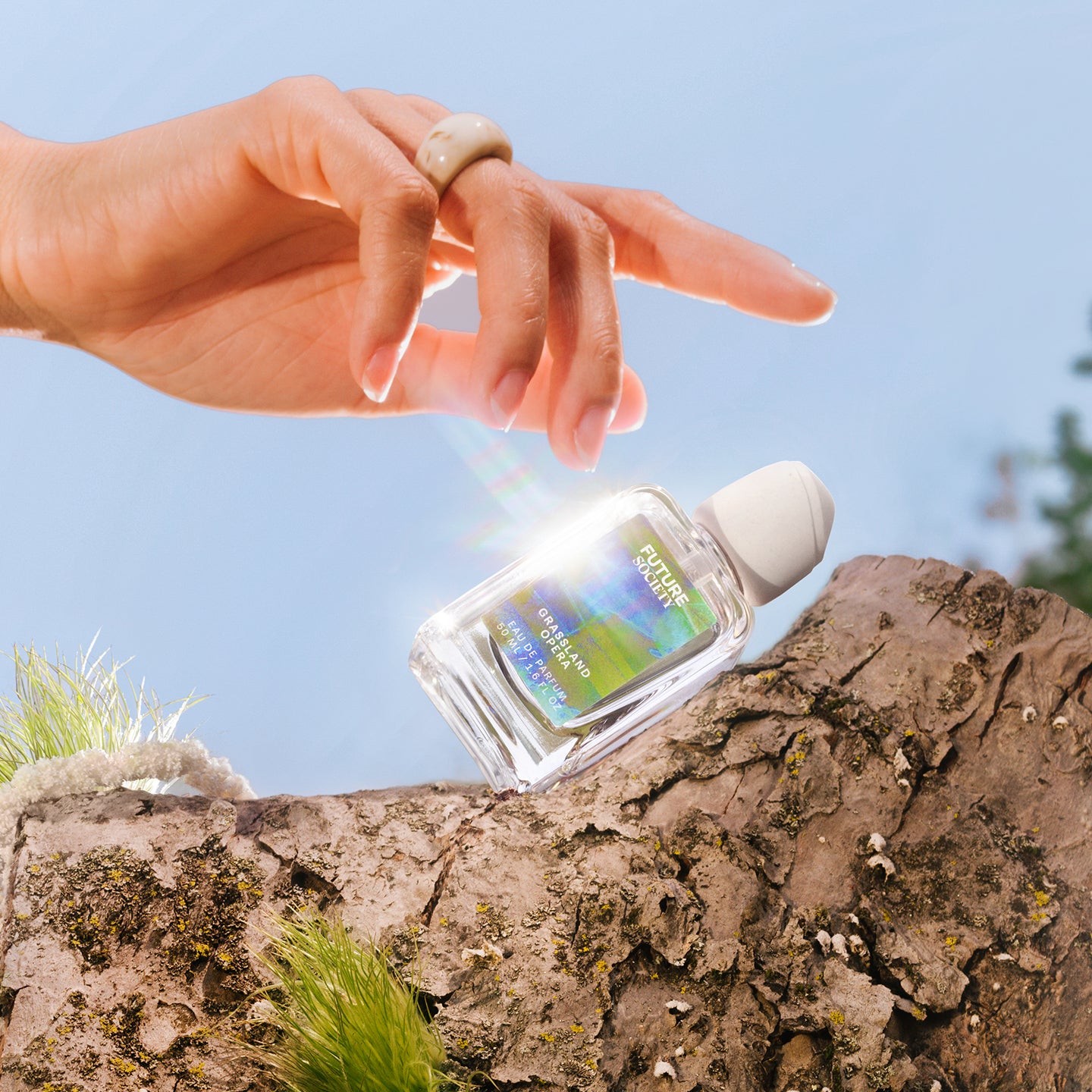
“Science is about more than clinical studies, it also represents new creative tools.”Jasmina Aganovic, Future Society launch announcement
The blend that needed another pass
Beauty stories tend to jump from inspiration to finished bottle. Arcaea’s September 2026 research account supplies the intervening mess. Early odor shifts were clearer in men than women, and some microbes were addressed less consistently. Expanded screening began in April 2025; final formula approval followed in January 2026.
Its reported seven-day study of 25 participants found average expert-graded odor scores falling from 2.90 to 2.35 on a five-point scale; 68% improved. These company-reported results suggest a measurable effect with individual variation. They leave room for a customer whose experience is less impressive than the premise.
Base Scent, the resulting consumer treatment, costs $40 for 100 ml. The brand directs users to apply it twice daily and allows layering with deodorant or fragrance. That is a useful distinction for shoppers: personal-scent care does not automatically provide sweat control. A person chiefly bothered by wetness may need a different function.
Average odor score on a 0-5 scale. Lower means less odor. 25 participants; company-reported results.
A laboratory with two shop windows
Founder and CEO Jasmina Aganovic studied chemical and biological engineering at MIT and worked at Fresh, Living Proof and Mother Dirt. Her career sits between technical development and the decidedly nontechnical reasons people buy beauty. Arcaea calls its approach expressive biology. The phrase describes an effort to make scientific capability usable for personal expression.
The company announced a $78 million Series A in October 2021, backed by investors including Chanel, Givaudan, Cascade Investment, Viking Global and Wittington Ventures. That is financing, rather than a published development bill. Olaplex later announced a strategic investment made in 2021 and a haircare partnership. In 2022, Arcaea also acquired Gadusol Laboratories for work on biologically produced sun-protective compounds.
Commercially, this is a business with two shop windows. Ingredient customers buy something they can build into their own products. Consumers buy Future Society’s finished goods, online or through retail. The fragrance launch announced $98 bottles and a rollout to Nordstrom.com and 20 stores. Owning a brand lets Arcaea put its biological ideas directly in front of shoppers; supplying ingredients gives other brands a way to use its work.
The competitive claim extends to sourcing. Arcaea wants ingredients that depend less on extracting from plants, animals or petrochemicals, and its explanation of fermentation describes microbes as small production factories. Sustainability remains something to establish for a particular ingredient and process. For a brand comparing suppliers, an appealing origin story cannot substitute for consistent batches, workable pricing and evidence about the finished formulation. The same buyer has to care about the promise and the production details.
The next brief comes from the sky
By 2026, Future Society had added Cloud Reverie, a $98 fragrance informed by microbes collected from clouds. Daniela Andrier composed the perfume. Biology supplies an unexpected point of departure; a perfumer supplies judgment about what deserves to remain in the finished scent.
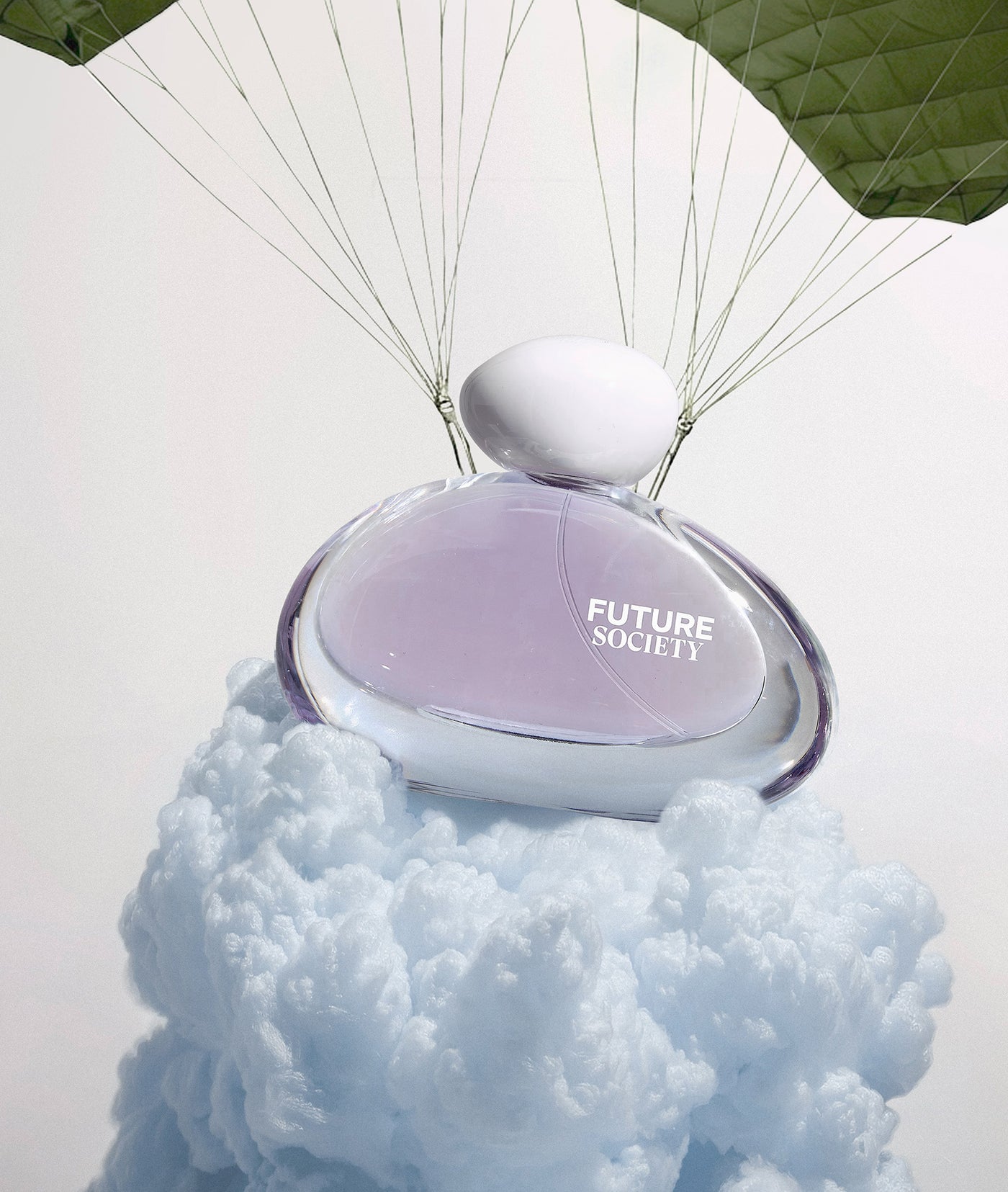
The transferable lesson is to change the starting material for a familiar task. Give the formulator a different mechanism; give the perfumer a different brief. Keep the test recognizable to the customer: does it work, and do I like it? Novel biology still has to earn a repeat purchase. Arcaea’s most useful idea may be that a laboratory can make beauty more curious without requiring its customers to become scientists.
Arcaea · Future Society · LinkedIn · X · Instagram · Facebook
Company blog · News · Founder’s TED talk · The Economist documentary · Beauty and the Biome interview