The first Ellis Brooklyn products did not arrive in perfume bottles. They were two scented body milks. Bee Shapiro, a beauty writer accustomed to examining finished products, had begun investigating the rather less glamorous business of making them. A scent needed a formula. A formula needed a container. The container needed a pump that worked. Somewhere between the idea and the shelf lay a considerable quantity of cardboard.
- A journalist’s personal routine became a fragrance business.
- Color, sampling and smaller formats help sell something a screen cannot convey.
- The brand now explains its ingredient choices while avoiding the word “clean.”
01 / A lotion with literary ambitions
In 2013, pregnant with her daughter Ellis and living in Brooklyn, Shapiro saw an opening. Beauty was acquiring a vocabulary of ingredient scrutiny, but the sophisticated fragrance options she wanted seemed scarce. She had spent years reporting on the industry. Now she wanted something she could use herself. The company’s name joined her daughter to the place where the idea began.
The launch came in June 2015. In a contemporary Fashionista interview, Shapiro described a self-funded operation whose only employee was her sister. Shen Beauty, a Brooklyn boutique, became the first retailer. One early scent, Pseudonym, drew on D.H. Lawrence’s poem “Figs.” A lotion inspired by a scandalous poem is an agreeable reminder that practical objects need not have practical imaginations.
The format also reflected office etiquette. As Shapiro later told Glow Journal, she wore scented lotion at her desk because spraying perfume in an open office felt intrusive. Eau de parfum followed in 2016. The starting product came from a real habit; it did not have to define the whole business.

02 / The nose needs a translator
Shapiro found an early collaborator in perfumer Jérôme Epinette. Their work required a shared vocabulary for sensations that resist description. Mood boards proved less useful to her than words. She became more comfortable sending written ideas. That is a specific lesson for creative businesses: choose the medium that communicates the brief, even when the fashionable medium looks better in a presentation.
MYTH, Epinette’s floral musk, makes the translation tangible. Its published notes move from bergamot and ambrette through orchid and jasmine to liquid musks and white cedarwood. These are clues to a composition, rather than a guarantee that every wearer will experience it identically. The 50ml bottle currently lists at $115. At that price, a romantic description has to earn its keep.
Today the assortment gives shoppers several ways to approach the same pleasure: full bottles, travel sprays, perfume mists, oils and discovery sets. The customer might want a familiar skin musk, a tropical mood or something sweet enough to suggest dessert. The problem being solved is modest but persistent: finding a scent that feels personal without requiring fluency in perfumery.
03 / A website cannot smell like jasmine
The MEMOIR discovery set costs $39 and contains nine 2ml glass spray vials. Its range includes MYTH, SALT, FLORIST and VANILLA MILK. This is a sensible answer to ecommerce’s sensory limitation. A shopper can compare fragrances at home before choosing a larger bottle. The names begin the conversation; the samples give the nose a vote.
There is also the shelf. Shapiro told Beauty Independent in 2023 that she had once hoped scent would tell the whole story. Experience changed that view. Earlier clear bottles and black boxes gave way to greater attention to color, with SALT and SWEET marking the shift. The bottle could help someone imagine the contents before lifting a tester.
That approach places Ellis Brooklyn among contemporary fragrance alternatives such as Phlur and DedCool, while competing for spending that might also go to Byredo or Jo Malone London. Its distinction lies in the combination of founder-written ideas, approachable scent references and multiple formats. No single ingredient establishes a private territory in this market.
04 / The expensive part of getting noticed
Ellis Brooklyn sells directly online and through retailers. Those channels offer different advantages: the website allows room for explanation, while stores allow smelling. A wider retail presence also brings costs. Shapiro has discussed spending on samples, store visibility and store teams. A good perfume still needs an encounter with a prospective buyer.
The company raised a reported $1 million seed round in 2020 from Stage 1 Financial and NYX founder Toni Ko. In October 2023, REDO Ventures led a $9 million Series A. The stated purposes included strengthening existing retail relationships, product innovation and expanding the team. Capital bought room to pursue distribution; it did not make scent preference predictable.
05 / When “clean” became too cloudy
“We don’t use the word ‘clean’ anymore.”Ellis Brooklyn’s current ingredient philosophy
The company’s current philosophy explains the reversal: the term means different things to different people and can create unvalidated concerns. Ellis Brooklyn uses both natural and synthetic ingredients. It states that its fragrances comply with IFRA standards and that it is PETA-certified vegan and cruelty-free. The emphasis has moved toward explaining selected ingredients and their purpose.
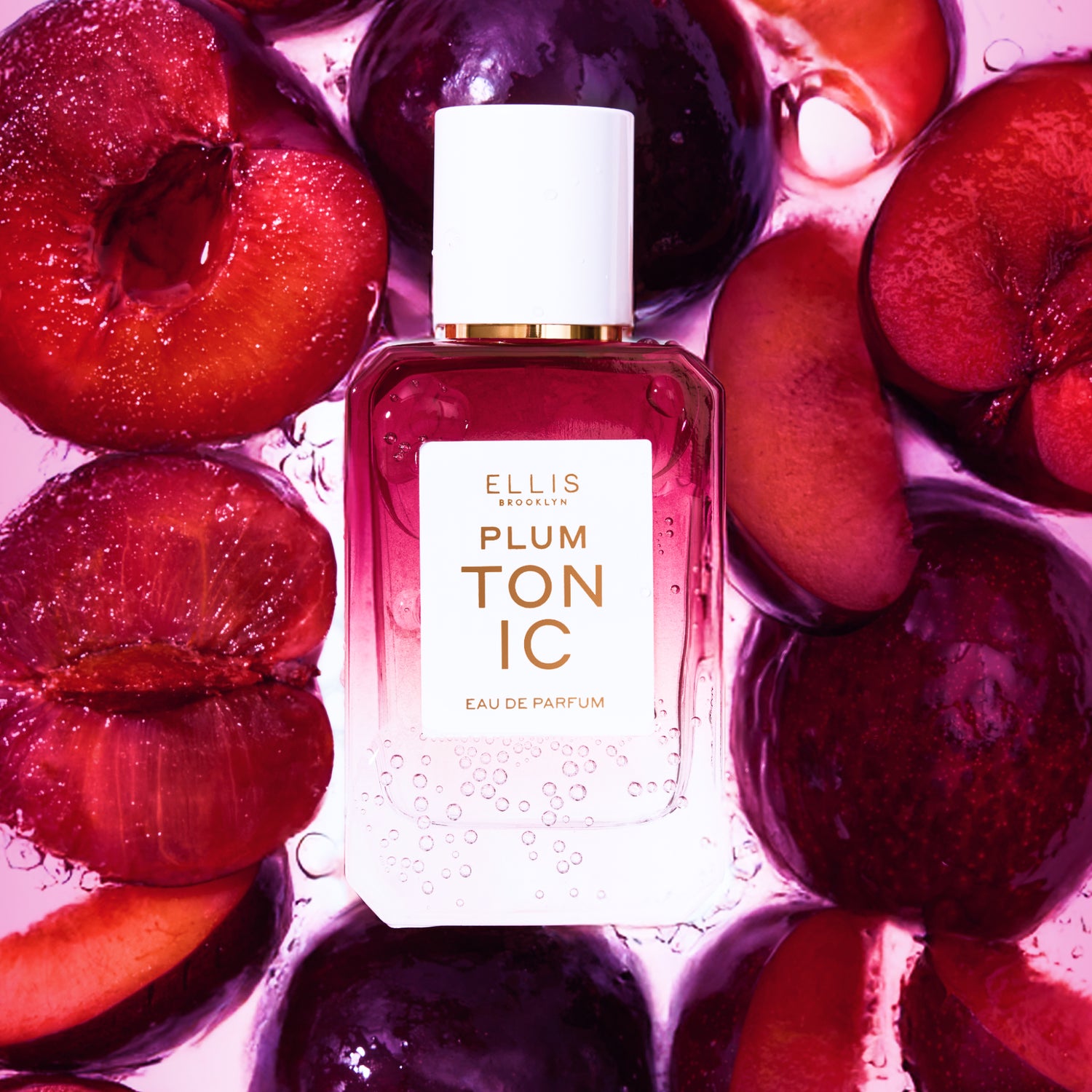
The newer products make that argument more concrete. VANILLA RICE, created by Nicole Mancini, combines toasted rice, coconut milk and vanilla with florals. Shapiro connects its inspiration to her experience of belonging as an Asian American immigrant. PLUM TONIC, also credited to Mancini, names plum nectar, mandarin and açaí. The vocabulary is becoming easier to picture, even as the formulas remain composed.
For shoppers, the useful move is to sample, wear and compare. For founders, it is to begin with a precise unmet desire, then revise the delivery as evidence accumulates. That approach depends on access to capable makers and enough capital to reach customers. Personal taste alone cannot cover those bills. Ellis Brooklyn’s most transferable habit is the willingness to edit: the format, the package, even a word that once seemed essential.