The important event was almost offensively unphotogenic. A satellite moved a little higher. In August 2022, Accion Systems reported that its TILE thruster had raised the altitude of D2/AtlaCom-1, a NanoAvionics spacecraft launched the previous summer. The check came from the satellite’s GPS. For a company selling movement, a changed orbit was a rather better calling card than another picture of a rocket.
Today that business operates as Revolution Space. Its history offers a useful question for anyone who builds expensive things: how do you turn an elegant laboratory device into something another person will trust inside an even more expensive machine?
- MIT-derived propulsion uses electric fields and liquid salt to move satellites.
- TILE’s modular approach tackles the squeeze on spacecraft mass, volume and power.
- A reported orbital demonstration precedes today’s broader space-systems work.
- A $19.98 million Air Force award funds development through July 2027.
01 / The payload has first claim on the suitcase
A small satellite is a suitcase packed by people who all believe their equipment deserves the last inch. The camera needs room. The radio needs power. The engine, inconveniently, needs both. Earth-imaging and communications missions may carry useful instruments yet struggle to accommodate the hardware that lets them change orbit or compensate for atmospheric drag.
Revolution Space’s propulsion heritage addresses that packing problem. TILE stands for Tiled Ionic Liquid Electrospray. Rather than burning fuel, it uses electric fields to extract and accelerate charged particles from liquid propellant. Expelling those particles pushes the spacecraft the other way. The salt is liquid; the useful trick is electrical.
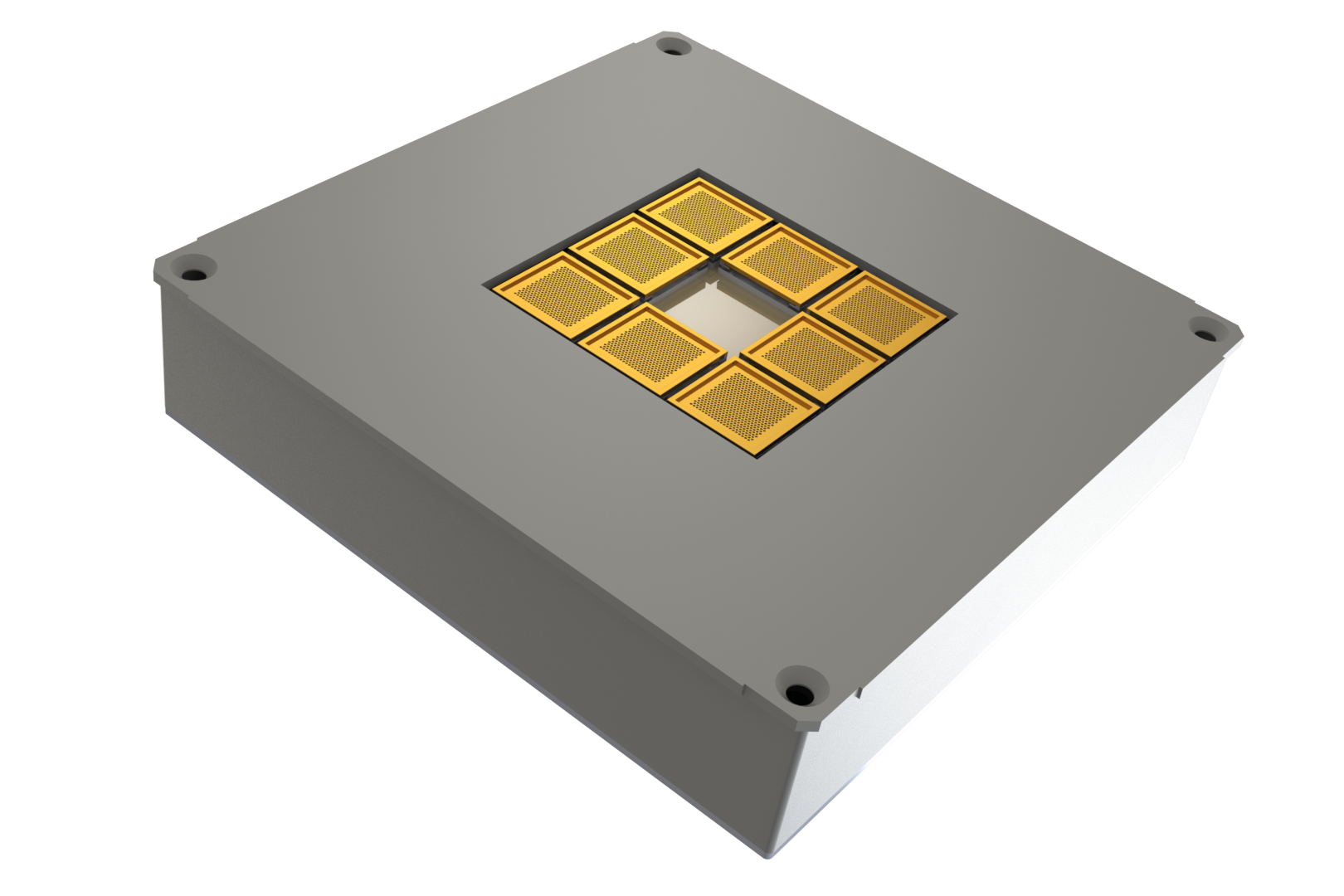
Its appeal lies partly in what the package can leave out. The original architecture avoided bulky pressurized tanks and valves. Small thruster elements could be combined into arrays, allowing designers to distribute propulsion around a spacecraft or cluster it together. That makes propulsion a question of arrangement as well as engine size.
02 / A second shot, and a better question
The company’s roots are at MIT, where Natalya Bailey, then known as Natalya Brikner, and Louis Perna worked on electrospray technology. Accion Systems was founded in 2014. Bailey had already tried a propulsion startup: Asteria Micropropulsion, begun in 2009, closed soon afterward. The failed venture was separate, but it gives the later company’s origin a human complication.
During MIT’s 2014 accelerator, the founders repeatedly used customer feedback to reshape the technology. An invention could be impressive and still answer the wrong question. The relevant question became what a spacecraft builder could actually integrate.
“We don’t want them to be made like bespoke jewelry anymore.”
Natalya Brikner / MIT News, 2015
That manufacturing ambition remained visible years later. The 2021 financing announcement described scaling MEMS production through microfabrication processes familiar to the semiconductor industry. The business proposition combined small hardware with repeatable production. A beautiful engine is useful; a beautiful engine that can be made consistently is a supplier.
03 / Borrow the spacecraft
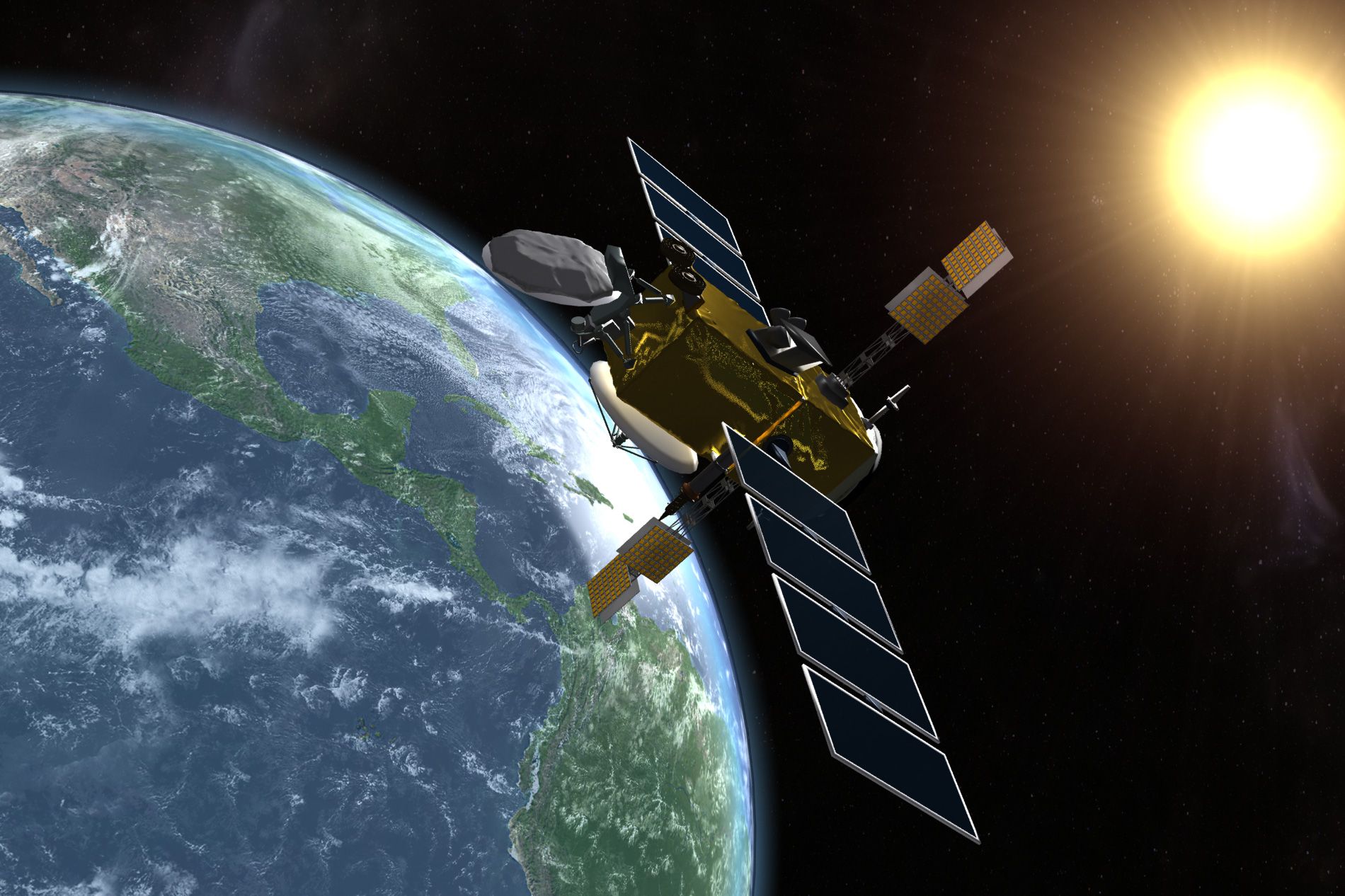
Getting the engine into orbit required other people’s expertise. In October 2020, NanoAvionics announced a hosting agreement for TILE 3 on its M6P satellite bus. It would handle integration, testing, registration, launch logistics, commissioning and operations. Accion could concentrate on the propulsion experiment rather than becoming a satellite operator to prove a satellite component.
D2/AtlaCom-1 shared its ride with imaging, communications and star-tracker hardware. NASA’s Tipping Point program supported the propulsion work, with involvement from JPL, Glenn and Ames. The goal was to approach the capabilities needed by NASA’s MarCO interplanetary CubeSats in a smaller, lighter, lower-power package. The reported altitude change was a concrete milestone toward that goal, not a demonstration of every future mission.
Xplore announced another hosting arrangement in August 2021, proposing a multi-year test of next-generation TILE hardware. Its value was duration: an engine intended for years of service needs more than a brief firing. The announcement describes a plan, rather than a completed mission.
This is also how to read its customer list carefully. Government agencies fund development. Manufacturers and mission integrators provide platforms or incorporate hardware. A demonstration host is not automatically a repeat buyer. Revolution Space occupies the hardware-and-development layer beneath the services that satellites eventually deliver.
04 / The money changed the scale
The capital was substantial. Accion announced an $11 million Series B in February 2020, co-led by Boeing HorizonX Ventures and Shasta Ventures. In July 2021, an affiliate of Tracker Capital led a $42 million Series C and acquired a majority stake. The announced valuation was $83.5 million. Those are dated transactions, not today’s price tag.
Under its current name, the company presents itself more broadly as an advanced space-systems business. Darren Garber is CEO and CTO; former NASA administrator Daniel Goldin chairs the board. Recruiting has included MEMS manufacturing, spacecraft systems and quality engineering. The disciplines suggest that making the hardware is part of the ambition, alongside inventing it.
The electrospray connection also continued under the new name. Revolution Space signed a two-year reimbursable technology-development agreement with JPL in September 2024. That arrangement links the current business to its propulsion roots without turning a reimbursable agreement into another venture round.
The Air Force contract awarded in March 2026 makes that broader scope tangible: a propulsive adaptor for long-duration orbital maneuvers, with integrated navigation and operations. It specifies twice the thrust of existing Hall thrusters at equivalent power, with completion expected July 8, 2027. Read that number as the assignment. It does not establish that the target has already been achieved, or that TILE has become a Hall thruster.
05 / The engine must suit the journey
For a spacecraft buyer, the choice begins with the mission. Busek offers electrospray alternatives; Enpulsion and Morpheus Space use metal-propellant approaches. Hall-effect engines and chemical systems occupy other parts of the trade. Low-thrust electric propulsion needs time to accumulate a maneuver. A mission demanding a rapid, forceful burn may need a different answer.
NASA’s engineering guidance also puts plume contamination and operating lifetime on the electrospray checklist. Small dimensions do not excuse testing. Buyers need evidence matched to their power budget, required orbit changes and service life. Other hardware founders can copy the sequence: narrow the customer’s constraint, borrow a credible test platform, then measure the outcome. Somewhere above Earth, the GPS reading still makes the argument.