electric-propulsion
(8)
Brunswick Corporation
Brunswick began with a billiard table in 1845. Today, its engines, electronics, boats and clubs form an unusually complete marine ecosystem - a bet that the future of boating belongs to whoever makes the whole experience easier.

ePropelled
ePropelled is a New Hampshire-based engineering company that designs intelligent electric motors, motor controllers, starter generators and power-management systems for uncrewed vehicles across air, land and sea. Built on patented magnetics technology - including its Dynamic Torque Switching (eDTS) architecture that reconfigures motor windings on the fly to boost efficiency - the company supplies drone and UAV manufacturers, defense programs and industrial customers with lightweight, high-efficiency propulsion. Founded in 2018 by serial entrepreneur Nick Grewal, ePropelled raised a $15M Series A in 2021 and has grown to roughly 110 employees with operations in the US, UK and India.

Nick Grewal
Nick Grewal is the founder, chairman and CEO of ePropelled, a Laconia, New Hampshire company building smart-propulsion and energy-management systems for drones, marine craft, and light electric vehicles. He founded ePropelled in 2018 after selling his previous startup Nashoba Networks to Cisco Systems for roughly $100 million in 1996 and spending two decades as an angel investor in more than 40 high-tech companies. He was inducted into the 2025 Boston Smart Business Dealmakers Hall of Fame.

Mitch Lee
Mitch Lee is the co-founder and CEO of Arc, the Los Angeles marine-technology company trying to make everything that floats electric. A Bay Area kid raised on the California Delta, he trained as a mechanical engineer at Northwestern, analyzed Apache helicopter rotor blades at Boeing, then spent years in software - founding Penny, which was acquired by Credit Karma - before reuniting with his old Boeing and Northwestern classmate Ryan Cook, a former SpaceX lead engineer, to build electric boats in 2021. Arc has raised more than $150 million, ships its Arc Sport wake boat and Arc Coast center console from a 150,000-square-foot LA factory, and in 2026 pushed into commercial and defense propulsion with a $50M Series C and a $160M tugboat contract for the Port of Los Angeles.
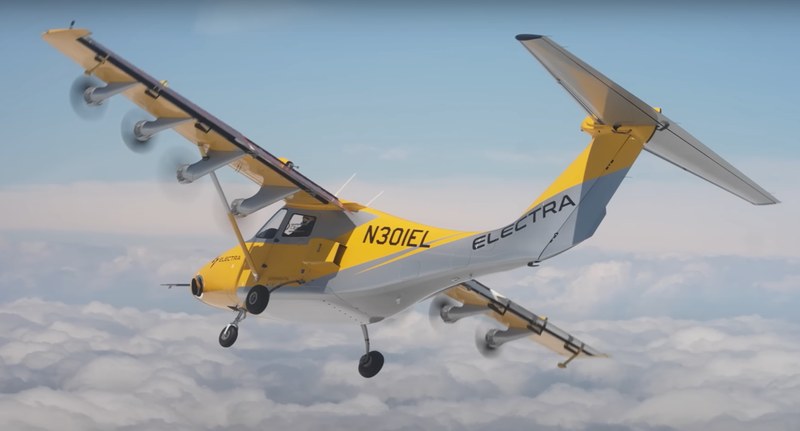
Electra.aero
Electra.aero is a Manassas, Virginia aerospace company building the EL9, a nine-passenger hybrid-electric 'Ultra Short' aircraft that takes off and lands in about 150 feet - roughly a soccer field - without conventional runways, charging stations, or the noise of a normal airplane. Using blown-lift aerodynamics and eight electric motors, it aims to open regional and community air travel from grass strips and small airfields while cutting emissions, with FAA Part 23 certification targeted for 2029.
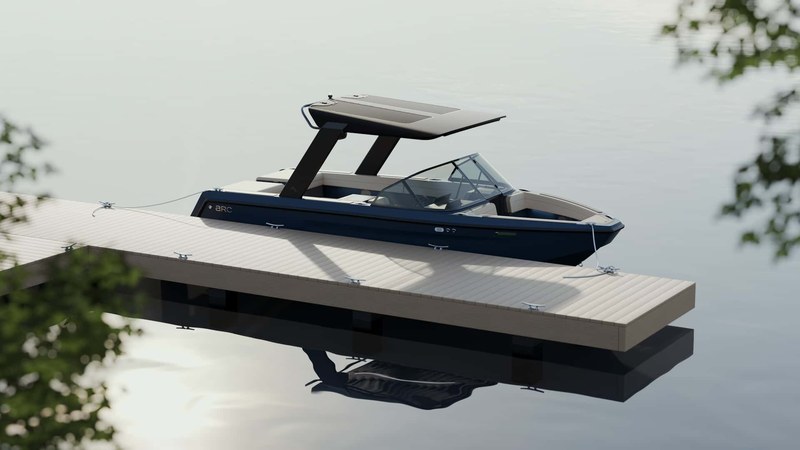
Arc
Arc is a Los Angeles electric boat company building battery-powered watercraft from the ground up - software, motors, battery packs and hulls - rather than retrofitting gas boats. Founded in 2021 by veterans of SpaceX, Rivian and Tesla, Arc started with the high-end Arc One, found its commercial footing with the Arc Sport electric wake boat and the Arc Coast center console, and is now extending its propulsion stack into commercial and defense vessels including electric and hybrid tugboats. The pitch: quiet, fume-free, low-maintenance boats with the torque and software experience of an EV.

Kyle Moore
Kyle Moore is co-founder and Software Fellow at Pyka, the Alameda, California company building the world's largest commercially-approved autonomous electric aircraft. A self-taught programmer who started writing code at age 11 from rural Washington, Moore brought firmware and robotics expertise from Google X to help design Pyka's Pelican — a 1,320-lb autonomous electric aircraft now spraying crops across four continents and delivering cargo for the U.S. Air Force. Pyka has raised $95M in total funding and achieved back-to-back FAA authorizations for the largest uncrewed aircraft systems in U.S. commercial history.

Michael Norcia
Michael Norcia is the Co-Founder and CEO of Pyka, the world's first FAA-certified autonomous electric aviation company. Based in Alameda, California, Pyka builds large-scale autonomous electric aircraft for agricultural crop protection and cargo logistics. Norcia — a UC Davis applied physics grad who cut his teeth engineering firmware and power systems at Zee Aero, Joby Aviation, and Kittyhawk — founded Pyka in 2017 (Y Combinator S17) with a pragmatic thesis: skip the flying cars, solve the problems aviation already has. Today Pyka's Pelican aircraft spray hundreds of acres per hour across the US, Costa Rica, Honduras, and Brazil, and the company is expanding into defense with a new platform called DropShip.