mit-spinout
(35)
Hosta AI turns a damaged room into a repair estimate
A few phone photos can spare a water-damage claim a long appointment with bureaucracy. Hosta AI, now operating as Elara Spatial, has built its business around making those pictures useful.

Revolution Space gives small satellites room to move
A Boston company turned liquid salt into satellite propulsion. Now the business once called Accion Systems is taking its small-engine ambitions into larger space systems and a $19.98 million Air Force development contract.

Syntis Bio wants to put a detour in your daily pill
A mussel-inspired intestinal coating is the unlikely foundation of Syntis Bio’s obesity program. Its daily tablet aims to borrow a metabolic trick from gastric bypass, with early human results and a much longer test still ahead.

The Company That Makes Metal Without Melting It
A Cambridge startup spun out of MIT skips the furnace entirely - smashing metal powders together instead of melting them - and says the result is a molybdenum alloy three times stronger than what the market sells today.
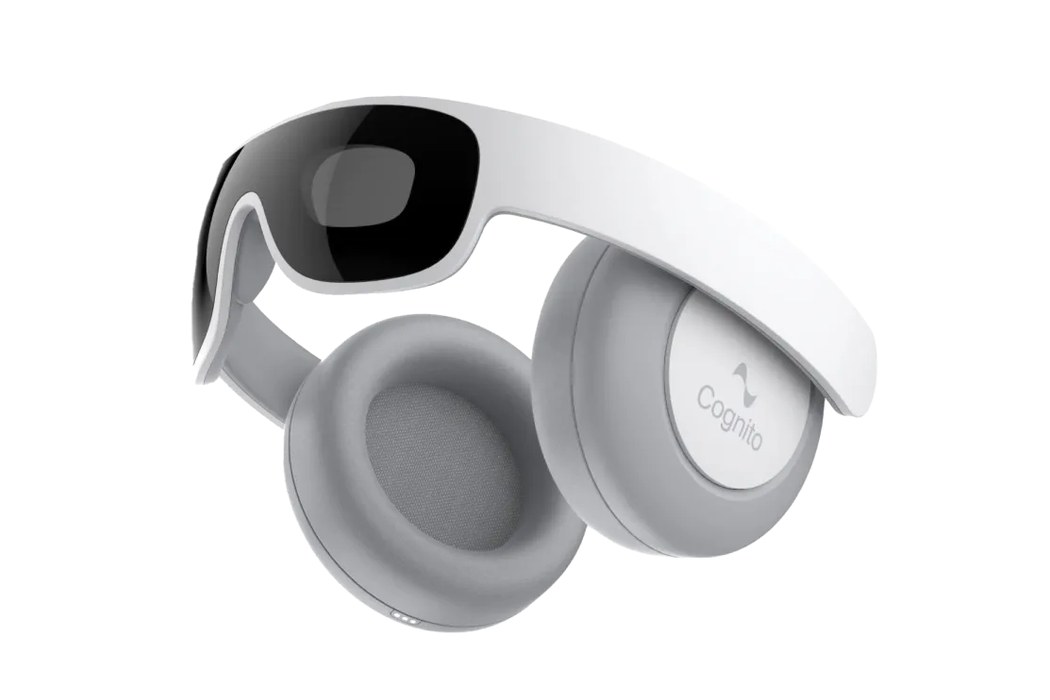
Cognito Therapeutics, Inc.
Cognito Therapeutics is a Cambridge, Massachusetts clinical-stage neurotechnology company spun out of MIT that develops non-invasive, wearable therapy for neurodegenerative disease. Its lead product, Spectris, delivers precise gamma-frequency light and sound stimulation through connected glasses and headphones to evoke gamma brain oscillations, with the goal of slowing cognitive and functional decline in Alzheimer's disease. Spectris AD holds FDA Breakthrough Device Designation and is being evaluated in the HOPE Study, described as the largest medical device trial focused solely on Alzheimer's disease.
Manus
Manus (Manus Bio) is an MIT-born industrial biotechnology company that engineers microbial cell factories and precision fermentation to produce natural ingredients - sweeteners, flavors, fragrances and pharmaceutical building blocks - that are normally extracted from plants or made from petrochemicals. Branded as 'The BioAlternatives Company,' Manus runs an R&D hub in Boston and a commercial-scale biomanufacturing plant in Augusta, Georgia, where it makes products such as monk fruit sweetener and stevia Reb M for partners including Givaudan and Tate & Lyle.

Saurabh Ullal
Saurabh Ullal is the CEO of 6K, an advanced materials company in North Andover, Massachusetts that uses a microwave-plasma process called UniMelt to make battery cathode powders and metal powders for additive manufacturing. A chemical engineer by training with a PhD from UC Santa Barbara, he joined 6K as COO and stepped into the CEO role in September 2024 alongside an $82M Series E close, tasked with scaling a technology invented at MIT into industrial tonnage.

Modo Labs
Modo Labs is a Boston-based software company that lets universities and enterprises build branded mobile and web apps without deep engineering teams. Born from an open-source MIT project, its no-code/low-code platform stitches together backend systems - student records, HR, calendars, building controls - into one personalized digital experience for campuses and workplaces. Its Modo Campus and Modo Workplace products serve organizations across 100+ countries, and the company was named a Leader in the 2026 Gartner Magic Quadrant for Workplace Experience Applications.

Addis Energy
Addis Energy is a Somerville, Massachusetts climate-tech company turning the Earth's subsurface into a chemical reactor to make ammonia. By injecting nitrate-bearing water into iron-rich underground rock, its process uses natural heat and pressure to convert nitrogen into ammonia without hydrogen feedstock, added electricity, or CO2 emissions. Spun out of MIT research and paired with deep oil-and-gas engineering experience, the company aims to produce clean ammonia - a fertilizer and potential fuel behind more than 1% of global emissions - at a fraction of conventional cost.

Cambridge Terahertz
Cambridge Terahertz is an MIT spinout building a chip-based imaging system that combines the 3D vision of lidar with the see-through power of X-ray, but using human-safe terahertz waves at a thousandth the power of a cell phone. Shrunk from an airport-scale scanner into a palm-sized, two-pound device, its AI-powered sensors detect concealed weapons through clothing and bags, and can see inside sealed packages without opening them. Founded in 2023 by MIT PhD Nathan Monroe, the company raised a $12M seed round led by Felicis with participation from Amazon's Industrial Innovation Fund.

Diffraqtion
Diffraqtion is a Somerville, Massachusetts deeptech company building what it calls the first quantum camera for satellites and telescopes. Spun out of research at MIT and the University of Maryland, its photon-counting sensors paired with AI aim to extract far more information from incoming light than conventional CMOS or CCD sensors, letting smaller, cheaper optics see beyond the diffraction limit. The company targets space domain awareness, defense, and Earth observation, and raised $4.2M in pre-seed funding in January 2026 alongside a DARPA SBIR contract.

Elemind Technologies
Elemind Technologies is a Cambridge, Massachusetts neurotech company spun out of MIT that makes a wearable EEG headband which reads your brainwaves and plays phase-locked acoustic pulses through bone conduction to help you fall asleep faster - without drugs. Founded by a group of leading neuroscientists and led by CEO Meredith Perry, the company launched its $399 'sleep on demand' headband in 2024 after raising $12 million in seed funding. Its broader ambition is an 'app store for the brain': one wearable running different neuromodulation protocols for sleep, tremor, memory and beyond.

Foray Bioscience
Foray Bioscience is a Cambridge, Massachusetts biotech company growing plants and plant products from single cells. Founded in 2022 by MIT PhD Ashley Beckwith, Foray pairs plant cell culture with AI to make lab-grown plant material predictable across species - unlocking harvest-free wood and materials, rapidly scalable seed supplies, faster crop improvement, and even conservation and de-extinction work. Its Pando software acts like a 'Google Maps for plant growth,' helping researchers navigate the dozens of variables that govern how a plant cell grows.

NeuroBionics
NeuroBionics is a Boston-area neurotechnology company spun out of more than a decade of MIT research. It builds hair-thin, flexible bioelectronic fibers that reach neural targets through the body's blood vessels instead of open surgery. Its lead device, evStim, aims to deliver deep brain and peripheral nerve stimulation endovascularly, potentially widening access to neuromodulation therapy for conditions like Parkinson's disease, epilepsy, chronic pain, and depression.

Opticore
Opticore is a photonic computing startup building optical processing units (OPUs) - chips that run AI workloads with light and waveguides instead of electrons. Spun out of research at MIT, USC and UC Berkeley, the company claims its photonic chips are up to 100x more energy efficient and offer roughly 25x the computing density of leading GPUs, using time-multiplexed computing to encode as many as a trillion parameters on a single chip. Opticore has raised about $14.5M to date to attack the energy and 'memory wall' bottlenecks of AI data centers.
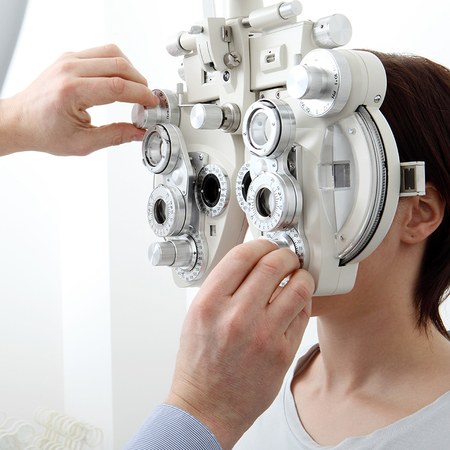
PlenOptika
PlenOptika is a Cambridge, Massachusetts medical device company that makes QuickSee, a handheld autorefractor that measures a person's eyeglass prescription in about ten seconds using wavefront aberrometry and machine-learning algorithms. Spun out of the Madrid-MIT M+Vision fellowship in 2014, the company set out to close the gap on uncorrected refractive error, a problem affecting more than a billion people worldwide. Its portable, clinic-quality device has been used by vision professionals and NGOs on over 5 million patients in more than 45 countries - and even flew aboard SpaceX's Polaris Dawn mission as the first handheld autorefraction device used in space.

SiTration, Inc.
SiTration is a Cambridge, Massachusetts materials-recovery company spun out of MIT that uses a patented, ultra-durable porous silicon membrane paired with electro-extraction to pull critical metals - lithium, cobalt, nickel, copper, and precious metals - out of mining waste, spent lithium-ion batteries, and refining streams. By replacing chemical-heavy, acid-dissolution processes with a tunable, energy-efficient membrane, SiTration aims to make the recovery of the metals behind batteries, EV motors, wind turbines, and data centers cheaper and cleaner.
Tiba Biotech
Tiba Biotech is a Cambridge, Massachusetts preclinical biotech spun out of MIT and the Whitehead Institute that is building a new generation of RNA vaccines and therapeutics. Its RNABL platform swaps the fragile lipid nanoparticles behind first-generation mRNA shots for fully synthetic, biodegradable dendrimer nanoparticles that carry larger RNA payloads with less toxicity and gentler cold-chain demands. The company is applying the technology across human vaccines, cancer immunotherapy, gene editing delivery, and animal health, backed by CEPI, BARDA, the NIH, and the NCI.

Xander
Xander builds XanderGlasses, standalone augmented-reality smart glasses that turn spoken conversation into real-time captions displayed in the wearer's field of view. Aimed at people with hearing loss who don't sign, the device runs speech-to-text offline - no phone, Wi-Fi, or cloud required - so private conversations stay private. An MIT Media Lab spinout founded by Alex and Marilyn Morgan Westner, Xander has been adopted by the U.S. Department of Veterans Affairs and is built on customized Vuzix Shield hardware.

Brelyon
Brelyon is an MIT Media Lab spin-out building headset-free immersive displays. Its Ultra Reality monitors use patented wavefront and light-field engineering to project a curved, multi-focal virtual image up to 122 inches with a ~110-degree field of view from a desktop-sized frame, giving users the depth and scale of VR without a headset. Brelyon targets simulation and training, control centers, teleoperations, enterprise visualization and high-end gaming.

Nathan Monroe
Nathan Monroe is the co-founder and CEO of Cambridge Terahertz, an MIT spinout building compact, affordable concealed-weapons detection. A PhD electrical engineer who demonstrated one of the largest terahertz phased antenna arrays ever built on standard CMOS, he shrank refrigerator-sized scanner physics into a device smaller than a toaster. After a school shooting marked his teenage years in Florida, he spent more than a decade at MIT turning terahertz sensing into a real product. Cambridge Terahertz uses safe, non-ionizing radio waves and AI to see weapons through clothing and packaging, and raised a $12M seed round backed by Amazon and Felicis.

MJ Antonini
MJ Antonini is the co-founder and CEO of NeuroBionics, an MIT spinout building hair-thin, flexible bioelectronic fibers that thread through blood vessels to reach deep neural structures - delivering deep brain stimulation without opening the skull. A Harvard-MIT Health Sciences and Technology graduate who trained in both medicine and engineering, he turned a decade of fiber research from Polina Anikeeva's MIT lab into a venture-backed company that raised an oversubscribed $10M seed round to push toward first-in-human trials.

Alastair Blake
Alastair Blake is the Chief Business Officer of Layer Health, an MIT-spinout building an AI layer for clinical chart review backed by Google Ventures, General Catalyst and Define Ventures. A Cambridge-trained physician (MD, MRCP) turned commercial operator, he trained as an internal medicine doctor in the NHS, served a National Medical Director's Clinical Fellowship at the Care Quality Commission, earned an MBA from Wharton, consulted at McKinsey, and led clinical and commercial partnerships at the healthcare data company nference before joining Layer Health in 2024. He sits at the intersection of medicine, data and go-to-market - a doctor who now sells the software meant to give doctors their time back.

DUST Identity
DUST Identity authenticates physical objects with a thin coat of engineered diamond dust. Each randomly oriented constellation of microscopic diamonds forms a fingerprint that cannot be copied, and that fingerprint is bound to a tamper-evident digital record. The result is an unbroken chain of trust from raw material to final delivery, used across aerospace, defense, electronics, luxury goods, and sports memorabilia.

Layer Health
Layer Health is a Boston-based healthcare AI company, spun out of MIT, that uses large language models to automate medical chart review. Its platform reasons over longitudinal patient records to answer complex clinical questions with evidence-based justifications, powering clinical registry automation, quality measurement, clinical pathways and real-world data abstraction for hospitals and health systems. Founded in 2023 and backed by a $21M Series A led by Define Ventures, the company counts health systems such as Intermountain Health, MultiCare and Froedtert among its partners.

Deep Principle
Deep Principle is an AI-for-Science company spun out of MIT that builds ReactiveAI, a closed-loop R&D platform fusing generative AI, quantum chemistry, and high-throughput experimentation to discover new materials, catalysts, and chemical processes far faster and cheaper than traditional trial-and-error labs. Founded by MIT PhDs Haojun Jia and Chenru Duan, the company targets materials, energy, and pharmaceutical R&D and has reported quantum-chemistry speedups on the order of 20,000x versus conventional DFT.

Gradiant
Gradiant is an MIT spinout turned global water-technology company that designs, builds, and operates advanced systems to treat, reuse, and recover industrial water and wastewater. Using a stack of proprietary technologies - from Carrier Gas Extraction to Counterflow Reverse Osmosis and an AI control layer called SmartOps - Gradiant helps semiconductor fabs, food and beverage giants, pharmaceutical makers, miners, and refiners cut freshwater use, recover lithium and other minerals, and destroy 'forever chemicals.' The first unicorn in the water industry, it reached a $2 billion valuation in 2026.
Infinite Cooling
Infinite Cooling is an MIT-spinout climate-tech company that helps the world's most water-intensive industries cut water loss and run cooling towers smarter. Its patented WaterPanel technology uses electric fields to recapture purified water escaping as plume from cooling towers, while its TowerPulse platform layers AI-driven analytics and real-time monitoring on top of existing cooling systems. Customers include power plants, data centers, refineries and manufacturers across the U.S. and internationally, including a flagship deployment with EDF, the world's largest nuclear operator.

ISEE
ISEE is an MIT spinout building humanistic, AI-powered self-driving yard trucks that automate the repetitive, dangerous work of moving trailers inside logistics yards and port terminals. Its autonomy system is grounded in cognitive-science ideas like theory of mind, letting trucks reason about intent and handle the unpredictable chaos of a working yard. ISEE claims to be the first company to reach fully autonomous operations in the yard-truck space, with customers including Maersk and Lazer Spot.

Kytopen
Kytopen is a Cambridge, Massachusetts biotech and MIT spinout building Flowfect, a non-viral, continuous-flow platform that uses fluid flow plus electric fields to deliver mRNA, DNA and CRISPR payloads into cells. The technology aims to engineer hundreds of billions of cells in minutes, removing a major bottleneck in discovering, developing and manufacturing advanced cell therapies like CAR-T and NK-cell treatments.