The trouble at the Navy test range began with software that nobody seemed inclined to look after. It lacked documentation. It had gone years without an update. When an update finally arrived, the changes were so extensive that the team would need a complete rewrite. This is an unglamorous way for an aerospace story to begin. It is also a useful way to understand AGI.
- The job: rehearse how spacecraft, aircraft, sensors and communications work together.
- The bet: reuse commercial mission software instead of rebuilding familiar calculations.
- The buyer: engineering teams and national security customers who need answers before an expensive test.
At Naval Air Systems Command’s Atlantic Test Range, operators used telemetry antennas to collect information from aircraft in flight. The previous arrangement required an operator for each antenna. The AccuTrack team wanted one person to handle several. Its developers chose STK Engine, AGI’s embeddable mission-analysis software, to put aircraft positions, antenna directions and controls into a shared application.
“The product we used before we adopted STK was no longer supported.”
Tracey Fritz / software developer, NAVAIR case study
The published case describes direct integration with C#, screens operators could share, and control they could hand to one another. Documentation and live support helped make the choice attractive. The first thing that broke was the old product’s maintenance relationship. The rewrite forced a decision. What changed the team’s mind was a practical prospect: supported software that could do more of the job.
A company built against reinvention
AGI began in 1989 as Analytical Graphics. In the company’s account, co-founders Paul Graziani and Scott Reynolds were frustrated by the waste of government programs commissioning purpose-built software. Their answer was a commercial product that could carry useful mathematics from one mission to the next. Its original name, Satellite Tool Kit, was admirably literal.
The product eventually became Systems Tool Kit, retaining STK while admitting that its interests had spread beyond satellites. AGI reported more than 50,000 installations worldwide in March 2022. Treat that as a dated installation count, rather than a census of today’s paying customers. Still, it suggests the reach of an idea that began by questioning the habit of writing everything afresh.
The distinction matters. A bespoke program can be exactly what one project wants. It can also leave the next project paying to rediscover the same geometry. AGI’s proposition gives teams a common analytical foundation, with room for their own data, interfaces and applications. The customer buys a tool and then does the engineering needed to make it useful.
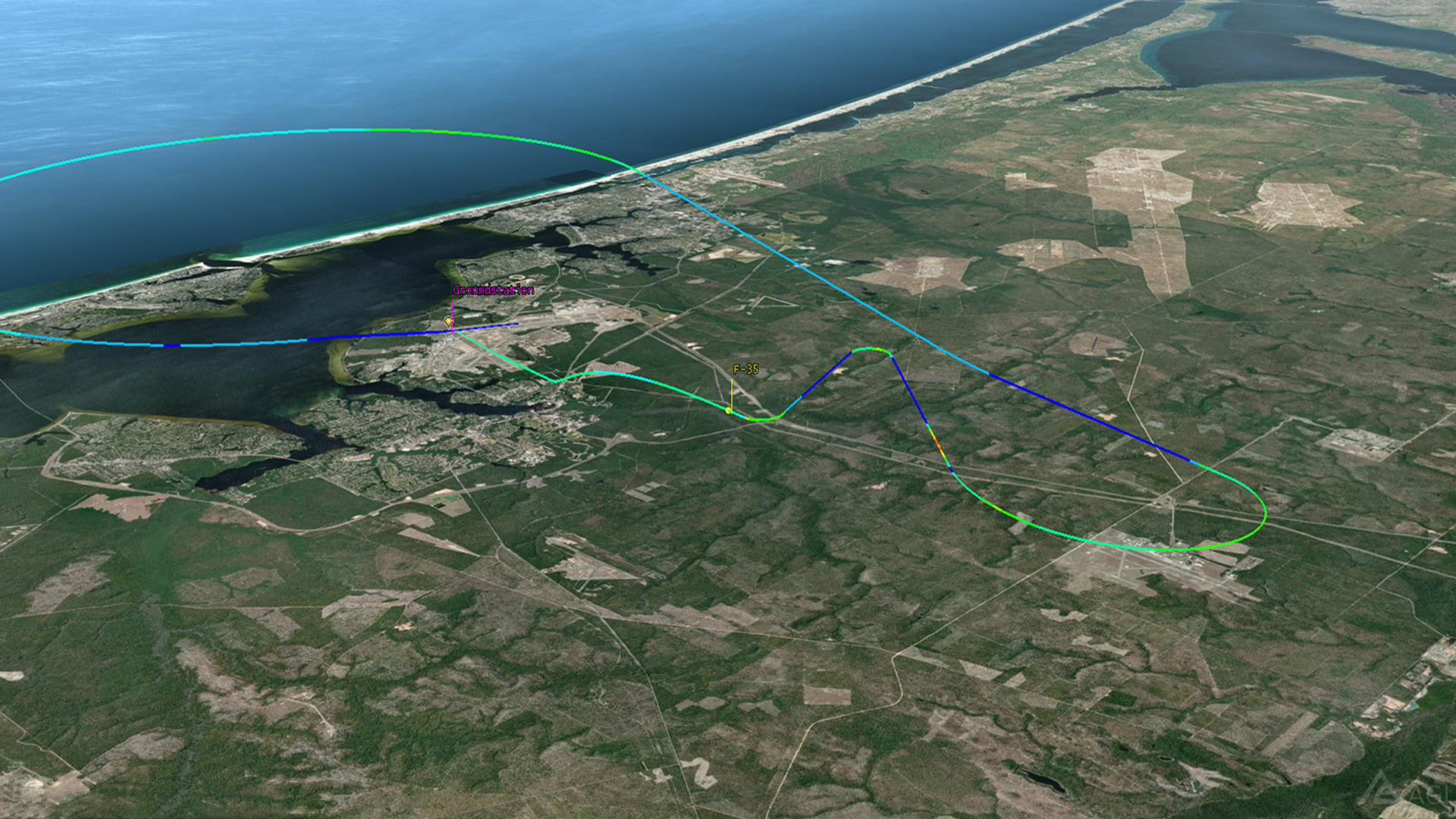
The satellite cannot pull over
Consider an illustrative mission question: when can a satellite communicate with a ground station? A position on a map is insufficient. The planet turns, the satellite moves, and access depends on the constraints the engineer sets. STK’s training materials turn this into a concrete exercise: compute access between objects, then inspect the resulting intervals in reports and graphs.
The attraction is the ability to ask related questions in the same environment. Move a facility. Change a route. Examine a sensor’s coverage. Compare communications opportunities. STK combines time-dependent modeling, specialized space and aviation capabilities, visualization and open APIs. The display helps people inspect the scenario; the underlying analysis supplies the answer.
Conceptual workflow, not a measured performance chart.
This is where AGI fits in the engineering market. A component can perform well on its own while proving unsuitable for a particular mission. Mission analysis asks about the component’s surroundings and its encounters with everything else. AGI’s tools help engineers investigate those encounters before committing to a route, a system configuration or a test plan.
Three toolkits, three different questions
STK is the broad mission environment. Orbit Determination Tool Kit, or ODTK, addresses a more specific problem: deriving an orbit from tracking measurements. Its output includes covariance, the mathematical description of uncertainty around the estimate. A crisp line on a globe can conceal an uncertain position. ODTK makes that uncertainty available for analysis.
ODTK supports missions from low Earth orbit to cislunar and deep space, along with tracking-data processing and automated interfaces. Engineers can evaluate proposed tracking methods before flight, then process measurements during operations. This connects the question of where a spacecraft should be with the question of where the evidence says it is.
Test and Evaluation Tool Kit, or TETK, follows the test itself. It supports detailed planning, monitoring execution and analyzing results afterward. That scope includes aircraft, satellites, missiles, maritime vehicles and ground systems. The point is to keep the planned experiment and the observed experiment close enough to compare.
Developers have another route in. STK Engine embeds capabilities in applications; DME Component Libraries supply building blocks for trajectories, communications, radar, navigation, terrain and visualization. Public GitHub repositories provide examples for STK and ODTK automation. AGI can appear on an engineer’s desktop, or beneath the interface of a system built for someone else.
Rehearsal has a price. So does skipping it.
RT Logic offers a useful example. It combined STK Engine with its Telemetrix channel simulator to generate radio-frequency and intermediate-frequency signals for hardware testing. The published case describes simulated Doppler shift, attenuation, interference and delay. A stationary test could expose equipment to changing mission conditions without conducting the corresponding flight.
The company case reports lower development time, cost and risk. It is a qualitative result; it should not be turned into an invented savings percentage. The mechanism is nevertheless clear: reuse mission geometry inside a physical testing product, so each user does not have to become an astrodynamics specialist before testing communications equipment.
AGI earns money through commercial licenses, maintenance and engineering services, with training and developer tools supporting adoption. Its support page directs STK buyers to a custom quote based on their required configuration. Pro, Premium Space, Premium Air and Enterprise serve different needs. The current evaluation offer is a 14-day Enterprise license.
Air Force contract ceiling, awarded May 11, 2026
The Air Force award at Edwards illustrates the scale and shape of that business. It establishes an ordering framework for software and services over several years. It does not tell an individual team what its STK license will cost. Buyers still need to scope capabilities, support and integration work against their own mission.
From partnership to parent company
AGI and Ansys announced a technology partnership in May 2019. The idea was to bring physics-based component models into larger STK mission scenarios. An antenna’s detailed behavior could then inform analysis of the system using it. This joined two levels of engineering that can otherwise live in separate tools and separate conversations.
In October 2020, Ansys announced a $700 million acquisition agreement; the purchase closed that December. AGI adopted the name Ansys Government Initiatives in March 2022, describing a dedicated channel for U.S. national security customers with appropriate security processes and secured support. Synopsys completed its acquisition of Ansys in July 2025.
The product has global users, while the subsidiary’s current identity concentrates on U.S. national security. Those are different kinds of reach. AGI now sits within a group spanning chip design, component simulation and mission analysis. The useful connection is whether a detailed design decision can be examined in the operational situation that gives it meaning.
The next rehearsal includes AI
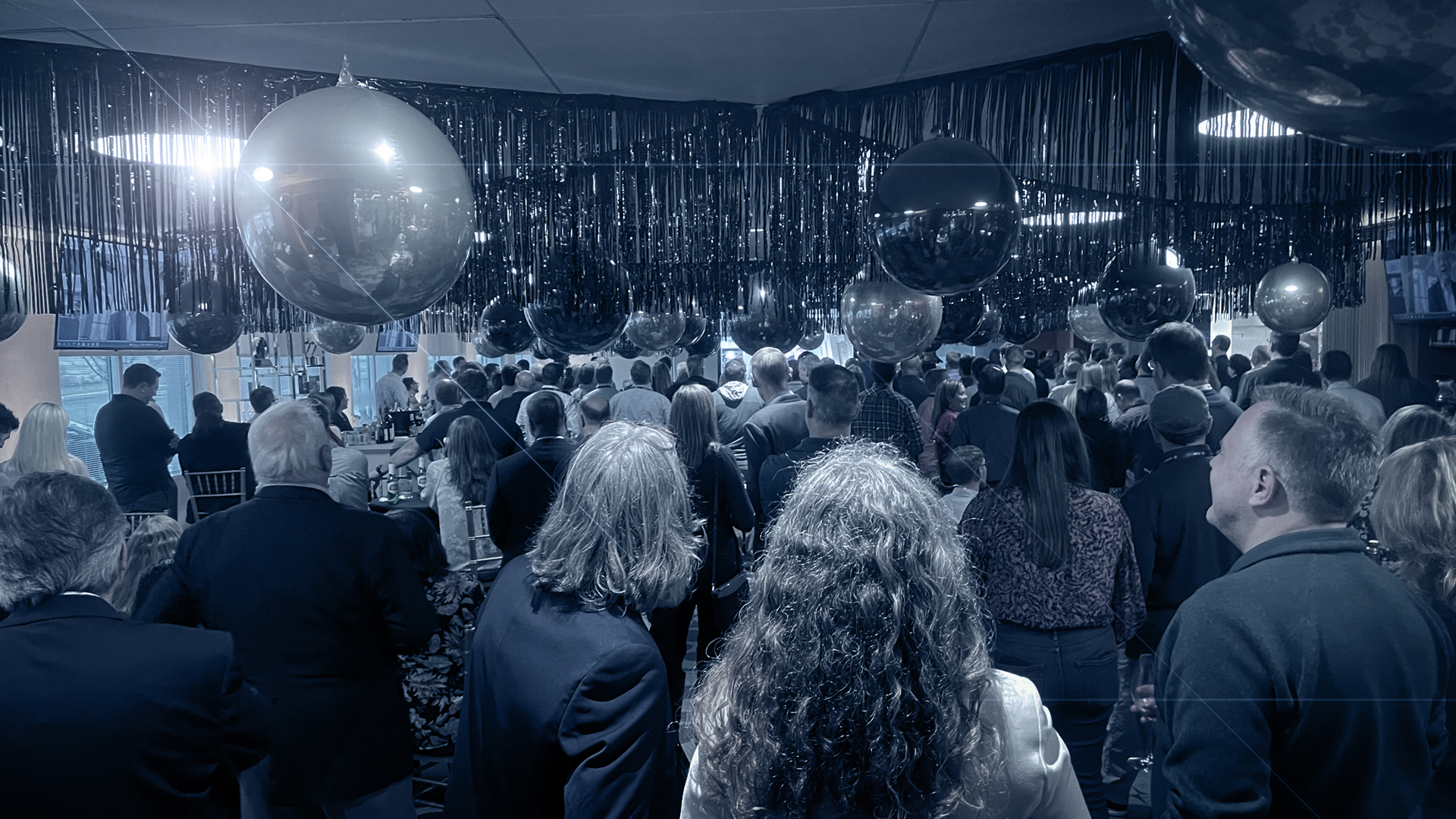
In May 2026, Lockheed Martin described its inaugural AI Fight Club event with AGI and ATG. The participants tested AI agents in virtual four-versus-four aerial scenarios. That is a specific collaboration, and a reminder that mission simulation increasingly supplies environments in which decision-making software can be evaluated.
A synthetic exercise offers repeatability and room to explore. Its results still require judgment about the models, assumptions and real conditions they represent. The sensible lesson to copy is a working method: pick an operational question, document the assumptions, vary the scenario, inspect the results, then compare predictions with measurements.
For a narrowly focused spacecraft-design task, NASA’s open-source GMAT is another option, supporting mission design, optimization and navigation. It is not a substitute for every part of AGI’s multidomain ecosystem. The choice depends on scope, integration needs and the value a team places on commercial support. Neither approach rescues poor inputs or an untested model.
AGI’s Navy case makes that last point particularly well. The useful advance was an application people could maintain and operate together, built on supported analysis. Long before the glamorous conversation about autonomous aircraft, someone needed an antenna pointed in the right direction - and software whose next update would not start the project over.
Open the toolkit
Explore AGI, the product range, product documentation, training and certification, and GitHub examples.
Follow the AGI LinkedIn profile, legacy AGI X account and AGI Facebook profile. AGI’s current social shortcuts lead to the parent’s LinkedIn and YouTube channel.
Watch Paul Graziani explain how AGI and Ansys products fit together or the STK mega-constellation chains demo. Read the AI Fight Club announcement and AGI’s name-change post.