The origin story sounds made up. In 2015, four friends in Chicago wanted to deliver happy-hour beer to offices, so they borrowed a Cadillac and started hauling kegs across the Loop. There was no app, no fleet, no plan bigger than the trunk they were loading. Ten years later, that same company - Crafty - runs the food, beverage, and supply programs inside more than 750 offices, feeds over 300,000 employees a month, and has raised north of $37 million doing it.
The through-line from the Cadillac to the platform is a single, unglamorous idea: the office pantry is a real business, and almost nobody was running it like one. Snacks got ordered ad hoc. Coffee ran out on Fridays. Nobody in the building could tell you what the whole thing cost. Crafty's bet was that if you wrapped that mess in software and a stocking crew, companies would happily pay to never think about it again.
What Crafty actually doesThe break room, outsourced
Strip away the snacks and Crafty is an operations company. It manages the things a workplace consumes - coffee, drinks, fruit, snacks, and supplies - and the machines that dispense them, from espresso setups and water dispensers to ice machines and, yes, the original kegerators. On top of that sits a proprietary platform that does the part humans hate: controlling spend, managing which products get ordered, tracking operations across locations, and giving an office manager one screen instead of a dozen vendor invoices.

Crafty sells this in three flavors, sized to how much hand-holding an office wants. Drop & Go is delivery only - the boxes arrive, you handle the rest. Delivery Plus adds a weekly service that restocks and tidies. Concierge puts a Crafty person on-site daily to run the whole program. Same platform underneath; different amounts of a human in the room.
Who buys itFrom 50-person startups to Robinhood
The customer list reads like a tech-company roll call: DraftKings, Robinhood, Zillow, Yelp, PayPal, Duolingo, Upwork, Brex, Sprout Social, and NextRoll among them. What makes the model durable is that Crafty grows with the account. Co-founder Ishan Daya once described the service as one that "evolves a company's food and beverage program as it evolves" - a 50-person startup and a 500-person office need very different pantries, and switching vendors every time you scale is a headache Crafty is built to remove.
Give away the kegerator, sell the kegs
The early growth engine is worth studying because it is so simple. When Crafty launched its office model around 2016, the pitch was a free kegerator installed in your office - you just had to commit to buying two kegs a month. Give away the hardware, lock in the recurring purchase. It's the razor-and-blades playbook applied to a Friday afternoon, and it got Crafty into buildings fast. Once the fridge was theirs, coffee, LaCroix, and snacks followed. By 2019 the menu had grown from beer to keto beef jerky, and the company had traded a WeWork desk for its own West Loop headquarters.
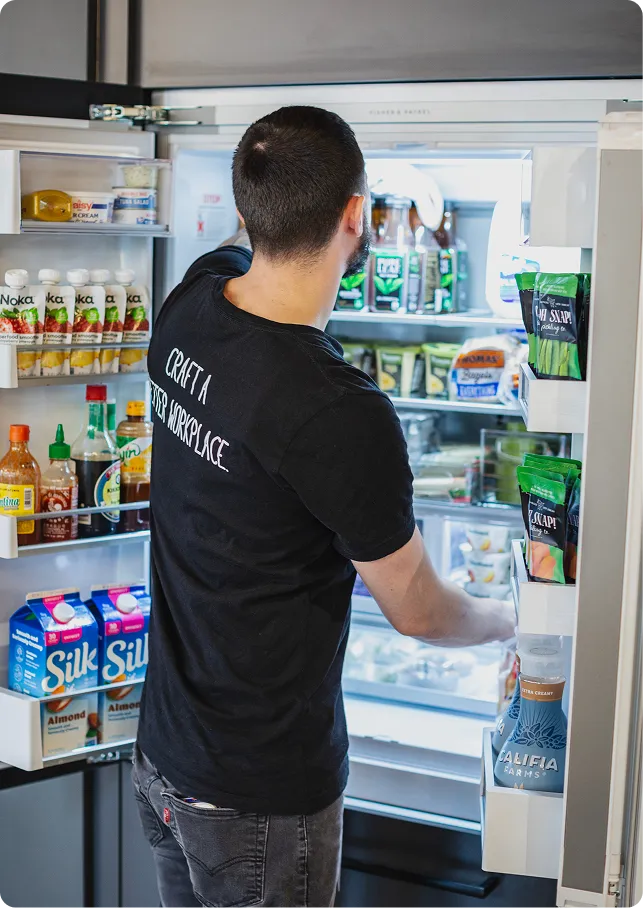
What happens to an office-snack company when the office empties
Then 2020 arrived and every office in America went dark. A company whose entire premise was stocking physical break rooms had a genuine problem. The move that saved Crafty was reframing what it sold: not beer, not even snacks, but the management of consumable spend for a workforce that was suddenly scattered across homes, hybrid desks, and half-full offices. That reframing is what convinced Tribeca Venture Partners to lead a $10 million Series A in 2022.
$37 million, mostly to scale the boring parts
Crafty has raised more than $37 million across seed, a $10M Series A, strategic investment (including from JLL Spark), and a $13.19 million debt round in February 2026. The backer list - Tribeca, Greycroft, OCA Ventures, Manifold, Firebrand, Rubicon, 7BC, Gaingels, and Bluestein Ventures - skews toward funds that like unsexy, high-frequency, recurring-revenue businesses. Which the office pantry very much is.
Funding milestones (approx.)
Not a vending machine, not a snack box
The office-perks space is crowded - vending operators, micro-market vendors, snack-subscription boxes, catering marketplaces, and old-line facilities giants. Crafty's separation is the platform plus the coverage: one system for pantry, catering, cafes, and supplies, run by local service teams in 45-plus markets rather than a box mailed from a warehouse. A June 2025 partnership with Staples plugged that giant's catalog and next-day logistics fleet into the Crafty Platform, extending reach into regions Crafty doesn't yet staff directly.
Spend control, product management, operations tracking, and employee engagement in one place - the layer competitors mostly lack.
Drop & Go delivery, weekly Delivery Plus, and daily on-site Concierge - matched to how hands-on an office wants to be.
Local crews plus the Staples fulfillment network, so a national employer gets consistent programs across every office.
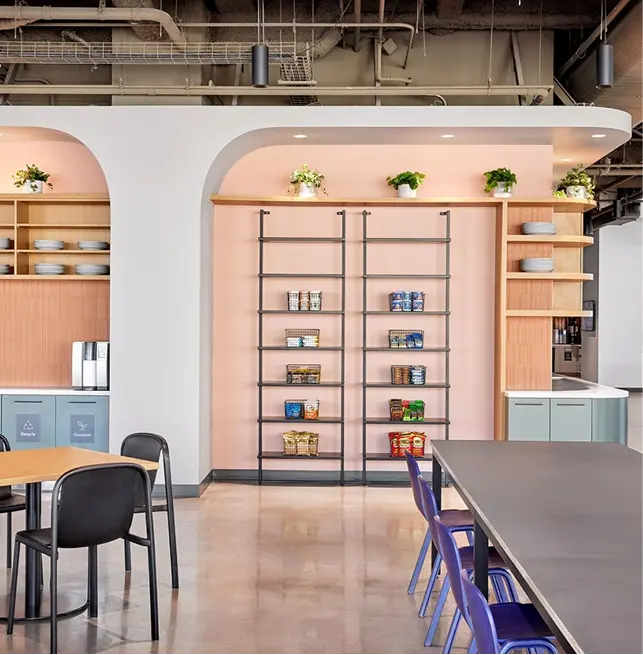
Builders, operators, and a seat at the industry table
Crafty employs roughly 250 to 320 people across Chicago, New York, and San Francisco, working a hybrid week and recruiting what it calls "builders, operators, technologists, and creatives." The engineering side runs on Ruby, Rails, and React; the culture side has collected nods as a top workplace from Forbes, Fortune, Built In, and the Chicago Tribune, along with multiple Inc. 5000 rankings. In July 2025, CEO Nate Rosenstock joined the board of the National Automatic Merchandising Association - a notable arrival for a founder who started by lugging kegs.
The honest read on Crafty: it took the least prestigious corner of the office and treated it as an operations-and-software problem worth solving at scale. That won't excite anyone chasing the next frontier model. But there is a whole category of businesses built by noticing a recurring cost that everyone pays and nobody manages well - and turning it into a product. Crafty found its version in the snack drawer.