BREAKING Bel Group bets on edible fruit coatings · Jan 2026
FUNDING $15M Series A closed (2023)
PATENTS 20+ issued utility patents
FACTORY 42,000 sq ft, Boston, MA
ON SHELF NadaMoo! bites in 700+ stores
ORIGIN Reverse-engineered from fruit skin
BREAKING Bel Group bets on edible fruit coatings · Jan 2026
FUNDING $15M Series A closed (2023)
PATENTS 20+ issued utility patents
FACTORY 42,000 sq ft, Boston, MA
ON SHELF NadaMoo! bites in 700+ stores
ORIGIN Reverse-engineered from fruit skin
Who they are now
A factory in Boston is melting the plastic wrapper
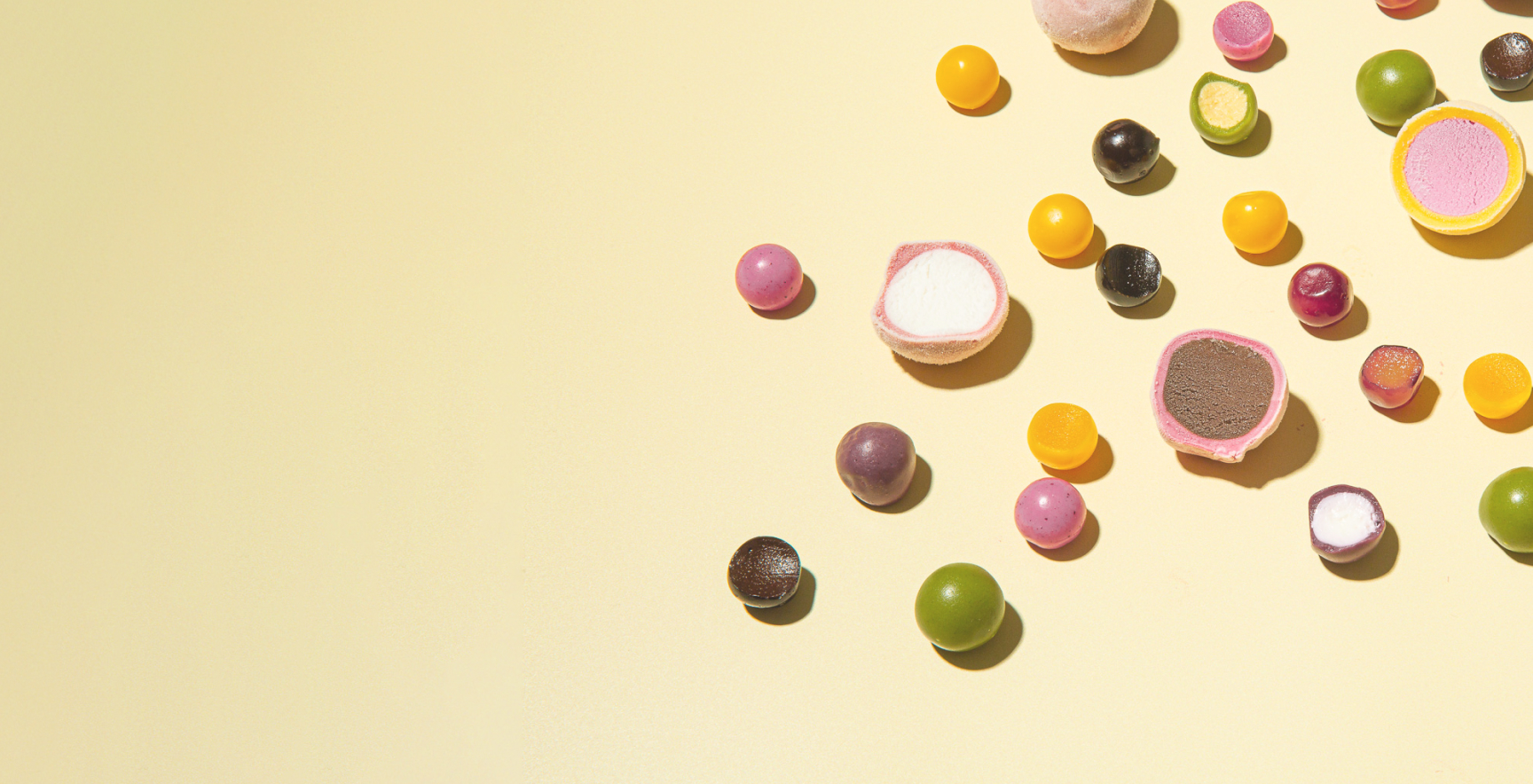
Walk into Foodberry's 42,000-square-foot plant in the Hyde Park corner of Boston and the strangest thing isn't the machinery. It's what comes off the line: ice cream that needs no cup, peanut butter that needs no spoon, smoothies you can hold in your hand. Each one is sealed inside a thin skin of real fruit - a coating that does the job of plastic and then politely vanishes the moment you bite down.
Foodberry is the company turning that party trick into an industry. It is small - around 18 people - and it sells almost nothing under its own name. Instead it works behind the labels of brands you already know, building snack formats those brands physically could not make on their own. The pitch is disarmingly simple: the best package is one you can eat.
Nature already solved packaging a few hundred million years ago. Foodberry just read the patent.
// The whole company in one sentence
The problem they saw
Fresh food has a wrapper problem
Here is the tension Foodberry exists inside. We want food that is fresh, portable, and single-serve. We also want a planet that isn't paved in film, trays, and clamshells. Those two wishes have spent the last century fighting, and plastic kept winning - because plastic is cheap, and it works.
A grape doesn't have this problem. Neither does a plum or a blueberry. Nature wraps soft, perishable, water-heavy interiors in thin protective skins - barriers tuned to keep moisture in, oxygen out, and the contents intact until the exact moment they're eaten. The food and the package are the same object. No landfill required, which is more than you can say for the average yogurt cup.
The wrapper outlives the snack by four hundred years. Foodberry thought that ratio was a little rude.
// On the case for edible barriers
The question that started everything: could you build that skin on purpose, from food, around anything you wanted? Around hummus, coffee, ice cream, nut butter? For most of food-science history the answer was a confident no.
The founders' bet
A classroom dare, two decades of stubbornness
The idea was born in a Harvard classroom around 2012, when professor David Edwards challenged students to reverse-engineer fruit skin into edible packaging. Most treated it as a thought experiment. Marty Kolewe treated it as a to-do list.
Kolewe had the unusual resume for it: a chemical-engineering degree from Johns Hopkins, a PhD from UMass Amherst, and a postdoc in drug delivery at MIT's Langer Lab - where scientists spend their days coaxing tiny capsules to release their contents at precise rates inside the human body. It turns out the science that delivers a drug to your bloodstream is uncannily close to the science that keeps ice cream from leaking out of a fruit shell. Microencapsulation. Controlled release. Same playbook, friendlier ending.
The name kept changing. The bet didn't.
WikiFoods became Incredible Foods became Foodberry. An early consumer brand, Perfectlyfree, sold allergen-free snacks across New England before being shelved in 2019. The company could have called it quits there. Instead it did the unfashionable thing - turned inward, ditched the consumer dream, and rebuilt itself as the technology platform other brands would rent.
Pictured: thirteen years, three names, one stubborn idea about fruit skin. The pivot nobody live-tweeted.
That pivot is the founders' real bet. Not "we'll build a famous snack." Rather: "we'll build the thing that makes everyone else's snack possible, and we'll be the only ones who can."
The product
A coating made of fruit, fiber, and patience
What Foodberry actually makes is a coating - plant-based, non-permeable, built from fruit and vegetable fibers, phytonutrients, and minerals. It can wrap a fresh, frozen, or shelf-stable core and turn it into a clean, poppable bite. No mess on your fingers. No wrapper in the bin. The barrier is engineered to behave like a fruit's skin: protective on the shelf, gone on the tongue.
The defensibility lives in those 20-plus issued patents - and in a manufacturing line most food startups never bother to build. Foodberry didn't just license an idea and wait. It put up a GFSI/SQF-certified facility so it could co-manufacture the products too, controlling the hard, finicky last mile where a clever coating either survives the production floor or doesn't.
Coating platform
Edible, non-permeable barriers from fruit and vegetable fibers - the core IP.
Co-manufacturing
A certified Boston plant that scales coated snacks for brand partners.
R&D collaboration
Turning purees, dairy, cheese and ice cream into new bite-sized formats.
Trailberries
Its own DTC line: peanut butter in real-fruit coating, 4g protein, 4g fiber.
Anyone can have an idea about edible packaging. Foodberry built the factory that makes it survive a Tuesday.
// On why the plant matters more than the patent
The Foodberry milestone reel
2012
Born as WikiFoods from a Harvard classroom dare to reverse-engineer fruit skin.
2012–2019
Operates as Incredible Foods; launches and later shelves the Perfectlyfree consumer brand.
2022
First B2B product partnership: NadaMoo! dairy-free frozen snack bites roll out to 700+ stores.
2023
Closes a $15M Series A from life-science and consumer investors.
2024
Launches Trailberries, a direct-to-consumer peanut-butter-and-real-fruit bite, on Amazon.
2026
Strategic partnership with Bel Group (Babybel, GoGo squeeZ) targets the $6B+ fruit-snack aisle.
The proof
The brands voting with their roadmaps
A coating that works in a lab is a science fair. A coating that works inside someone else's product line is a business. Foodberry now has a roster of partners who put their own names on the result.
NadaMoo! was first, sending dairy-free frozen bites into more than 700 stores. Van Leeuwen used the technology for French Ice Cream Bonbons. Gopuff put out Ice Cream Bubbles. Cape Cod Select makes Frozen Smoothie Bites. And in January 2026, the biggest tell: Bel Group - the multinational behind Babybel and GoGo squeeZ - signed a strategic partnership to build fruit-and-protein snacks aimed at the $6 billion-plus U.S. fruit-snack category, with a first product slated for select markets in 2026.
Why the Bel deal is the headline
// relative scale of the prizes Foodberry is chasing, by US market / proof point
Bars are scaled for visual comparison across different units (market size, capital, distribution, IP) and are illustrative, not to a single axis. Figures from public reporting.
When the company that owns Babybel knocks on your door, you are no longer a science project. You are a supplier.
// On crossing from lab to ledger
The mission
Make the wrapper edible, make snacking honest
Foodberry's stated mission is to develop plant-based coatings that turn foods and beverages into self-contained, bite-sized snacks - creating new consumer moments while leaning on nature's own protective tricks instead of plastic. Strip the corporate phrasing and it's a quiet rebellion against a default everyone stopped questioning: that fresh, portable food has to come shrink-wrapped.
It's worth being skeptical here, and Foodberry would probably agree. Edible packaging has been an industry punchline for years - long on press releases, short on shelves. What separates Foodberry from the graveyard of good intentions is the unglamorous stuff: issued patents, a real factory, paying partners, products you can actually buy. The mission is romantic. The moat is industrial.
Why it matters tomorrow
The aisle that's about to get strange
Think about the next decade of the snack aisle. Regulators are circling single-use plastic. Shoppers say they want less of it. Brands are hunting for formats that feel new without feeling weird. A technology that delivers fresh, portioned, mess-free food without a wrapper sits dead center in all three pressures at once.
If Foodberry is right, the coating becomes invisible infrastructure - the thing inside a hundred products that never says "Foodberry" on the front. That's a less glamorous future than a household brand, and a far larger one. The companies that win in food rarely get famous. They just get into everything.
So return to that line in Boston. The machines are still running, still turning out ice cream with no cup and fruit with no film. For now it reads as novelty - a clever trick from a clever lab. But novelty is just the early word for normal. The wrapper that melts in your mouth isn't a stunt. It's a preview.
One day you'll eat the package and not even notice. That's the day Foodberry wins.
// Back where we started, in the factory
Profile compiled from public sources, June 2026. Figures are approximate where reporting varies.
Foodberry · 75 Sprague St, Boston, Massachusetts 02136 · Series A food-technology company.