Founder Profile / Fintech
Jack Chong
He learned Arabic to become a diplomat. He now runs the switchboard between banks and the digital-asset world.
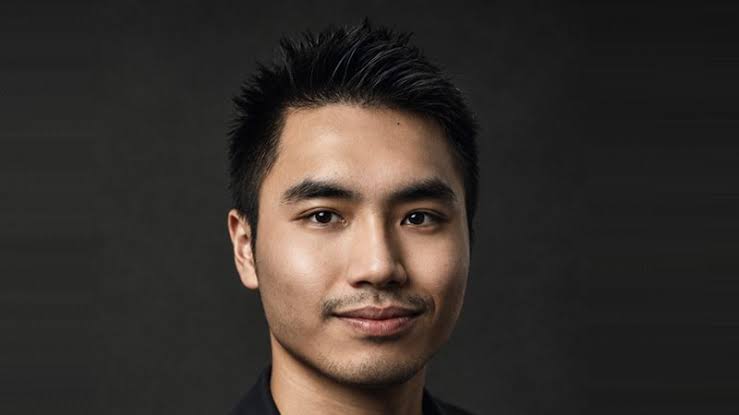
Jack Chong, co-founder & CEO of Checker. Currency, in human form.
He learned Arabic to become a diplomat. He now runs the switchboard between banks and the digital-asset world.
Stablecoins work. Using them doesn't. That four-word diagnosis is the entire reason Jack Chong gets out of bed. As co-founder and CEO of Checker, the New York company he started in 2023, he sells one thing that sounds boring and turns out to be enormous: a single API that lets a regulated bank, an OTC desk or a payments firm reach the world's fragmented digital-asset liquidity without stitching together fifty integrations themselves.
The pitch lands because the mess is real. A treasurer in Lagos, a trading desk in Hong Kong and a fintech in São Paulo all want the same thing - fast, cheap, programmable money movement - and all of them hit the same wall of disconnected exchanges, custodians and rails. Checker routes around the wall. One plugin, the company says, reaches 75-plus currencies and 50-plus providers, intelligently sending each order to wherever price, speed and reliability are best.
"Stablecoins work. Using them doesn't."
- Checker's founding thesis, in four wordsThe numbers stopped being theoretical fast. In under twelve months Checker went from zero to more than $3 billion in processing volume, serving 30-plus regulated institutions and quietly handling something on the order of 1% of global B2B flows. In May 2026 the company raised $8 million in a seed round led by Galaxy Ventures, Al Mada Ventures and Framework Ventures, with strategic checks from Bitso and Airtm in Latin America, DFS Lab in Africa, and Onigiri, SNZ and Velocity across Asia. Operators from Stripe, Tala, Flutterwave, Mesh, ComplyAdvantage and Superstate piled into the round too.
"This funding allows us to enable financial institutions from Brazil and Kenya, to Hong Kong and the United States, to transform how foreign exchange, payments, trading, and investment products are built."
Rewind a few years and Jack Chong was on a very different trajectory. He moved to the UK for high school, then aimed himself at something almost nobody on a fintech founder's resume claims: he wanted to be a Chinese diplomat working in the Middle East and North Africa. So he learned Arabic. Not as a hobby - properly, through private tutorials and then on the ground at the Qasid Arabic Institute in Amman, Jordan.
That detour matters. It is the difference between a founder who arrived at global finance through a spreadsheet and one who arrived through languages, geopolitics and a genuine appetite for places most of his peers will never work. Checker's map - Brazil, Kenya, Hong Kong, the United States - is not a slide deck flourish. It is the worldview of someone who chose Amman over the obvious path.
"DeFi will eat TradFi. The key is via Real World Assets."
- Jack Chong, on X, launching the RWA primerHe landed at the University of Oxford to read Philosophy, Politics and Economics, the degree of choice for British prime ministers and the occasional contrarian. He got there on a full-ride Kwok's Scholars Association scholarship and graduated in 2022. Along the way he collected the kind of starter ventures that signal restlessness more than indecision: Level Up, an ed-tech startup out of the OX1 Incubator that won more than £10K on Demo Day in 2020, and frigg.eco, a climate venture that took first place at the Oxford Incubator, picked up a Best Paper Award and finished in the top five of a climate investment challenge.
Most founders pitch a vision and back-fill the reasoning. Jack did it the other way around. Before Checker existed, he co-authored a roughly 70-page primer on the tokenization of real-world assets with fellow builders Teej Ragsdale and Mukund Venkatakrishnan - one of the earliest serious attempts to argue, in rigorous detail, that decentralized finance would absorb the traditional kind through programmable, on-chain versions of real assets.
He kept going, publishing an allocator's guide to tokenized treasuries and joining White Star Capital's Digital Asset Fund as an Entrepreneur in Residence. There he sketched the gap he would later fill: beyond the asset-class marketplaces (Centrifuge, Ondo) and the regulated infrastructure players (Securitize, Onyx), he believed a third category was missing - the Stripe-and-Plaid layer that quietly makes the whole stack usable. Checker is that bet, made flesh.
"Blockchain presents an opportunity to leapfrog - to build an open, composable, efficient financial software stack."
- Jack Chong, on joining White Star CapitalThe roadmap reads like a list of things banks complain about. Checker wants to expand global payments to cut the reliance on slow correspondent-banking chains, build embedded lending and borrowing, and ship AI agents that handle treasury and back-office grunt work. Bhanu Kohli, former CEO of Rail (since acquired by Ripple), put the appeal plainly: "Checker's network has been instrumental to our business. Their plug-and-play infrastructure supercharges our trading and treasury plumbing."
It is a long way from diplomacy, and also not. Jack Chong still spends his days connecting parties that don't naturally speak the same language - only now the parties are financial institutions and the language is liquidity. The job description fits a man who once planned to negotiate between nations: find the people who need each other, and build the channel that lets them talk.
Roughly the share of global B2B volumes Checker's network already touches.
Languages, ventures, continents - pick a category, Jack collects beginnings.
Pages in the RWA primer he co-wrote before building the company.
Core products - payments, treasury, trading, credit, on/off-ramps - behind one plugin.