Tagged: brain-computer-interface
8 results
Omniscient Neurotechnology (o8t)
Omniscient Neurotechnology (o8t) is a Sydney-based brain-mapping company that uses AI and machine learning to turn ordinary MRI scans into detailed maps of the brain's electrical networks, or connectomes. Its flagship FDA-cleared platform, Quicktome, gives neurosurgeons a patient-specific view of the pathways responsible for speech, movement and cognition before they operate, while its research platform, Infinitome, helps scientists study how diseases like Alzheimer's, epilepsy and schizophrenia disrupt brain connectivity. Founded in 2019 and led by CEO Stephen Scheeler, the company has raised roughly US$124 million to date and is expanding connectomics into stroke, movement disorders and brain-computer interfaces.

Ramses Alcaide
Dr. Ramses Alcaide is the co-founder and CEO of Neurable, a Boston-based neurotechnology company building brain-computer interfaces disguised as ordinary headphones. A neuroscientist trained at the University of Washington and the University of Michigan, he turned a decade of EEG research into the MW75 Neuro, a Master & Dynamic collaboration that reads brainwaves to help wearers focus. Neurable has raised roughly $49M, closed a Series A in late 2025, and unveiled a HyperX gaming headset at CES 2026.

NeuroBionics
NeuroBionics is a Boston-area neurotechnology company spun out of more than a decade of MIT research. It builds hair-thin, flexible bioelectronic fibers that reach neural targets through the body's blood vessels instead of open surgery. Its lead device, evStim, aims to deliver deep brain and peripheral nerve stimulation endovascularly, potentially widening access to neuromodulation therapy for conditions like Parkinson's disease, epilepsy, chronic pain, and depression.

Axoft
Axoft is a Cambridge, Massachusetts neurotechnology company building implantable brain-computer interfaces (iBCIs) out of Fleuron, a proprietary material it claims is up to 10,000x softer than the polyimide used in conventional brain implants. By making electronics roughly as soft as brain tissue, Axoft aims to keep thousands of sensors in stable contact with single neurons for years instead of months - reducing scarring and signal loss - to diagnose and eventually treat disorders of consciousness, paralysis, and other neurological conditions. A Harvard spinout founded in 2021, it raised an oversubscribed $55M Series A in April 2026 and has run first-in-human studies in 11+ patients worldwide.

Paul Le Floch
Paul Le Floch is the co-founder and CEO of Axoft, a Cambridge neurotechnology company building brain implants out of a material so soft it behaves like brain tissue. A Harvard-trained materials scientist and Forbes 30 Under 30 honoree, he bet that the way to read the brain better was not to borrow chips from the semiconductor industry but to invent a new material from scratch. The result, Fleuron, is up to thousands of times softer than conventional probes yet can carry over 1,000 sensors. Axoft has now implanted its device in 11 patients and raised a $55M Series A to push toward FDA trials.
Tanay Kothari
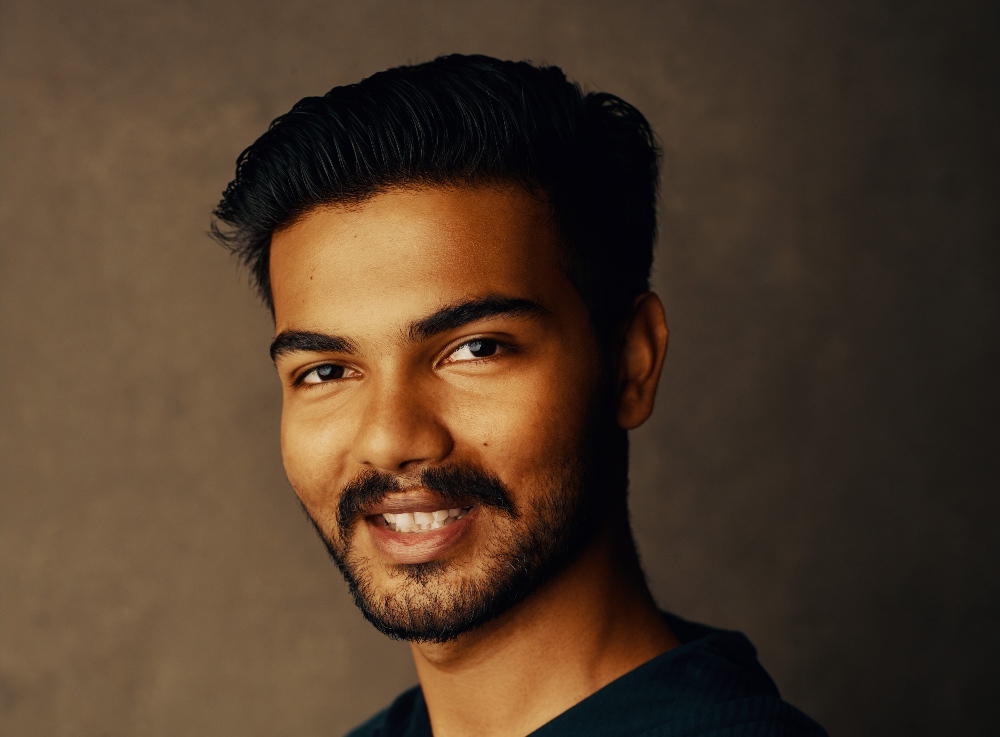
Tanay Kothari is the co-founder and CEO of Wispr Flow, a San Francisco-based AI company building the voice interface for the AI era. A four-time founder who taught himself to code at age nine in New Delhi, Kothari holds BS and MS degrees from Stanford in Computer Science and AI, taught Deep Learning alongside Andrew Ng, and published medical AI research. After selling his first startup FeatherX to Cerebra Technologies straight out of college, he co-founded Wispr in 2021 with Stanford batchmate Sahaj Garg. The company's flagship product, Wispr Flow, transforms spoken ramblings into polished writing across 100+ languages with sub-second latency, achieving 50% month-over-month growth and a 20% paid conversion rate - five times the industry standard. Wispr has raised $81 million total, including a $30 million Series A led by Menlo Ventures and a $25 million extension led by Notable Capital, at a $700 million valuation. Named to Forbes 30 Under 30 in 2023, Kothari is betting that keyboards will be vintage store items within five years.

Elon Musk
Elon Musk is the wealthiest person in recorded history and the founder or co-founder of nine major companies including SpaceX, Tesla, xAI, and Neuralink. Born in Pretoria, South Africa, he taught himself to code at 10, sold his first game at 12, and dropped out of a Stanford PhD after two days to chase the internet gold rush. His companies collectively own 65% of all operational Earth satellites, produce the world's best-selling electric vehicles, and are actively building brain-computer interfaces and rockets to colonize Mars. As of May 2026, his net worth stands at approximately $809 billion.

Fred Ehrsam
Fred Ehrsam (Frederick Ernest Ehrsam III) is a serial founder and investor who co-founded Coinbase in 2012 — the crypto exchange that went public on Nasdaq in 2021 — and Paradigm in 2018, the research-driven crypto VC firm that raised a $2.5 billion fund. Now he's chasing his next frontier: Nudge, a non-invasive brain-computer interface startup using focused ultrasound to modulate brain states, which raised $100 million in Series A funding in 2025. A Duke computer science graduate turned Goldman Sachs FX trader, Ehrsam discovered Bitcoin in 2011 and never looked back — quietly becoming one of the most influential architects of the crypto industry while building a reputation as a deep thinker obsessed with pushing the boundaries of human capability.