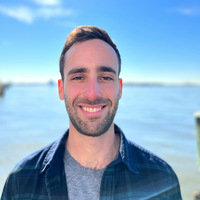
Oren Friedman sells scheduling. Also incentives, consent forms, participant segmentation, panel dashboards, and the parts of user research nobody puts on a keynote slide. His company, Rally, is a customer relationship management tool - except the customers are the customers' customers, the ones who agree to sit on a Zoom call for forty-five minutes in exchange for a $75 gift card and the vague sense of having contributed to a roadmap.
Rally is headquartered at 169 Madison Avenue in New York, has fifty-four employees, and closed an $11 million Series A led by Canapi Ventures in June 2025, bringing the total raised to just under $20 million. Its customer list - Adobe, Sonos, MongoDB, GitLab, BILL, Monzo Bank - is the kind you'd expect if you polled product designers about which companies have their research operation together. Rally is the tool most of those research operations quietly run on.
Friedman co-founded the company in 2021 with Alec Robins, a Vanderbilt classmate who was previously a tech lead at Facebook and HubSpot. They went through Y Combinator's Winter 2022 batch. Robins does the engineering from Nashville; Friedman does the sales, the fundraising, and the interviews from New York. There is an obvious efficiency to a two-founder company where one person handles the code and the other handles everyone who is not writing code.
The thing Rally does that nothing else does is refuse to do more. Friedman is emphatic on this point: "We're building a best-in-class solution, not an all-in-one solution." Research teams, in his telling, want infrastructure that connects to Qualtrics for surveys, Listen Labs for AI moderation, Zoom or Teams for interviews, Snowflake or BigQuery for analysis, Salesforce for user data, and increasingly Claude or Copilot for whatever a research assistant needs an LLM for. Rally sits in the middle and coordinates. It is the plumbing.
This is a curious pitch. The dominant story in SaaS for a decade has been consolidation - Figma buying whiteboards, Notion buying calendars, HubSpot buying everything. Friedman's bet is the opposite. Buy narrow, integrate wide, be the coordination layer for a job that involves five other tools. The bet appears to be working, in part because his customers - research operations professionals, a group with strong opinions about tooling - agree with him.
By the Numbers § 02
The Thesis § 03
The Long Way § 04
Customers Rally Runs Research For § 05
Funding, Charted § 06
Rally rounds, cumulative
In His Words § 07
"We're building a best-in-class solution, not an all-in-one solution."
The Research Ops Review, 2026"For too long, ResearchOps has indexed on control at the cost of convenience, and that's what I think could lose them their jobs."
The Research Ops Review, 2026"Whether you're using Qualtrics for surveys, Listen Labs for AI moderation, Zoom, Microsoft Teams, Copilot, Claude or whatever, to make research work, your tools need to talk to each other."
The Research Ops Review, 2026"I don't see a world in which AI moderators are talking to AI participants, and everything is fully abstracted."
The Research Ops Review, 2026Second Read § 08
The most interesting sentence Friedman has said in public - possibly the most interesting sentence anyone in ResearchOps has said in public - is that ResearchOps has "indexed on control at the cost of convenience." It is worth pausing on. ResearchOps, as a discipline, has spent a decade professionalizing itself: consent forms, PII redaction, participant panels with strict quotas, incentive audit trails. Friedman is not against any of this - Rally sells governance features, and enterprise governance is why Monzo and Adobe pay for it. But he is warning his own buyers that if the answer to every product manager's question is "fill out this intake form and wait two weeks," the product manager will simply go talk to a customer without them.
This is the founder's peculiar advantage: he spent almost a decade at AlphaSights and Remesh selling to the same buyers he now sells to, which means he watches them get bypassed. Rally's product roadmap - self-serve research, workflow automation, stakeholder engagement dashboards, panel management - reads as an argument for keeping ResearchOps in the loop by making the loop faster than going around it.
The other useful thing about having a former enterprise sales rep as CEO is that Rally's growth is not a mystery. In 2023, launch day. In 2024, six product lines and five integrations. In 2025, an $11 million round from a firm - Canapi - that is not the obvious lead for a user research CRM. Canapi is best known for financial services fintech, which is another way of saying they underwrite compliance-heavy software. Rally's expansion into "research governance" is not a random word on the marketing site; it is the thing that made a fintech-adjacent VC comfortable leading the round.
Rally's technology stack, per public trackers, includes Kafka, Temporal, Snowflake, DynamoDB, and Anthropic Claude. This is heavier infrastructure than a scheduling app needs. It is closer to the infrastructure a company would need if it planned to sit in the middle of every research workflow at a Fortune 500. Which, in Friedman's telling, is exactly the plan.
Fun Facts & Footnotes § 09
Friedman is a Nashville native who studied Human & Organizational Development at Vanderbilt - a degree explicitly about how groups of people behave. The company he built is a CRM for studying how groups of people behave.
Rally's CTO Alec Robins was a tech lead at both Facebook and HubSpot before starting the company. He works from Nashville. Friedman works from New York. Everything runs on Slack and, presumably, Rally's own scheduling.
The Twitter/X handle Friedman uses publicly - @rallyuxr - is the company's, not a personal one. Founders who do this are usually the ones who think the brand is the point.
Product managers, Friedman notes, do not say "user research." They say "continuous discovery" or "talking to a customer." Rally's copy quietly reflects this.
Rally's YC batch, W22, was the largest ever and the last one before Y Combinator publicly downsized. Rally is one of the batch's clearer B2B outcomes.
He co-founded his first company - UniverCity Deals - in 2012 as an undergraduate. Rally is a thirteen-year overnight success.
FAQ § 10
Who is Oren Friedman?
Co-founder and CEO of Rally, a New York-based user research CRM used by companies including Adobe, Sonos, MongoDB, GitLab and Monzo.
What is Rally UXR?
A user research CRM that automates participant recruiting, scheduling, incentives and panel management for corporate research teams. Rally went through Y Combinator's Winter 2022 batch.
How much has Rally raised?
Roughly $20 million total, including an $11 million Series A led by Canapi Ventures announced in June 2025.
Where did he study?
Vanderbilt University, Human & Organizational Development.
Who is his co-founder?
Alec Robins, Rally's CTO, a Vanderbilt CS grad who was previously a tech lead at Facebook and HubSpot.