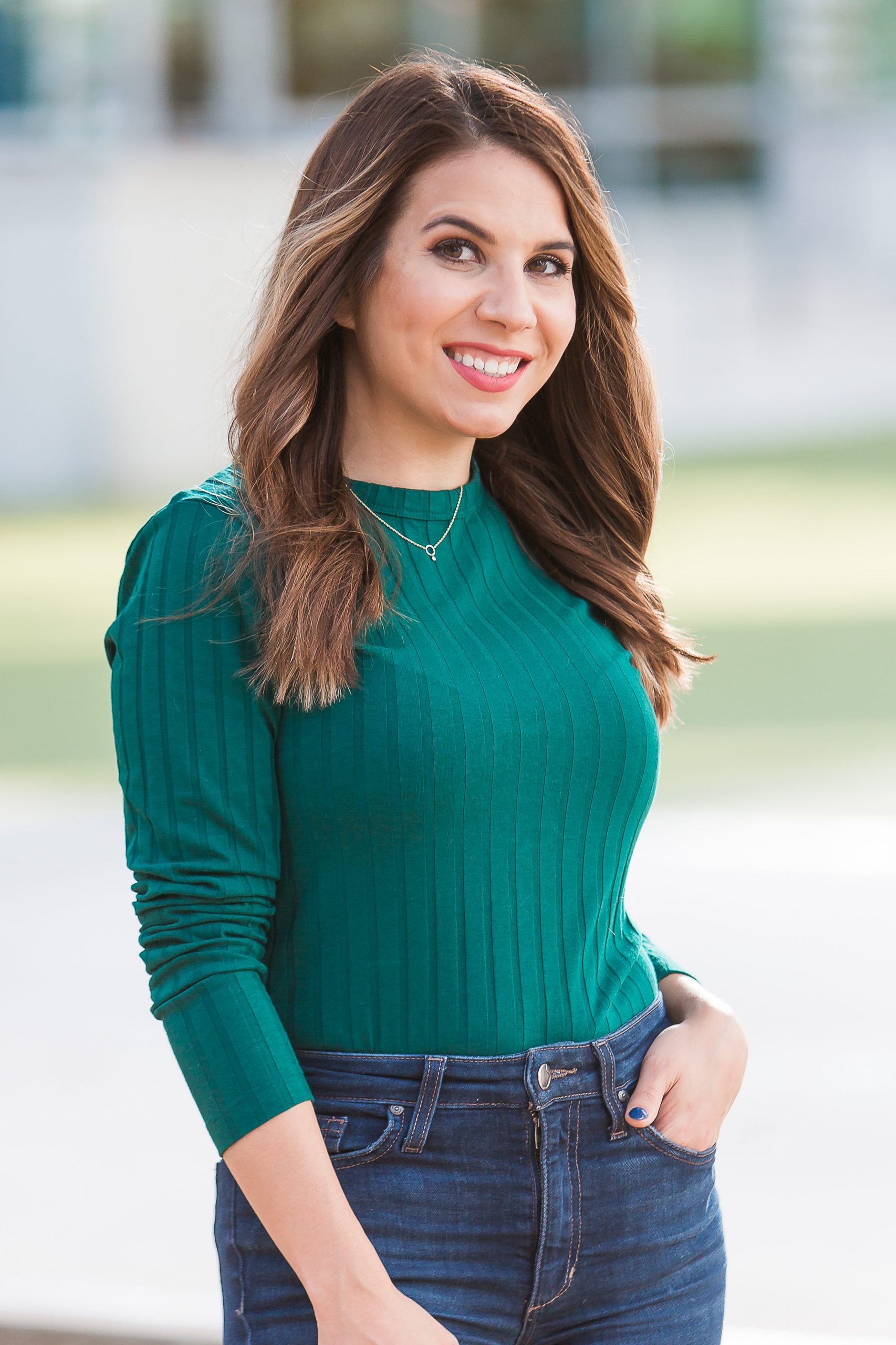
Michelle Davey runs a healthcare company you have almost certainly used and probably cannot name. Wheel, which she co-founded in January 2018 with Griffin Mulcahey, does not sell you a telehealth app. It sells the plumbing behind other people's telehealth apps. Retailers, payers, pharmaceutical companies, and digital health brands plug into Wheel to get a nationwide network of clinicians, the software those clinicians use, and the state-by-state licensing paperwork that would otherwise make each of them build a small compliance department from scratch. This is a specific bet, and it is Davey's whole thesis: the interesting business is not the visible one.
She got there by way of the least glamorous corner of the tech industry, which is recruiting. Davey did three years of medical device recruiting at Medtronic, which she found slow and dispiriting. She left for Google, which was fast. She left Google for Favor, the Austin food delivery startup, where she was employee number eight and spent her time scaling the driver network into eighteen states. Then she went back to healthcare, this time to a telehealth company, where the job was to hire clinicians. That is when she noticed the actual problem. Getting a doctor licensed to practice across state lines is a paperwork exercise so tedious it functions as a moat.
Wheel is the company you build if you stare at that moat and decide the moat itself is the business.
Fifteen years without a diagnosis.
Davey grew up in a small town in Texas. She has said in interviews that she spent her childhood and early adulthood shuttling between doctors trying to get someone to tell her what was wrong, and that it took fifteen years for anyone to name what she had. She now calls it the thing that would have been solved sooner if telehealth had existed in the form she is now building. That is the polite founder version. The impolite version is that a lot of the American healthcare system is a map of who lives near which specialist, and if you do not live near one, the map stops working for you.
This is the personal component of the origin story. It is the part that gets quoted. The professional component is that Davey spent nearly a decade watching workforces get built and unbuilt. She placed engineers into big tech, then placed drivers into an early gig economy, and she developed a specific habit of thinking about labor as a supply-side infrastructure problem. Later, when she took a job as head of talent at a telehealth company, she brought that habit with her. She saw the state-by-state licensing paperwork not as an administrative cost but as an unmet product spec.
Wheel is what you build if you insist on treating those two problems - a rural kid who cannot find a doctor, and a licensed doctor who cannot easily practice across state lines - as the same problem seen from opposite ends.
Wheel, in one line: sell shovels.
Wheel positions itself as a virtual care platform, but the useful shorthand is that it is the AWS of telehealth. If you are a national pharmacy chain deciding to offer virtual visits, you can either build a clinician network, credential each provider across fifty states, write scheduling and EMR software, and monitor clinical quality, or you can pay Wheel to do it and put your logo on top. Most companies pick the second option. This is the point.
The company has grown by peeling off adjacent problems. In November 2022 it acquired GoodRx's back-end virtual care technology for $19.5 million in cash, folding a clinician-facing EMR, clinical management tools, and patient-experience software into the stack. In early 2023 it laid off 28 percent of the company - fifty-six people - in what Davey framed to staff as a refocus on long-term strategy and technology investment. She has publicly said Wheel is not raising in the foreseeable future and has cash on the balance sheet.
Whether that reads as discipline or as a slowdown depends on whether you were reading healthtech headlines in 2021 or 2023.
A recruiting career that never quite ended.
Quotes on file.
We've built Wheel around the idea that empowered and engaged clinicians lead to healthier patients.
COVID has blown the lid off the possibilities of virtual care.
Focus on the problem you want to solve. I guarantee that once you identify that initial problem, you'll soon identify another dozen problems related to that first spark of an idea.
Finding an investor who can help fill in the gaps while painting a broader picture is crucial, especially when you're in the earlier stages of building a company.
Clinicians as customers.
Most healthcare software is sold to whoever writes the check, which is usually a payer or a large employer. Davey's public framing has been consistent that Wheel is trying to design for the clinician first - flexibility, licensing across states, the experience of actually delivering care through a screen at 9 p.m. from a home office in Waco. Her argument is that a clinician who wants to keep working is the entire product, and everything else is packaging.
This is either the right insight or a marketable one, depending on how you feel about clinician retention numbers. Either way, it is a specific claim, and Davey has structured her company around it. The recruiting background matters here. She has been building talent pipelines her whole career, and Wheel is the version where the pipeline is credentialed medical professionals instead of engineers or drivers.
The GoodRx acquisition was consistent with this. Buying an EMR and a patient-experience layer is not the flashy move. It is the move you make if you actually intend to run the clinician's day.
Small facts that add up.
Instagram bio: "Austin Native." The rare CEO bio that is also a citizenship claim.
She was employee #8 at Favor, the Austin delivery startup, and helped scale it into 18 states.
She studied International Business and Latin American Studies, not health policy or CS.
She writes on Medium under her own name and has used it to publish funding announcements in her own voice.
She once, in her telling, "swore off healthcare" as too broken to fix. She now runs a healthcare company.
Wheel is headquartered on South Lamar Boulevard, one of the more literal main streets of Austin's startup scene.
The company's Twitter handle is @Wheel_Health, though Wheel dropped "Health" from its public name years ago.
Davey speaks at HLTH and the Rock Health Summit, which are the two conferences that matter in the sector.
What is on the desk.
28% reduction
Wheel cut about 56 roles. In a memo to staff, Davey framed it as a refocus on long-term strategy and technology investment. She said the company had "a lot of cash" on the balance sheet.
GoodRx Care
Wheel bought the back-end virtual care technology behind GoodRx Care for $19.5M in cash: EMR, clinical management, patient experience software.
Series C
$150M led by Lightspeed. Existing backers include CRV and Salesforce Ventures. Total raised passes $216M.
Common questions.
Who is Michelle Davey?
She is the co-founder and CEO of Wheel, an Austin-based virtual care infrastructure company she started with Griffin Mulcahey in January 2018.
What does Wheel actually do?
Wheel provides the back-end telehealth platform, clinical operations, and nationwide clinician network that other healthcare, retail, and pharma brands use to deliver virtual care under their own names.
Where did she work before Wheel?
Recruiting and operations roles at Medtronic, Google, and Favor, and a stint as head of talent at a telehealth company, where she encountered the licensing problem that became Wheel's founding thesis.
How much has Wheel raised?
More than $216 million across four rounds, including a $150 million Series C led by Lightspeed in January 2022.
Where did she go to school?
St. Edward's University in Austin, where she earned a BBA in International Business and Latin American Studies.