Profile / Enterprise Software
Erik Bakstad
The engineer who kept promoting himself - from CTO to CEO - as Ardoq grew into a global enterprise architecture platform.
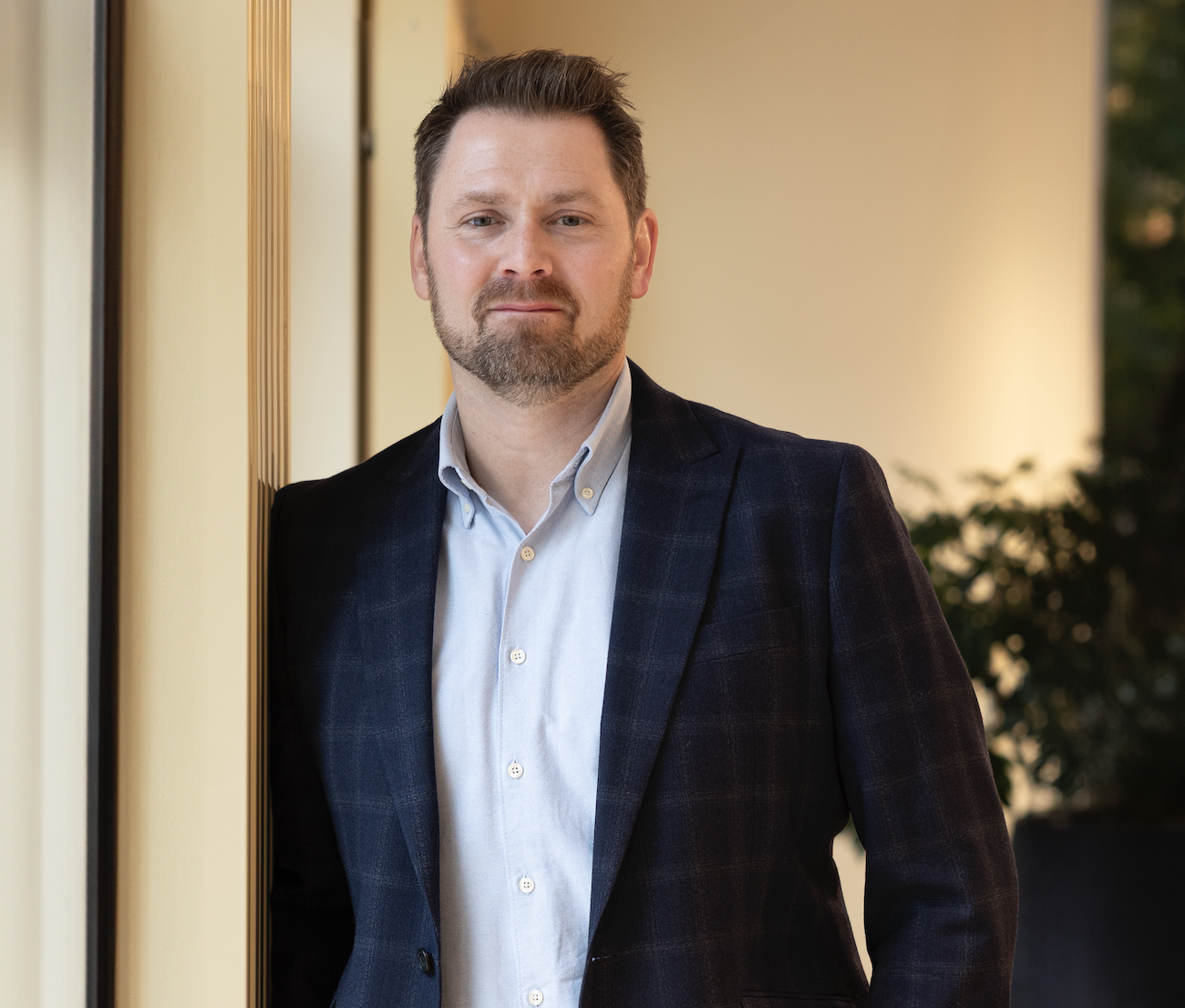
Erik Bakstad, CEO & co-founder of Ardoq. / Ardoq
The engineer who kept promoting himself - from CTO to CEO - as Ardoq grew into a global enterprise architecture platform.
Erik Bakstad, CEO & co-founder of Ardoq. / Ardoq
Erik Bakstad did not arrive at Ardoq's top job the usual way. He built the company from the code up, ran its technology for six years, then handed himself the harder problem: running the whole thing.
Today Erik Bakstad sits at the head of Ardoq, the Oslo software company he co-founded in 2013 and now leads as chief executive. The product he sells is not flashy. Ardoq builds a platform for enterprise architecture - the discipline of mapping how a large organization's software, data, processes, and people actually connect. It is the sort of work that decides whether a bank's migration lands on time or a retailer's transformation quietly runs off the rails. Bakstad's bet is that companies can only change what they can see clearly, and that most of them cannot see clearly at all.
What he is working on now is a rebuild of that idea for the AI era. Ardoq describes itself as an AI-first platform that does not merely document a technology landscape but analyzes it, generates insights automatically, and puts what the company calls virtual architects to work across sprawling systems. It is a sharp turn from where enterprise architecture started, and Bakstad has spent more than a decade arguing that the turn was overdue.
"Before, architects created these massive architectural diagrams... They ended up spending more time maintaining their diagrams than actually advising the business."
The origin is a familiar founder story with an unusual twist: the pain came first, and it was personal. Bakstad spent the early part of his career as a developer and architect inside finance and telco - two industries defined by scale, legacy systems, and the constant hazard of change. What he saw, over and over, was failure. Big transformation projects that ran over time, ran over budget, or carried a risk profile that made everyone nervous.
His co-founder, Magnulf Pilskog, brought an enterprise architecture background from one of Norway's largest banks, where he had wrestled with the same problem. Pilskog built a prototype that seeded the original question behind Ardoq: how can you help people understand the full impact of a change before they make it? Bakstad frames the customer's dilemma in three plain questions.
"When you're making any type of change, you need to know: where do I start? What do I have? How are things connected?"
That was the itch the two set out to scratch - not a market they spotted from a distance, but a frustration they had lived. The company they built in Oslo grew from that prototype into a platform now trusted by names like ExxonMobil, MUFG, Primark, and DSM-Firmenich.
Bakstad's career has an unusual shape. Most founders pick a lane - the technical one or the commercial one - and stay in it, bringing in outside leaders as the company grows. Bakstad kept changing lanes without changing employers. For the first six years he was Ardoq's chief technology officer, focused on building the platform, the engineering team, and a culture that treated technology as a competitive edge rather than a cost center.
Around 2018 and 2019 he began pulling the product organization under his wing, taking responsibility for product strategy and eventually the chief product officer role. Then, in February 2021, after three months as interim chief executive, he took the CEO job outright. Developer, CTO, CPO, CEO - four roles, one company, roughly eight years. Each move was less a promotion than a response to what the business needed next.
"There had to be a better way to help organizations navigate transformation."
In March 2022, Ardoq announced a $125 million Series D led by One Peak and EQT Growth. It was one of the largest private rounds in Norwegian tech history, and it came on the back of 80 percent year-on-year recurring revenue growth in 2021. By then the company had grown well beyond Oslo, with offices in Copenhagen, London, and New York, and a headcount that has continued to climb. The funding was earmarked for global expansion, product investment, and hiring.
Recognition followed the revenue. Ardoq strung together five consecutive years in Gartner's Magic Quadrant for Enterprise Architecture Tools and picked up a Gartner Customers' Choice nod along the way. Bakstad, for his part, joined the Forbes Technology Council and became a regular voice on where enterprise architecture is heading. He tends to explain the stakes with an analogy rather than a lecture.
"A classic example here would be Netflix utilizing new internet technologies to transform into a streaming provider rather than a DVD rental service."
Bakstad's approach to growth reads as patient rather than explosive. He describes the Ardoq journey in three verbs - iterate, evolve, execute - and the record supports the framing. This is a company that spent years refining its category rather than chasing every adjacent one, and a leader who grew into each new title rather than parachuting into it.
He is candid about the kind of people he wants around him: bold, caring, and driven, tackling hard problems together. It is a short list, and a telling one. The culture he talks about is less about perks than about temperament - the appetite to take on messy problems and the care to do it well. Bakstad himself is a self-described former hockey player turned geek, a line he uses to signal that the path from rink to code was not a straight one, and that he is comfortable saying so.
His larger ambition is to move enterprise architecture out of the static-diagram era for good. Instead of maps that go stale the moment they are drawn, he wants living, queryable, data-driven models that tell an organization where to invest and where to divest - and increasingly, he wants AI doing the heavy analytical lifting. For a discipline long stereotyped as bureaucratic box-drawing, that is a genuinely different pitch, and Bakstad has staked his company on it.
More than a decade in, the frustration that started it all has not really changed - transformation is still hard, and plenty of projects still fail. What has changed is the tooling Bakstad and his team have built to shorten the odds, and the scale at which they now get to test the idea. From a prototype about change impact to a nine-figure business serving some of the world's largest companies, the throughline is the same stubborn question he started with: before you change anything, do you actually understand what you have?
Erik Bakstad is the Norwegian CEO and co-founder of Ardoq, an Oslo-based SaaS company that builds a data-driven, AI-first enterprise architecture platform.
He became CEO in February 2021, after serving as CTO and then Chief Product Officer, and following a three-month interim period.
Ardoq was founded in 2013 in Oslo by Erik Bakstad and Magnulf Pilskog.
Ardoq raised a $125 million Series D in March 2022 led by One Peak and EQT Growth, part of roughly $162.8 million raised in total.
He holds a Master's in Information and Communication Technology from the University of Bergen and worked as a developer and architect in finance and telecommunications before co-founding Ardoq.
"We were seeing this constant stream of projects that failed - either over time, over cost, or with a high-risk profile."
"Where do I start? What do I have? How are things connected?"
"There had to be a better way to help organizations navigate transformation."