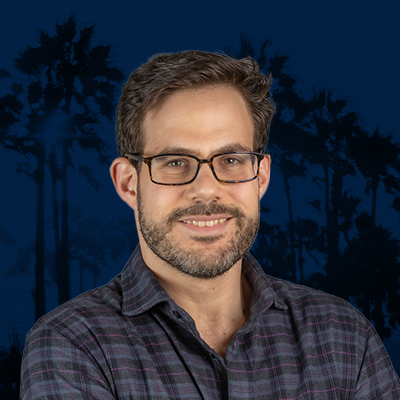
Noam Schwartz, CEO and co-founder of Alice
New York - The founder in his working uniform, unremarkable.
Profile / Founders / AI Safety

Noam
Schwartz

The co-founder who spent eight years learning how three billion people abuse the internet, then renamed the company Alice.

Role
CEO & Co-Founder
Company
Alice (ex-ActiveFence)
Based
Brooklyn / Tel Aviv
Founded
2018
Dispatch

Behind the safety layer

Noam Schwartz runs a company that, until this year, most of the internet had never heard of, which is somewhat the point of it. Alice, which was called ActiveFence right up until January 2026, is the vendor that platforms hire when the abuse gets worse than the platform is willing to admit publicly. Its customers include NVIDIA, Amazon, TikTok, Cohere and Black Forest Labs. Its reach, per the company, covers three billion users and seven of the ten largest AI foundation models. Its founder went to law school.

Schwartz is CEO and co-founder. He started ActiveFence in 2018 with Alon Porat, Eyal Dykan and Iftach Orr. Before that he ran Tapdog, a competitive intelligence startup that mapped the web by chasing hyperlinks; SimilarWeb acquired it and he stayed on as VP of Business and Corporate Development. Before that he was an intelligence officer in the Israel Defense Forces, working counter-terrorism. Before that he had two degrees from Bar-Ilan University, an LL.B. in Law and Business and an M.B.A., which is a slightly unusual combination even for an Israeli founder.

The company he now runs is a story about compound learning. Trust and safety, as an operating category, tends to be treated by tech platforms as a cost of doing business. Schwartz's bet, from the beginning, was that it is actually a category of intelligence work, and specifically a category that benefits from being centralized across many platforms rather than reinvented at each of them. Eight years in, the bet has aged well enough that the largest AI labs pay him to do it for them.

The 2026 rebrand to Alice is less a change of subject than an admission that the subject has enlarged. When ActiveFence started, the adversary was a bad actor uploading a video to a social feed. Today the adversary is a bad actor writing a prompt to a foundation model, or a model producing content that has to be caught before it leaves the API. The company calls this category Communicative Tech, which is the sort of coinage that either becomes a Gartner Magic Quadrant or gets forgotten in eighteen months. Schwartz appears to be betting on the first.

We've spent eight years learning exactly how humans can abuse tech at the scale of billions.
- Noam Schwartz, on the Alice rebrand, January 2026
Origin

The folder that made a company

Founding stories tend to be tidy in retrospect. Schwartz's is not tidy. He has told versions of it in interviews and on podcasts, and the shape is consistent: at Tapdog, which was doing competitive-intelligence work by mapping hyperlinks across the internet, he came across a folder that contained child sexual abuse material. He has said in one recorded interview that "something in my mind snapped." His daughter, born at 26 weeks, was in a neonatal ICU at around the same time. The two facts sat next to each other in his life, and he decided to build a company about it.

That decision, in 2018, produced ActiveFence, which for its first several years operated with a kind of deliberate quiet. There was no consumer product, no viral launch. There was a services-and-software stack that platforms could plug into, and a threat intelligence practice that was closer to a small national security agency than to a startup. The founding team leaned Israeli intelligence and data science. The customer list stayed under NDA. The company hit roughly 200 employees across six offices by 2021 and raised $100 million in combined Series A and B that July at a $500 million valuation. Then it kept going.

In 2023 the company bought two other trust-and-safety startups: Rewire in London, which had built AI systems for detecting harmful language, and Spectrum Labs in Miami, which had built classifiers for toxicity and other harms. The acquisitions gave ActiveFence more surface area on the modeling side and, incidentally, more customer overlap with the AI labs that were, by 2023, starting to worry seriously about what their own models could be induced to say.

The rebrand to Alice, unveiled in January 2026, is best read as the moment when the surface area caught up with the ambition. The new positioning is that the company sells three things: defense against weaponized AI, guardrails for AI interactions, and monitoring for model integrity. The underlying engine is called Rabbit Hole. It analyzes, per the company, billions of harmful data points across fraud, exploitation and prompt-injection attacks. If you find that name slightly on the nose for an internet safety company, you are not alone; it is also a fair description of what the engine actually does.

What Alice does, in one paragraph

It sits between people and the platforms they use, and increasingly between people and the models those platforms deploy. It looks at signals the platform cannot easily see on its own. It flags what it thinks is abuse, fraud, exploitation, prompt injection or model misuse. It hands the platform back a decision.

Why the name changed

ActiveFence described a defensive perimeter. Alice describes a character in a story about what happens when the rules of the world you're in are not the rules you thought they were. Schwartz's company is now betting that AI safety is the second one.

By the numbers

Alice at scale

3B
Users protected
7/10
Top AI foundation models
$100M
Series A+B, 2021
2018
Year founded
Career

A working timeline

Pre-2010s

Israeli intelligence officer

Counter-terrorism work with the Israel Defense Forces. The starting point for the methodology he later commercialized.

2010s

Bar-Ilan University

LL.B. in Law and Business, followed by an MBA. A lawyer's training, applied elsewhere.

Early 2010s

Tapdog

Founded and led the competitive intelligence platform that mapped the web by hyperlink. Acquired by SimilarWeb.

Post-acquisition

SimilarWeb

VP Business & Corporate Development. Also guest lectured at Wharton on online data analysis and research methods.

2018

ActiveFence founded

With Alon Porat, Eyal Dykan and Iftach Orr. Dual HQ in New York and Tel Aviv.

July 2021

$100M Series A/B

Valuation of $500M. Headcount roughly 200 across six offices.

2023

Two acquisitions

Rewire (London) and Spectrum Labs (Miami). AI classification comes in-house.

January 2026

Alice

ActiveFence rebrands as Alice. Positioning shifts from content moderation to AI model security.

Field notes

On the founder, briefly

The reason Schwartz is worth reading about, if you care about this category, is that his instinct on trust and safety has been correct for longer than the market believed. He was building an intelligence company for platform abuse in 2018, when most of the industry was still treating abuse as a policy problem. He was buying AI classification companies in 2023, before the AI safety category had a Gartner ring around it. He was renaming his company for AI in early 2026, roughly the moment large customers began asking specifically for that. The pattern is not prescience so much as staying in the room while the room fills up.

He is not a public founder in the usual sense. There is no Substack, no keynote deck making the rounds, no long-form manifesto pinned to his Twitter, which itself is under the handle @NoamSCH and posts sparingly. The interviews he does are on other people's podcasts, and they are largely about the work rather than the person. The company kept its customer list mostly quiet for eight years and only started saying the names on stage after the rebrand made it strategically useful to say them.

The clearest window into his mental model is the origin story he keeps returning to: the moment at Tapdog when the folder appeared. That story does two things at once. It explains the mission in a way that gets attention, and it puts the founding decision downstream of a very specific piece of evidence rather than of an addressable-market calculation. Founders who start companies from evidence tend to run them differently than founders who start companies from thesis. Schwartz runs Alice like a company started from evidence.

His teaching stint at Wharton, on online data analysis and research methods, sits oddly next to the counter-terrorism intelligence work, until you realize that both are about extracting signal from open, adversarial, noisy environments. The MBA and the LL.B. sit oddly next to both, until you realize that the trust-and-safety category is also a category about policy - what counts as abuse, who decides, what a takedown means legally, how a platform's terms of service interact with foreign law. A lawyer with an intelligence background is almost overqualified for that job.

The Alice thesis, then, is that Communicative Tech - a phrase Schwartz introduced with the rebrand and which may or may not survive - is a real category, and that a safety layer under it is a real product, and that the layer belongs to whoever has been building it the longest. Alice has been building it the longest. That is the pitch, and Schwartz has spent eight years earning the right to make it.
Motifs

Fun-adjacent facts

01

Rabbit Hole

Alice's core adversarial intelligence engine is named for the metaphor. Product marketing, taking itself literally.

02

Two capital cities

Alice is co-headquartered in Brooklyn and Tel Aviv. Schwartz lives in the first and grew up in the second.

03

Wharton, briefly

He guest-lectured on online data analysis. Not at a business school he attended.

04

Ex-Nokia, ex-moolta

Two lines on his resume no one asks about, presumably because they were before the interesting parts.

05

The Tapdog sale

Not the story he leads with, but the one that gave him the operating experience to build the next thing bigger.

06

Silent for eight years

The company's customer list was under NDA for most of its life. The rebrand is the first time it has said "NVIDIA, Amazon, TikTok" out loud.

Themes

Where his attention is

AI safety trust & safety adversarial intelligence prompt injection content moderation weaponized AI model integrity child safety online disinformation fraud detection open-source intelligence generative AI security Communicative Tech Rabbit Hole
FAQ

Questions people actually ask

Who is Noam Schwartz?

CEO and co-founder of Alice, formerly ActiveFence, an AI safety and trust-and-safety company headquartered in New York and Tel Aviv.

What is Alice?

Alice is the rebrand of ActiveFence, launched in January 2026. It positions itself as the safety and security layer under Communicative Tech, protecting three billion users and seven of the ten largest AI foundation models.

Why did ActiveFence rebrand to Alice?

To reflect its expansion from moderating user-generated content into securing generative AI systems - prompt injection, model abuse, adversarial attacks.

How did he start ActiveFence?

In 2018, after encountering child sexual abuse material while mapping the internet at his previous startup, Tapdog. He co-founded the company with Alon Porat, Eyal Dykan and Iftach Orr.

What did he do before ActiveFence?

Ran Tapdog until SimilarWeb acquired it, then served as VP Business and Corporate Development at SimilarWeb. Earlier, he was an intelligence officer with the Israel Defense Forces, and he holds an LL.B. and an M.B.A. from Bar-Ilan University.